
Tekingame Night #1: UAG cases confirm the controversial return of the 'Camera Island' on Galaxy S26. Nvidia launches Project Genesis to merge AI with Quantum computing. Ubisoft rolls back Rainbow Six servers after a massive hack, 'Calyx' challenges Factorio, and Samsung's profit surges 300% thanks to AI chips.
1. Mobile: UAG Leaks Confirm the Return of the "Camera Island" on S26 Ultra
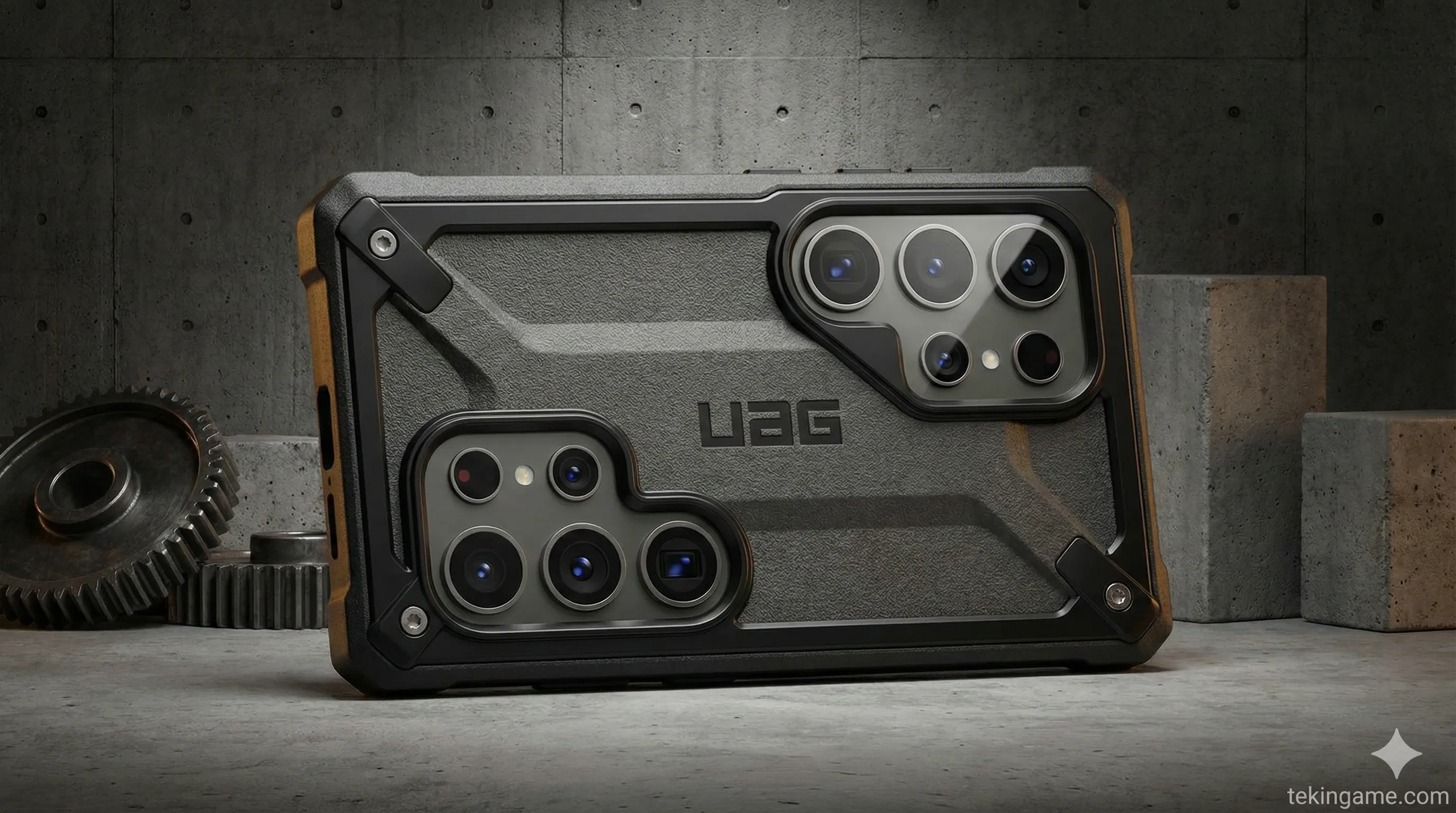
This morning, the tech internet exploded when images of protective cases from the renowned brand UAG (Urban Armor Gear) surfaced online. These renders, specifically for the popular "Monarch" and "Civilian" series cases designed for the unreleased Galaxy S26 Ultra, leave almost zero room for doubt regarding the final design. If you were a fan of the minimalist, individual lens cutouts (the "Waterdrop" design) seen on the S23, S24, and S25, I have bad news: The "Camera Island" is officially back.
What exactly was leaked?
In the UAG imagery, we clearly see that the camera lenses no longer protrude individually from the chassis. Instead, the entire camera array—including the five lenses and the laser autofocus module—is encased within a single, raised rectangular housing covered by a unified piece of glass. This design language creates a massive throwback to the Galaxy S20 Ultra era, but with significantly more refined materials and curves.
Why did Samsung U-turn? (Technical Analysis)
Many users on Twitter/X are already calling this a "regression." However, hardware analysts point to two critical technical reasons for this decision:
1. The Dust Accumulation Problem: The individual lens design was a magnet for pocket lint and fine dust. Cleaning the tiny crevices between the lenses was a nightmare for users, and over time, the trapped grit caused micro-scratches on the back panel. A unified island solves this hygiene issue instantly—one wipe cleans everything.
2. The Physical Reality of the Sensor: As we discussed in our S26 Deep Dive, this phone is rumored to use the massive 320MP ISOCELL HP9 sensor. This sensor is physically thicker and larger than its predecessors. If Samsung kept the individual lens design, the protrusion would be dangerously high and fragile. The "Island" disguises this thickness and provides structural integrity to the module.
Can we trust UAG?
Absolutely. Case manufacturers like UAG receive precise CAD (Computer-Aided Design) files and aluminum dummy units from Samsung about 3 months before launch to prepare their production lines. UAG's track record with the S23 and S24 leaks was 100% accurate. Therefore, we can say with 99% certainty: The Island is back.
2. Gaming: A Rival to Factorio? "Calyx" Enters Early Access
If you are the type of gamer who finds joy in complex production graphs, supply chain management, and building interstellar empires, today is a massive day. The ambitious indie title Calyx officially launched into Early Access on Steam today, and in just a few hours, it has secured a "Very Positive" rating from the notoriously difficult-to-please strategy community.
What is Calyx?
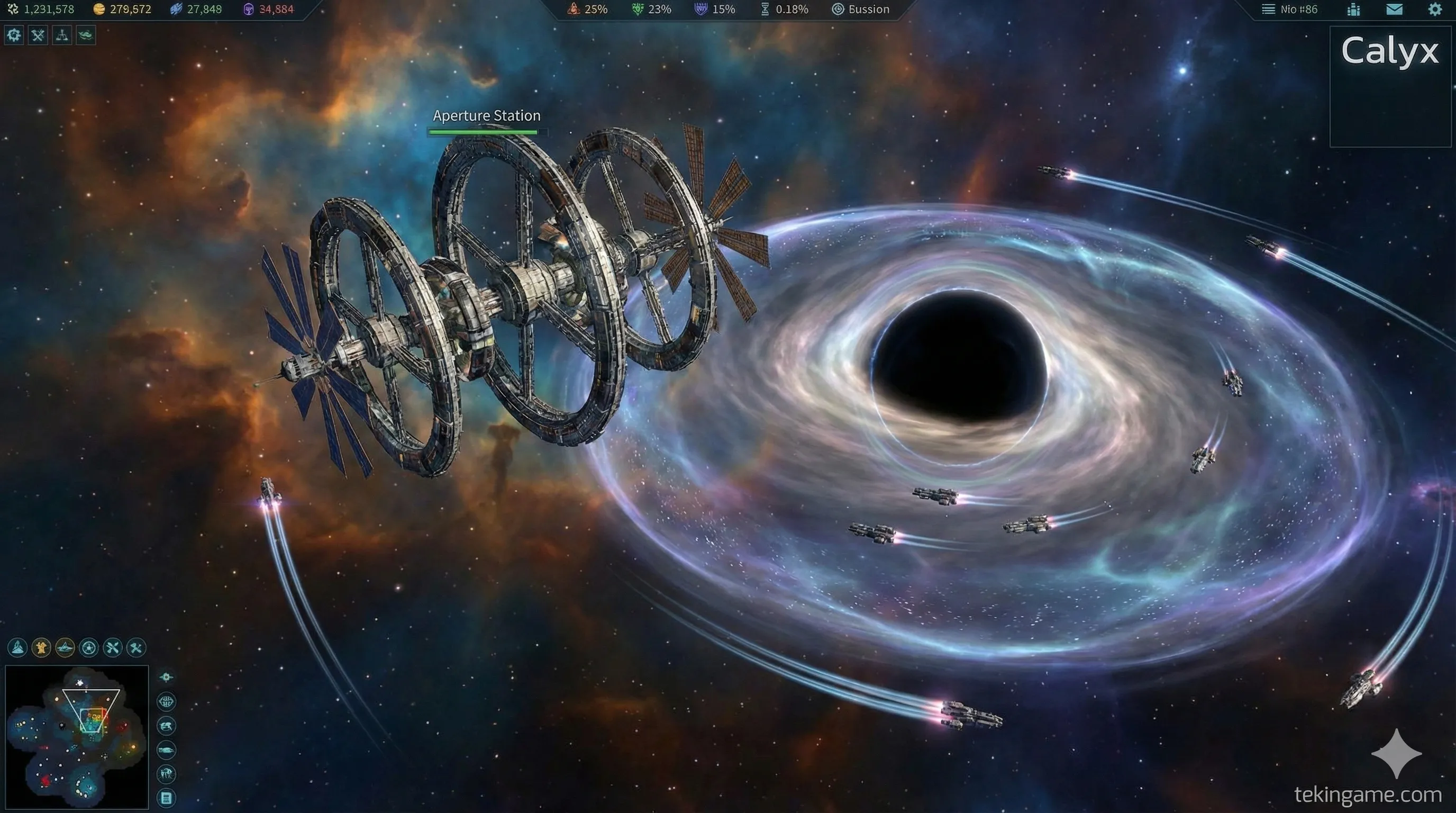
Imagine taking the engineering complexity of Factorio and blending it with the grand scale and politics of Stellaris. The narrative is set in the year 2150; Earth has been rendered uninhabitable due to climate collapse, and you are the commander of a Colony Ship tasked with settling a new, hostile star system. But unlike typical RTS games, your enemy isn't just aliens—it's "Logistics."
The Revolutionary Mechanic: Time-Dilation
What separates Calyx from thousands of other strategy games is its physics engine. In most RTS games, time flows linearly for everyone. In Calyx, you deal with Relativity.
When you extract resources from a planet near a black hole, time moves slower there relative to your capital ship. This means 10 years might pass in your capital, while only 1 year passes at your mining outpost. This mechanic introduces a brain-melting layer of strategy: Do you send reinforcements to a colony knowing they will arrive 20 years in the future? Or do you invest in expensive "Warp Gate" technology to synchronize timelines?
Developer Singularity Studios has promised that the Early Access build contains a 40-hour story campaign, with competitive multiplayer arriving within six months. At a $25 price point, this is shaping up to be the sleeper hit of 2026.
3. Tech: Nvidia's Project Genesis; Using AI to Fix Quantum Errors
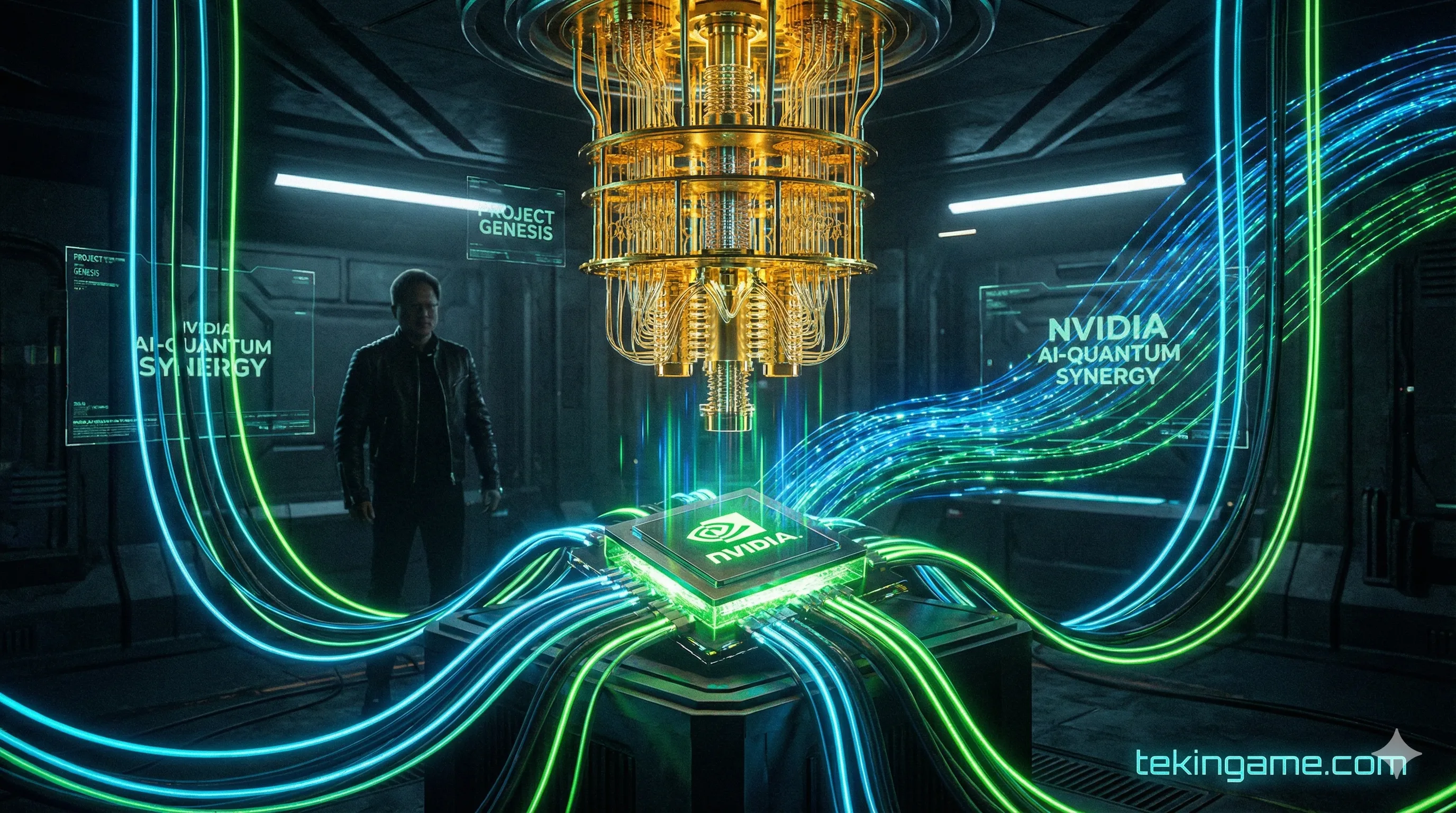
Jensen Huang, the charismatic, leather-jacket-wearing CEO of Nvidia, dominated the headlines again today. At a special briefing in Santa Clara, he unveiled the top-secret Project Genesis and officially requested billions in government funding to merge "Artificial Intelligence" with "Quantum Computing."
The Problem: Quantum Noise
Quantum Computers are the Holy Grail of computing. They can solve problems in seconds that would take current supercomputers thousands of years. However, they have one fatal flaw: Instability.
Qubits (Quantum bits) are incredibly fragile. A tiny change in temperature or a slight vibration causes "decoherence" or errors. Until today, scientists hadn't found a reliable way to correct these errors at scale.
The Nvidia Solution: The AI Supervisor
Nvidia claims to have cracked the code. Project Genesis involves connecting Nvidia's powerful Blackwell AI GPUs directly to Quantum Processors. The AI's job is to "monitor and predict" the behavior of Qubits. It learns the patterns of noise and corrects errors before they corrupt the data. It is essentially building a "Super-Brain" where the raw power of Quantum is tamed by the precision of AI.
Why does this matter?
If Genesis succeeds, we are looking at a scientific revolution:
1. Drug Discovery: Simulating molecular interactions to cure cancer or Alzheimer's could be done in days, not decades.
2. Material Science: Designing batteries with 10x the current density.
3. Cryptography: The scary part—these machines could theoretically break all current banking and military encryption codes in seconds. This is why Nvidia is involving the government immediately.
4. Security: Anatomy of the Rainbow Six Siege Hack; How Ubisoft Survived
The Rainbow Six Siege community can finally breathe a sigh of relief. After a chaotic 48 hours where hackers effectively seized control of the game's economy and servers, Ubisoft announced this evening that they have patched the vulnerability and regained control.
The Anatomy of the Hack
This cyberattack, already being dubbed "The Great Siege Crisis of 2026," was not a standard DDoS attack. Hackers managed to infiltrate the In-Game Store API.
The result was absolute chaos:
– Free Elite Skins: Premium skins that usually cost $20 each were suddenly unlocked for every player online, destroying the game's economy.
– False Bans: The game's anti-cheat system (BattleEye) became confused by the injected code and started banning innocent players. The famous streamer "Jynxzi" was permanently banned live on stream in front of 100,000 viewers!
– Rogue Messaging: Hackers displayed bizarre and offensive text in the main menu News Feed.

The Resolution & Rollback
Ubisoft's dev team issued a statement: "We identified a vulnerability in legacy store code and have deployed a hotfix."
Crucially, Ubisoft confirmed a global Server Rollback. This means the game state is being reverted to how it was 48 hours ago. All the free skins players "acquired" will disappear, and all false bans (including Jynxzi's) will be lifted. This event serves as a stark warning about the fragility of live-service digital economies.
5. Tools: The "Spot AI" Revolution; No-Code Agents for Cameras
Today, a new AI tool named Spot AI trended #1 on Product Hunt, signaling a massive shift for small business owners and home automation enthusiasts.
Until today, making a CCTV camera "smart" required expensive hardware or hiring a Python developer to write Computer Vision code. Spot AI has democratized this technology.
How does it work?
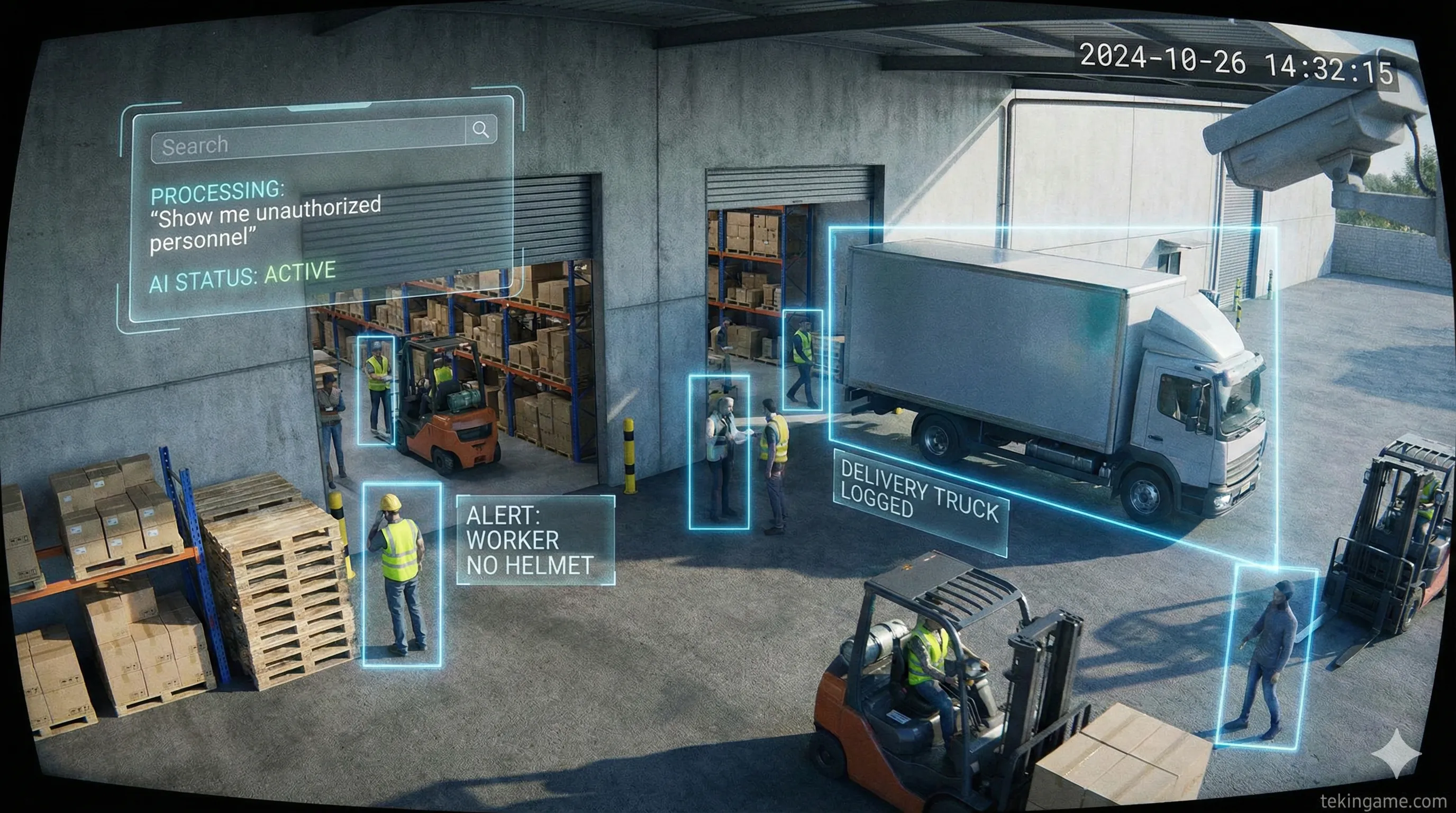
The platform connects to the RTSP stream of any standard security camera. It then allows you to create "Agents" using nothing but Natural Language.
Real-world examples users tested today:
– "Send me a WhatsApp message every time the yellow delivery truck stops at the gate."
– "Count how many customers stopped in front of the shampoo aisle and log the average dwell time in an Excel sheet."
– "Sound the alarm if a worker enters the factory floor without a hard hat."
The most impressive part? Spot AI claims to process this data via "Hybrid Edge Computing," meaning the analysis happens locally or on edge servers to protect privacy, ensuring your private video feeds aren't just floating around the cloud. It’s a move from "Generative AI" (text/images) to "Physical AI" (video/action).
6. Business: Samsung's Resurrection; AI Chips Triple Profits
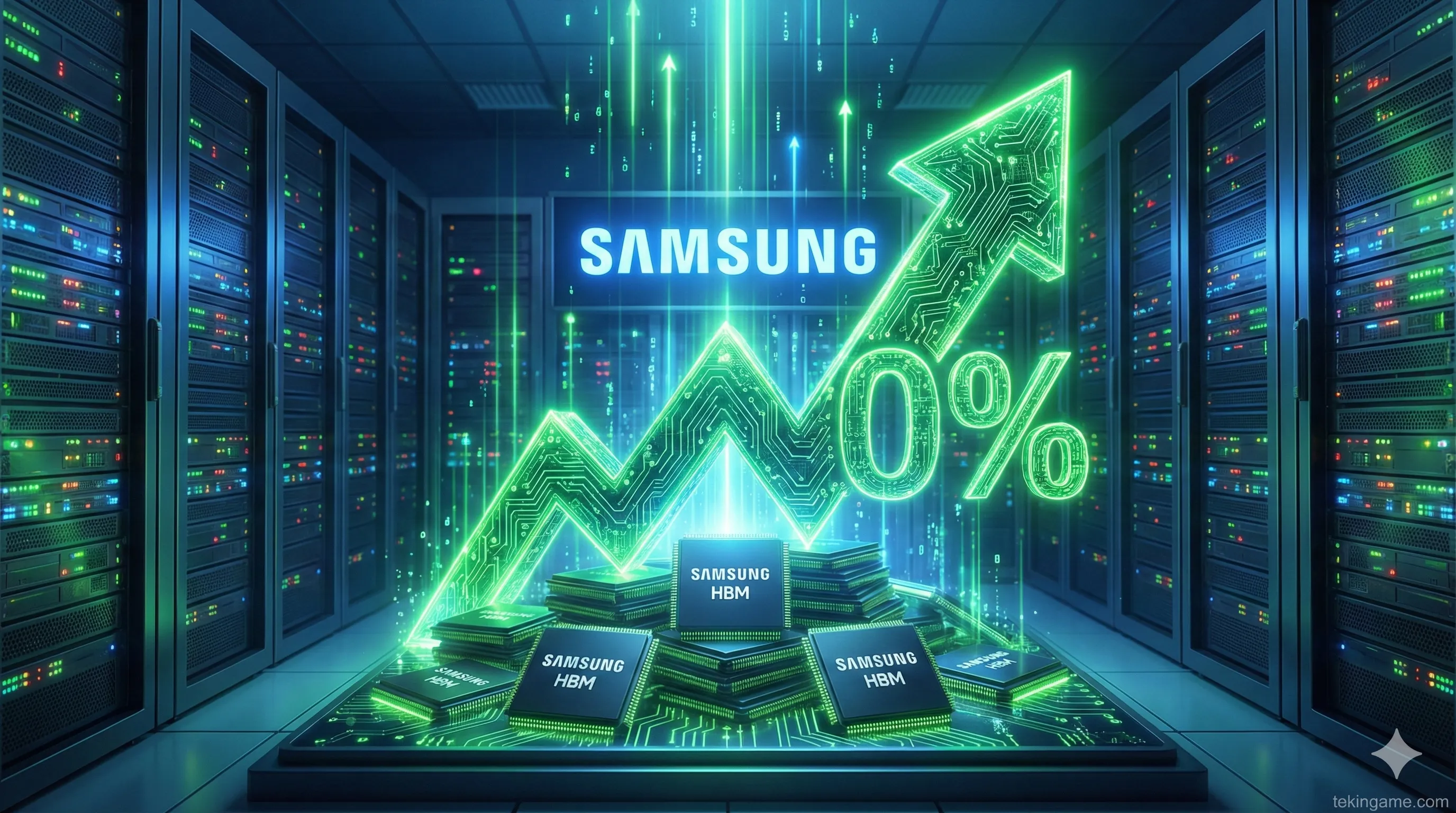
Finally, we end with the news that turned the South Korean stock market green. Samsung Electronics' confirmed financial report released this evening shows that the giant has awoken from its slumber.
Key Stat: Samsung's operating profit has jumped 300% (3x) year-over-year.
Economic Analysis: The "Pick and Shovel" Strategy
Last year, Samsung suffered heavy losses due to low global demand for smartphones and laptops. But their gamble on AI infrastructure paid off.
Currently, the bottleneck for global AI isn't just Nvidia's processors; it is High Bandwidth Memory (HBM). These stacked, ultra-fast memory chips are the only things capable of feeding AI GPUs. Samsung, having mastered HBM3E and HBM4 mass production, is now the primary supplier for the industry.
This massive influx of cash gives Samsung the freedom to take risks again. Projects like the Galaxy S26 AI-Native (which we reviewed in the previous article) are funded directly by this profit. It proves that even if the smartphone market is saturated, the "AI Infrastructure" market is the new gold mine. The King of Android has successfully rebuilt his war chest.
🌙 End of Tekingame Night Shift #1
That concludes our deep dive into the six events that shook the tech world in the last 24 hours.
From Samsung's design retreat to the terrifying potential of Quantum AI.
Which story shocked you the most?
Power down your terminals, grab some water, and get some rest. We will be back for the next shift at Tekingame Night #2! 💤