
Behind the backdrop of every major software revolution in recent years—from the rise of Gemini to AI-driven game development—a hidden but highly critical crisis is unfolding: the hardware crisis and the severe shortage of compute power. Currently, Nvidia stands as the undisputed king and ruthless dictator of Silicon Valley, commanding over 80% of the AI chip market share. The company's graphics processing units (GPUs), particularly the H100 series and the new Blackwell architecture, are so scarce and astronomically expensive that purchasing the
In the tech world, true, decisive wars are not always fought on monitor screens with lines of code. The most brutal, expensive, and ruthless battles are waged on a nanometer scale across pieces of silicon. Today, the global technology industry is gripped by an unprecedented crisis: the insatiable thirst for AI compute power. At the center of this battlefield stands a company aiming to permanently alter the physics and economics of the game: Google.
1. The End of Peacetime: Why Google is Going to War with Nvidia
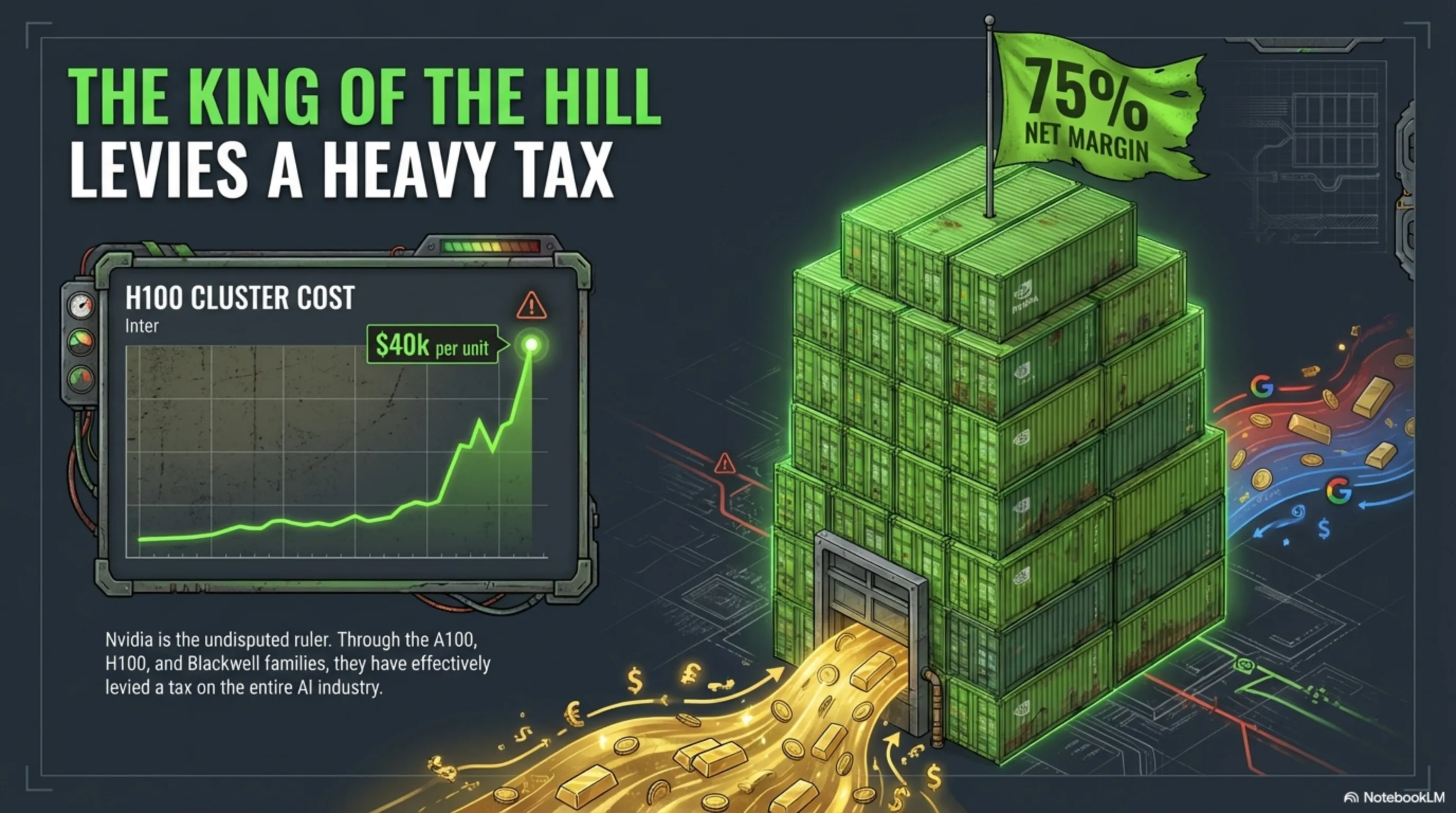
To understand the genesis of this historical conflict, we must examine the current hardware landscape. Nvidia, led by CEO Jensen Huang, recognized the potential of AI early on. Through its A100, H100, and now the Blackwell architecture families, Nvidia has crowned itself the undisputed ruler and dictator of the market. Nvidia doesn't just sell hardware; boasting legendary profit margins (sometimes exceeding 75% net), the company has effectively levied a heavy tax on the entire artificial intelligence industry.
1.1. Silicon Extortion and the Crisis of Training Costs
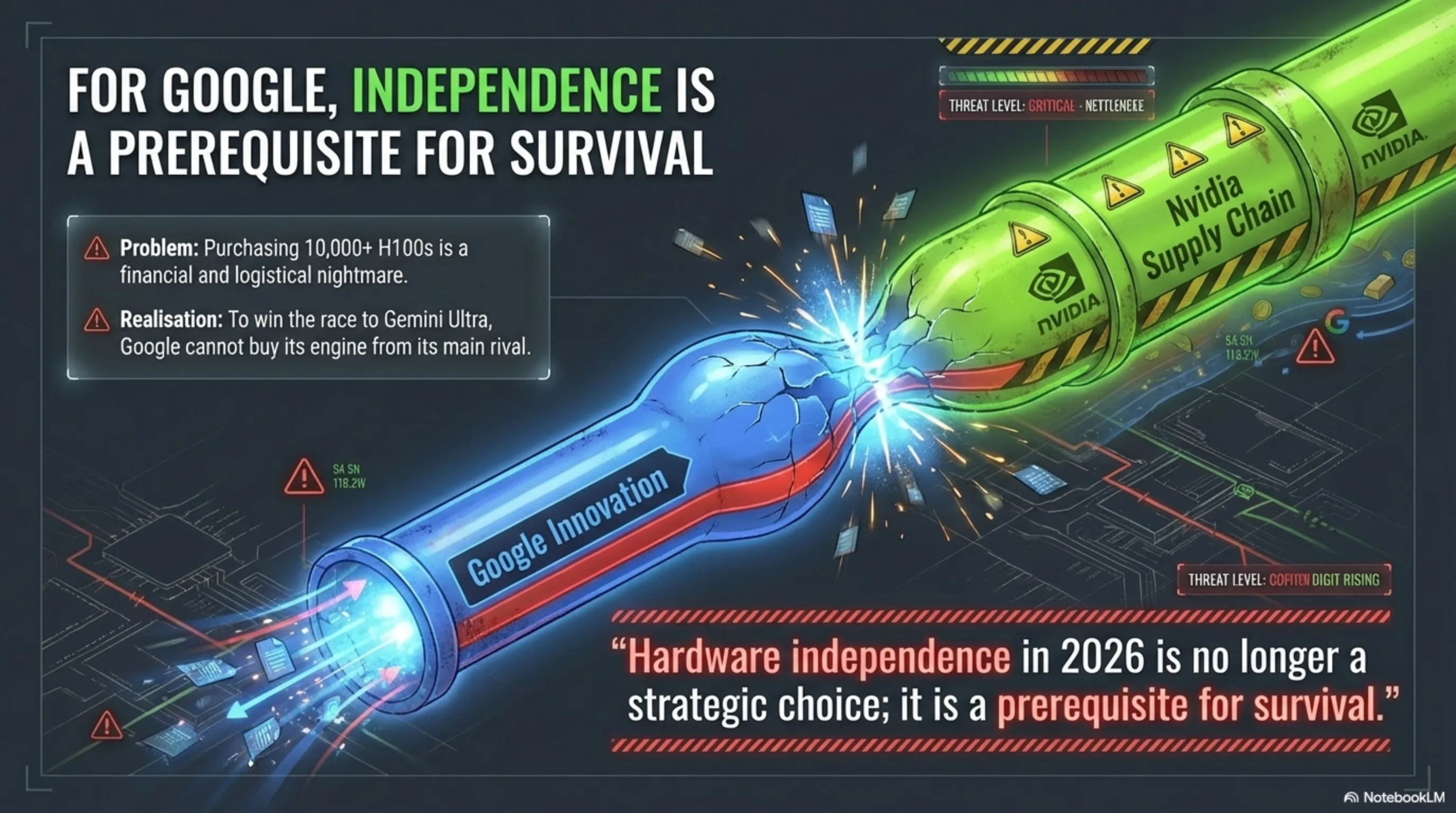
Companies like Google, Microsoft, Meta (Facebook), and OpenAI are Nvidia's largest clients. However, purchasing massive clusters of tens of thousands of H100 chips—at $30,000 to $40,000 a pop—is a terrifying financial and logistical nightmare, even for a company as wealthy as Google. Worse still, massive lead times and absolute dependence on Nvidia's supply chain have severely bottlenecked the pace of innovation for these tech giants. Google executives have reached a definitive conclusion: to win the AI race (and develop more powerful models like Gemini Ultra), they cannot keep buying their racecar engine from their main competitor. Hardware independence in 2026 is no longer a strategic choice; it is a prerequisite for survival.
2. Anatomy of a Weapon: What is a TPU (Tensor Processing Unit)?
Unlike Microsoft and Meta, who are only recently scrambling to design their own custom silicon, Google has been quietly iterating on its proprietary hardware in the absolute secrecy of its labs for over a decade. TPUs (Tensor Processing Units) are highly specialized chips designed by Google exclusively and specifically to execute machine learning algorithms and deep neural networks.
2.1. The Architecture Clash: ASIC vs. General Purpose GPU
Nvidia's Graphics Processing Units (GPUs) were originally designed to render video game graphics (like shading and pixel processing) and were later brilliantly repurposed for AI computations. They are "General Purpose" processors that perform a variety of tasks exceptionally well. In stark contrast, Google's TPUs are Application-Specific Integrated Circuits (ASICs). They have zero comprehension of rendering graphics; they do one thing and one thing only: massive Matrix Multiplications. This mathematical operation happens to be the beating heart of all neural networks and Large Language Models (LLMs).
Because of this hyper-focused, single-minded engineering, TPUs (especially newer generations like the TPU v5p) lack the superfluous transistors ("Dark Silicon") found in GPUs. Consequently, they consume significantly less power, generate less heat, and offer a vastly superior Cost per FLOP (Floating-Point Operation) when training and running LLMs compared to their Nvidia counterparts.
3. The CUDA Software Moat: Nvidia's Greatest Defense
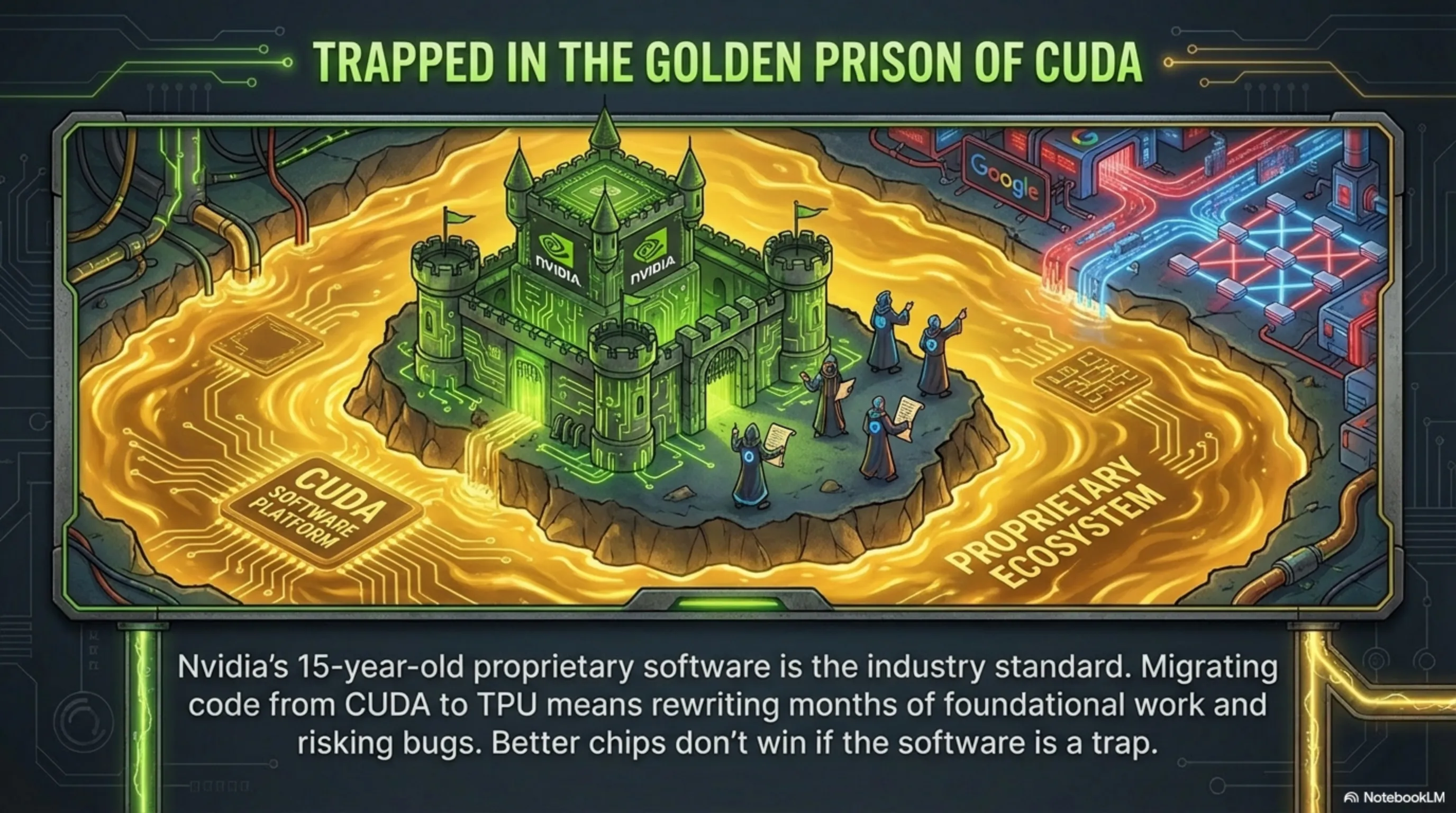
If Google's TPUs are architecturally more efficient for AI, why haven't they replaced Nvidia yet? The answer to this massive riddle lies in a four-letter word: CUDA. CUDA is Nvidia's proprietary software platform and Application Programming Interface (API), introduced over 15 years ago, which has since become the inescapable, golden standard for AI programmers worldwide.
3.1. Why is Escaping the Golden Prison of CUDA So Difficult?
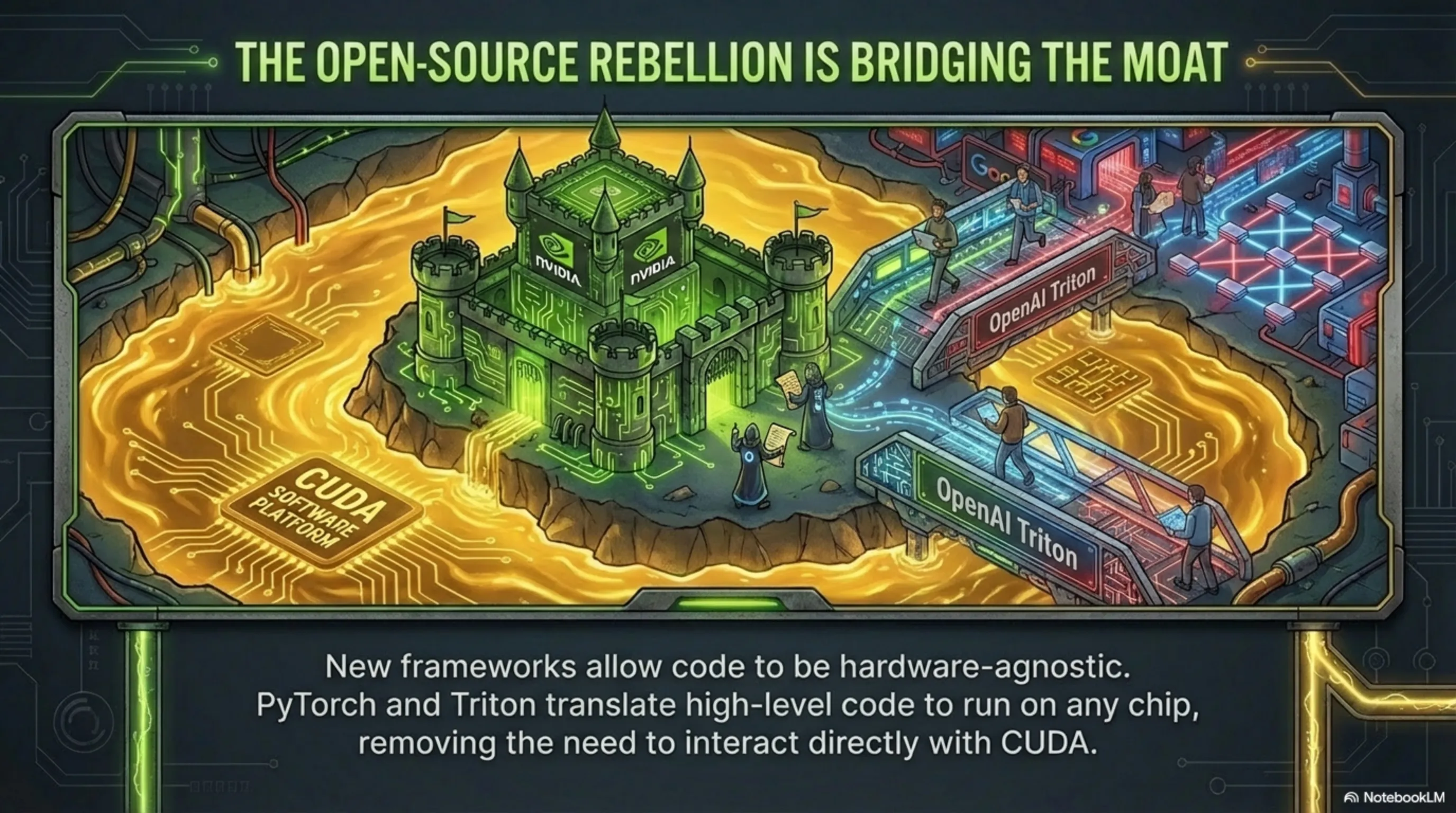
Through the intelligent development of CUDA, Nvidia has dug an incredibly deep "Software Moat" around its hardware castle. Most popular AI frameworks are heavily optimized at the lowest levels to run flawlessly and bug-free exclusively on CUDA architecture. When a startup writes its foundational code based on CUDA libraries, migrating to different hardware (like Google's TPU or AMD's Instinct chips) means rewriting months of foundational code, facing severe performance degradation, and battling unknown bugs. Google's primary war is not against Nvidia's physical silicon; it is a psychological and software battle to convince engineers to break out of this "Golden Prison."
4. Tokenomics: Why TPUs are Cheaper at Massive Scale
To understand Google's strategy, we must look at the concept of "Tokenomics" in AI. When you ask an AI (like ChatGPT or Gemini) a question, the cost of generating the answer is calculated by processing each word (Token). When a system has millions of concurrent users, a difference of a tenth of a cent in processing a single token translates to billions of dollars in savings or losses annually.
Because of their ultra-fast on-chip networking design (Optical Circuit Switches), Google's TPU chips perform pure magic when connecting thousands of processors together (Cluster Scaling). For massive LLMs that cannot fit on a single chip and must be distributed across thousands of processors, TPUs exhibit far less speed degradation than Nvidia clusters. This means Google can drastically reduce the inference cost of every single token, allowing them to obliterate competitors in the AI API pricing wars.
5. Google's Scorched-Earth Strategy in the Cloud
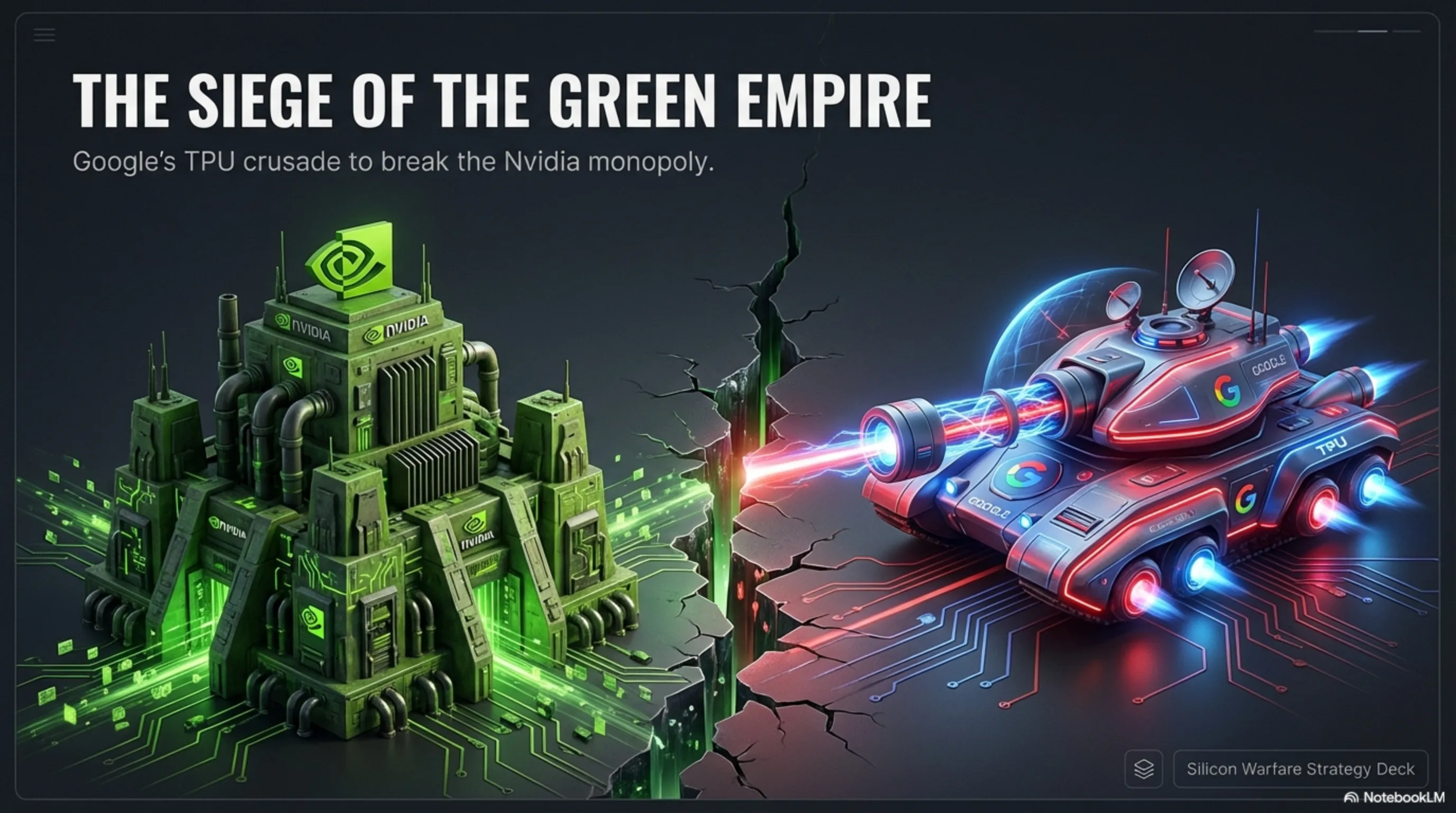
Reports from the Wall Street Journal and top financial analysts suggest that Google intends to drop its nuclear weapon in this fight: its legendary cash reserves exceeding $100 billion!
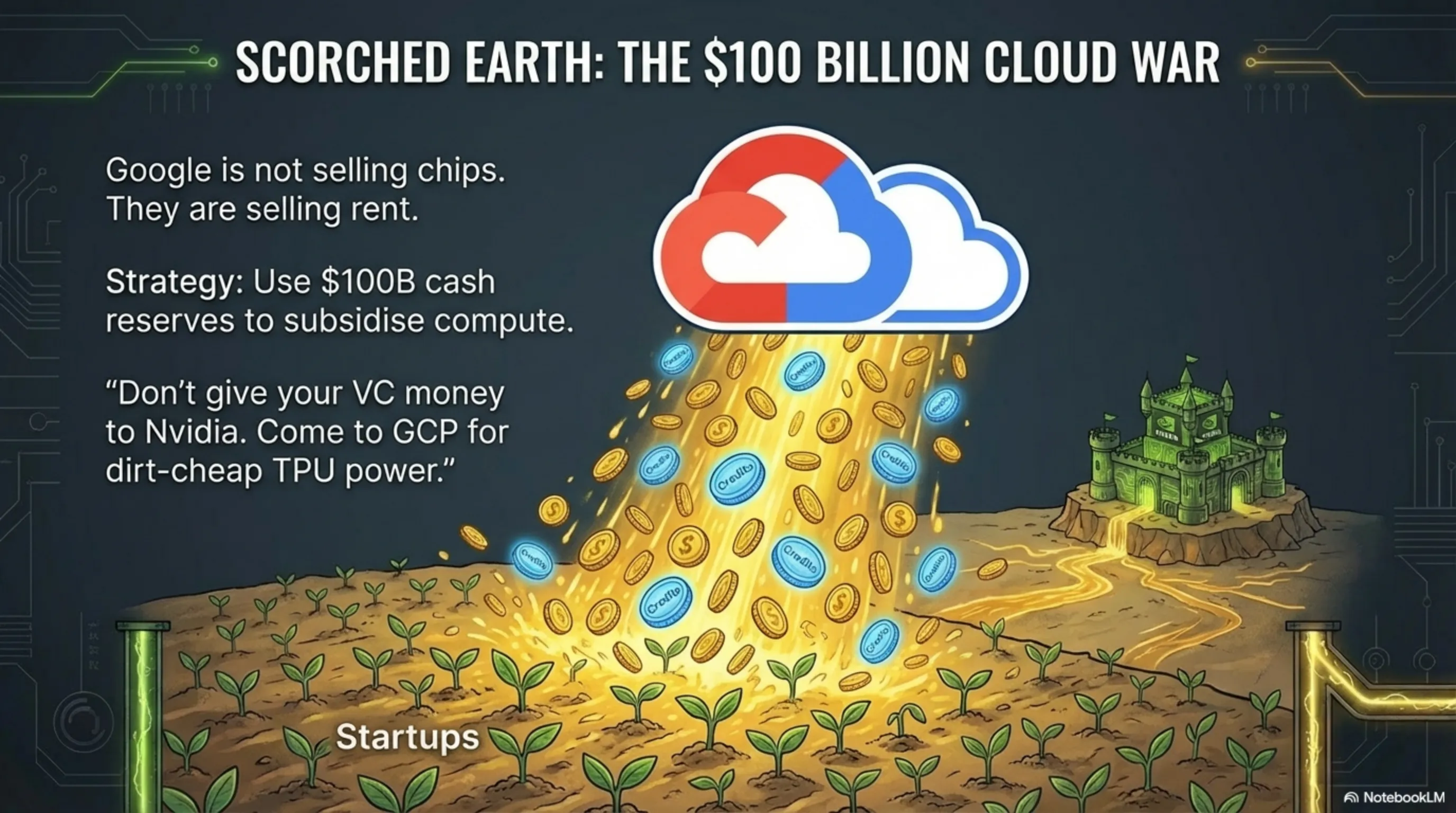
Google's strategy is not to sell physical chips on the open market (like Nvidia or Intel do). Google wants to drag startups into its cloud ecosystem: Google Cloud Platform (GCP). Their tactic is a classic "Scorched Earth" strategy. Google is pitching AI startups: "Instead of handing millions of your venture capital to Nvidia to buy physical servers, come to our cloud. We will provide you with compiler tools (like XLA) to translate your code to TPU-code for free, and we will rent you TPU compute power at heavily subsidized, dirt-cheap prices." Google is fully prepared to lose billions of dollars in the short term to annihilate Nvidia's market share in the cloud space and addict clients to the Google ecosystem.
6. The Collateral Damage: AMD, Intel, and Custom Silicon
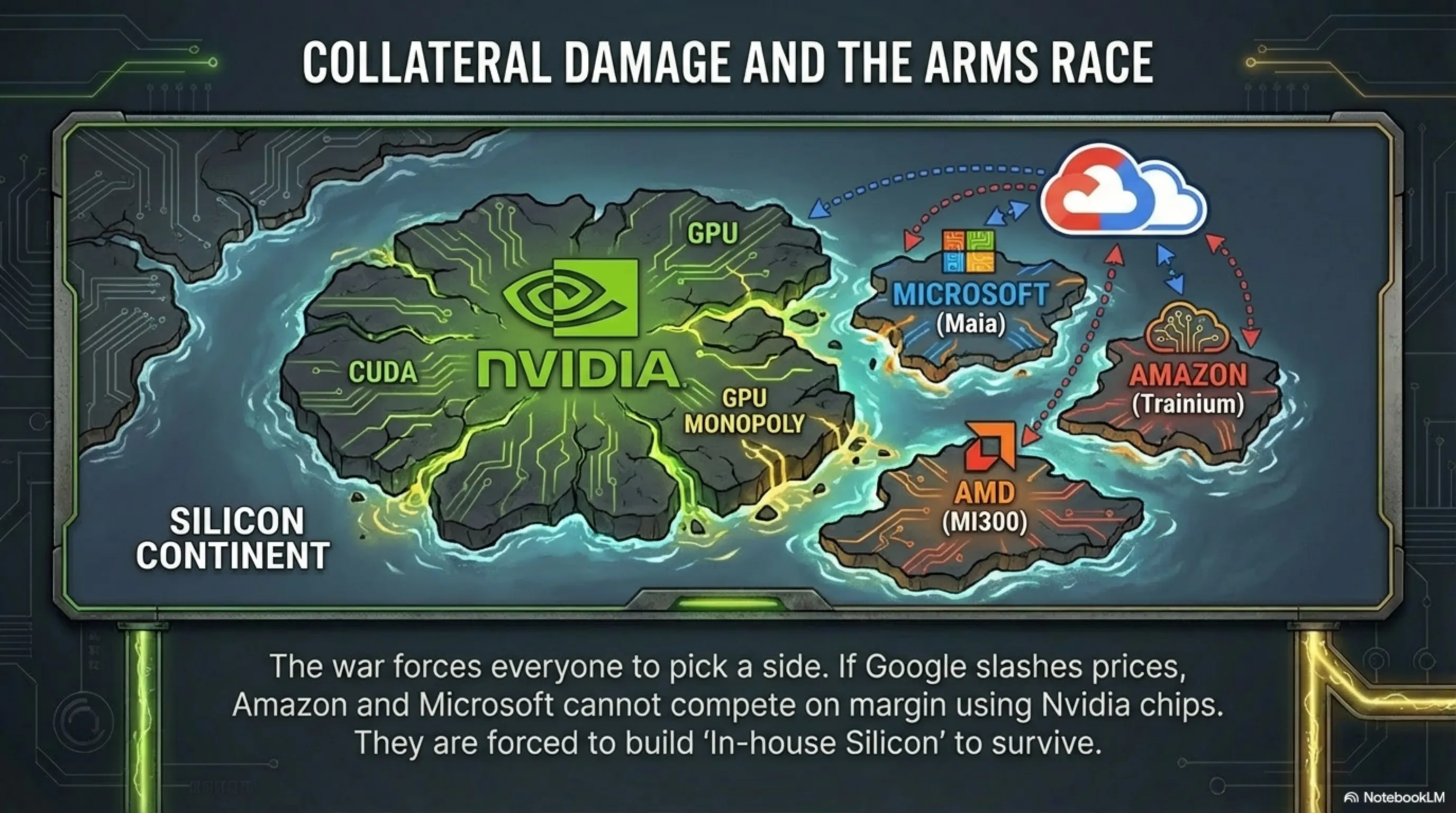
This battle is not just between two titans (Google and Nvidia); the shrapnel from this war will strike Microsoft, Amazon, and traditional chipmakers. Currently, AMD is striving to be a viable alternative to Nvidia with its MI300 chips, but they too struggle with the lack of a powerful software ecosystem comparable to CUDA.
On the other hand, rival Cloud Providers have sensed the danger. Microsoft (with Maia chips) and Amazon (with Trainium and Inferentia chips) are heavily investing in developing their own custom silicon. If Google succeeds in slashing AI processing prices with TPUs, Microsoft (Azure) and Amazon (AWS)—who remain heavily reliant on purchasing expensive Nvidia chips—will lose their ability to compete on price. This war has triggered a frantic arms race to build "In-house Silicon."
7. The Open-Source Rebellion: PyTorch and Triton vs. Nvidia
Google's most vital ally in this war is the global Open-Source software community. Developers worldwide are exhausted by Nvidia's monopoly. The immensely popular framework PyTorch 2.0 (backed by Meta) has made fundamental changes to its compiler to be far less hardware-dependent.
Furthermore, the powerful Triton project (developed by OpenAI) is a language that allows programmers to write code that runs with maximum performance across various hardware (including AMD chips and potentially TPUs) without needing to interact directly with CUDA. This open-source software rebellion is slowly but surely filling in Nvidia's defensive moat, paving the way for alternative hardware like TPUs to triumph.
8. Consequences for Developers, Startups, and the Gaming Industry
For independent developers, small startups, and the gaming industry (which is starving for smart NPCs and generative content), this war is incredibly liberating news. A monopoly always guarantees high prices, restricted access, and sluggish innovation.
Google's full-scale entry into the AI compute market will trigger a bloody Price War. As compute prices shatter, more startups will be able to execute their wildest ideas without needing to raise hundreds of millions of dollars in venture capital. If an indie studio wants to build a game with worlds generated entirely on-the-fly by AI (similar to Google's Genie project), the subsidized, cheaper processing of TPUs in the cloud will finally make this dream economically viable.
9. Final Conclusion: Will the Green Empire Fall?
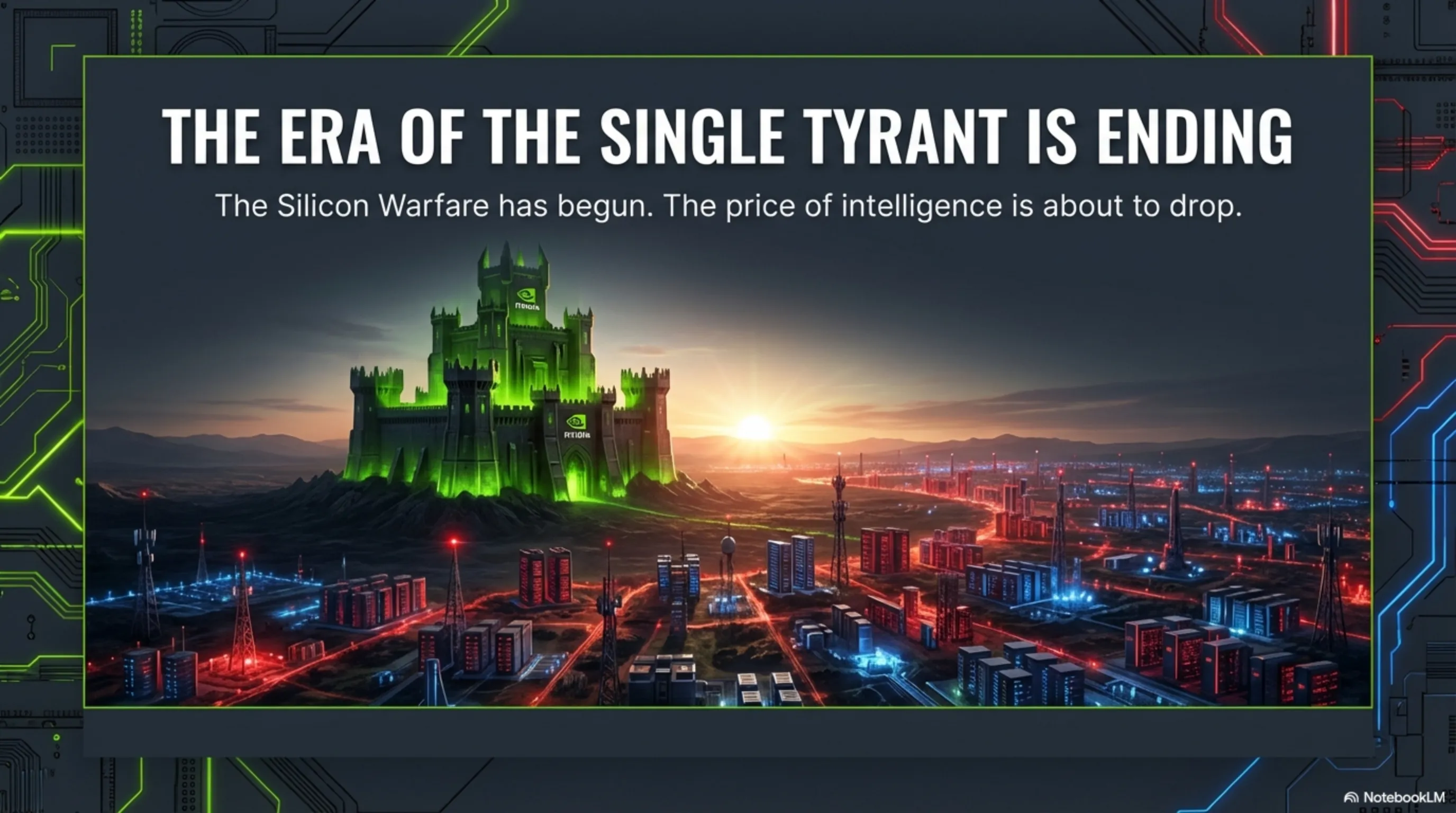
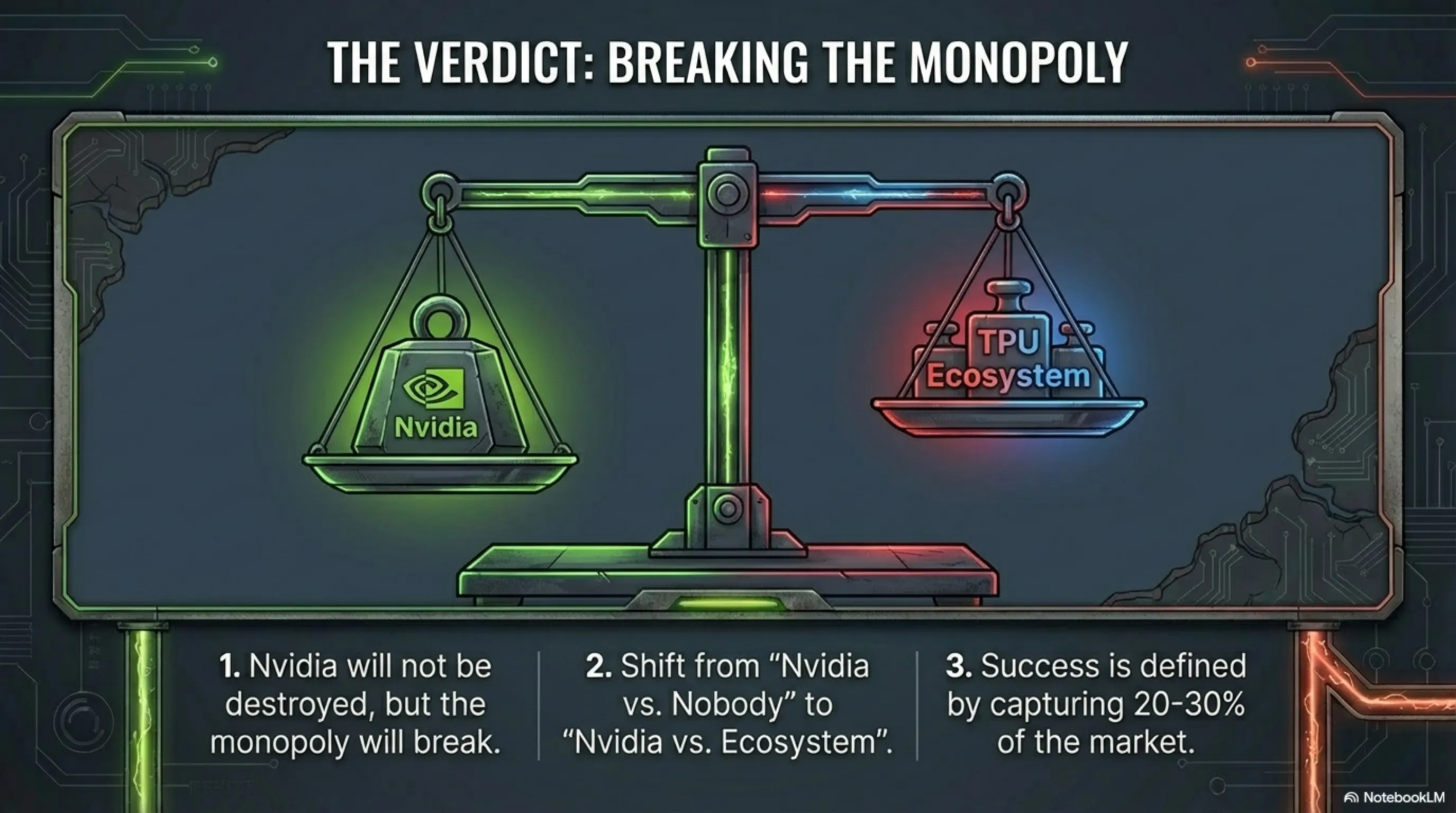
Can Google, with all its wealth and infrastructure, completely destroy Nvidia? The short answer: No. At least, not in this decade. The CUDA software moat is too deep, and engineering loyalty to it is too strong to be overcome by a sudden blitzkrieg. Furthermore, Nvidia has proven its extraordinary pace of innovation; its new architectures show the company has no intention of taking its foot off the gas.
But Google doesn't need to completely destroy Nvidia. Google's objective is to break the absolute monopoly and shift the market dynamic from "Nvidia vs. Nobody" to "Nvidia vs. the Google Ecosystem." If Google can migrate just 20% to 30% of the massive AI compute market onto its TPU infrastructure and habituate startups to its platform, it will be a historic, economic, and strategic victory for the engineers in Mountain View—one that will alter the balance of power in Silicon Valley forever.
The Final Verdict: Tekin Analysis Newsroom
- 💻 The End of a Dangerous Monopoly: Nvidia's absolute hegemony over the AI hardware market has been the primary bottleneck for technological progress. Google's aggressive push with TPUs is vital CPR for the industry.
- 💻 The Secret Weapon: Cloud Subsidies: Google isn't selling chips; it's selling an ecosystem. Google is willing to bleed billions to rescue startups from Nvidia's expensive hardware by offering deeply subsidized cloud servers.
- 💻 The Deep CUDA Moat: Nvidia's superiority isn't just in silicon; it's in software. Until open-source projects like OpenAI Triton and PyTorch 2.0 can fully sever code dependency on Nvidia, programmers will resist the shift.
- 💻 Who is the Ultimate Winner? Startups and Game Developers! Competition between titans always benefits the end-user. The impending price war will drastically cheapen AI development in the coming years.
Do you think Google's massive infrastructure and cash can successfully challenge Nvidia's kingdom? As a developer, would you prefer to build on Nvidia servers or cheaper Google TPUs? Share your expert thoughts in the comments below!