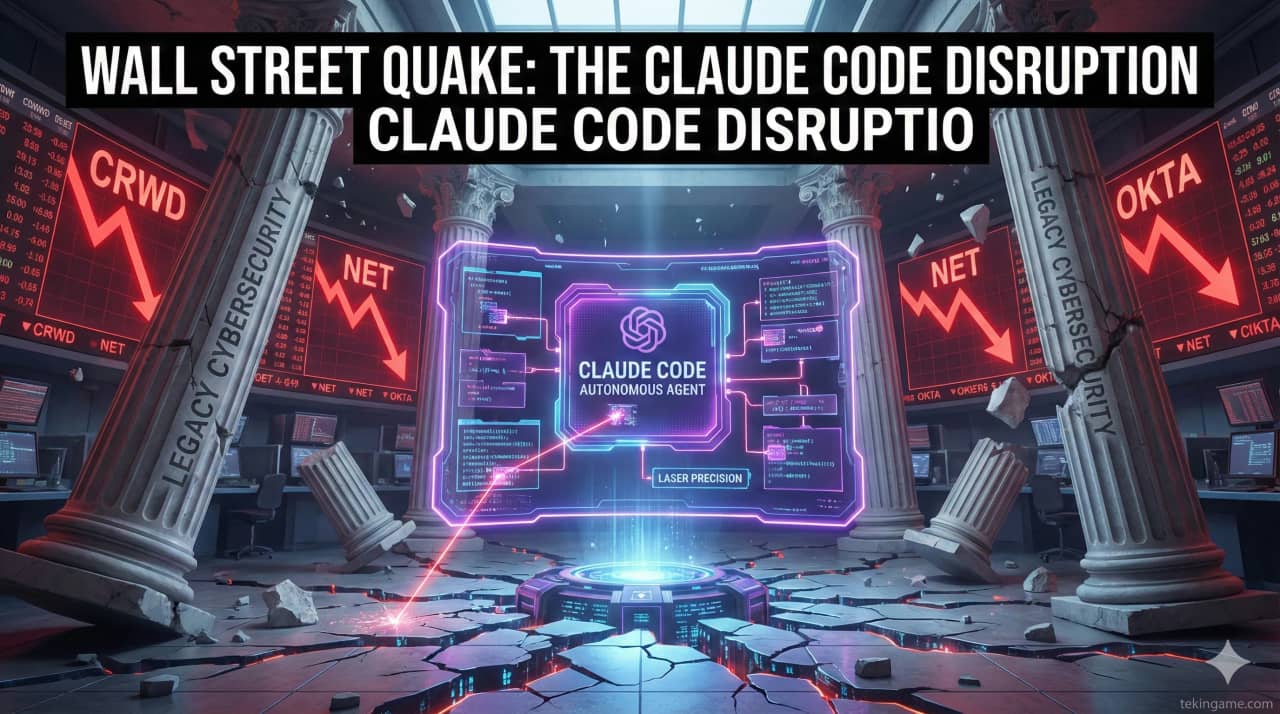
February 2026 will be recorded in tech history as the day AI evolved from an "advisory assistant" to an "autonomous surgeon" within the terminal environment. The introduction of Claude Code by Anthropic triggered an 8.0-magnitude earthquake on Wall Street, causing an 8-10% freefall in the undisputed leaders of the cybersecurity market (including CrowdStrike, Cloudflare, and SailPoint). This mega-article from Tekin Garage dissects the intersection of the "Silicon Economy" and "Algorithmic Security." We specifically examine how reducing the Mean
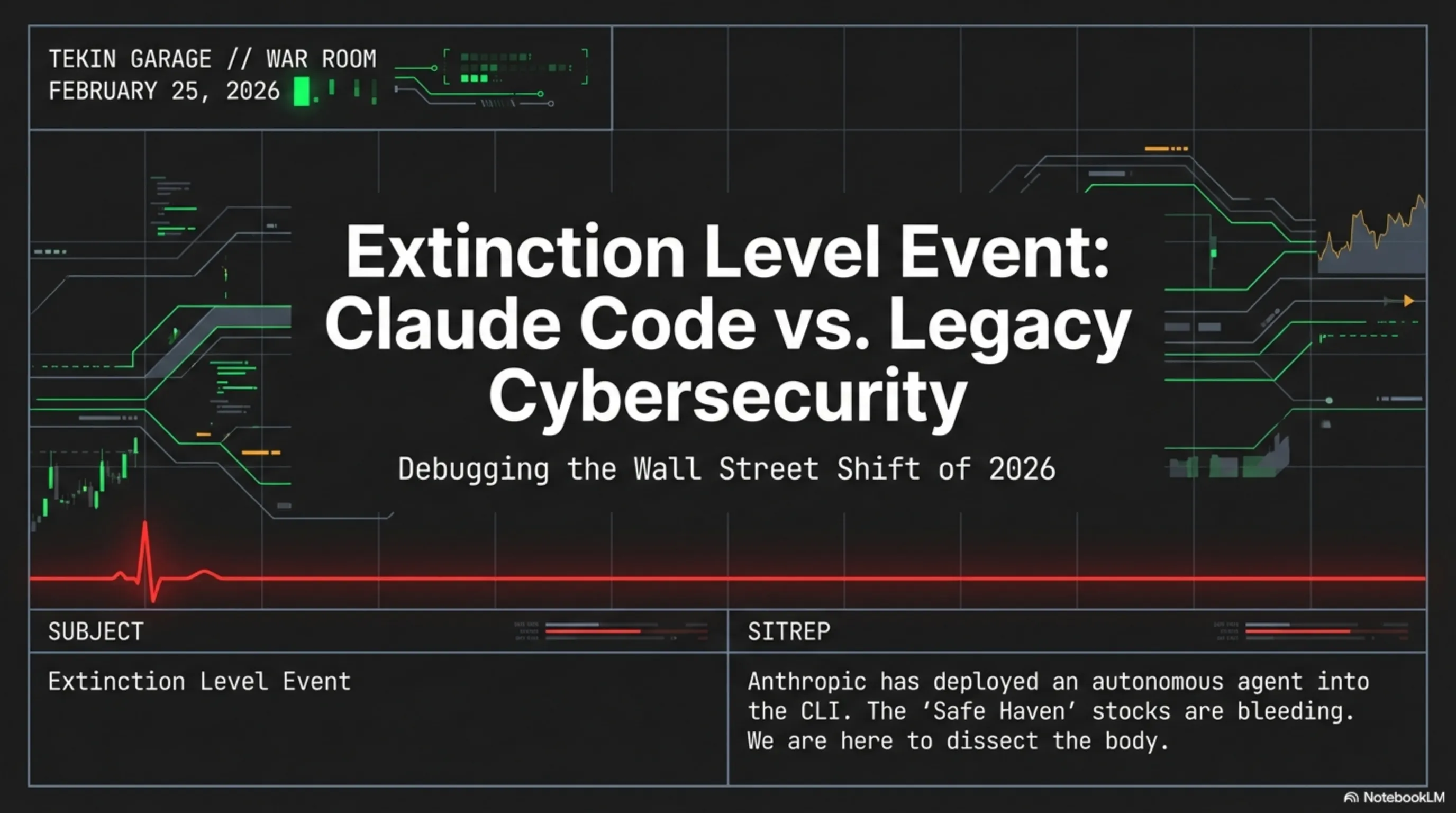
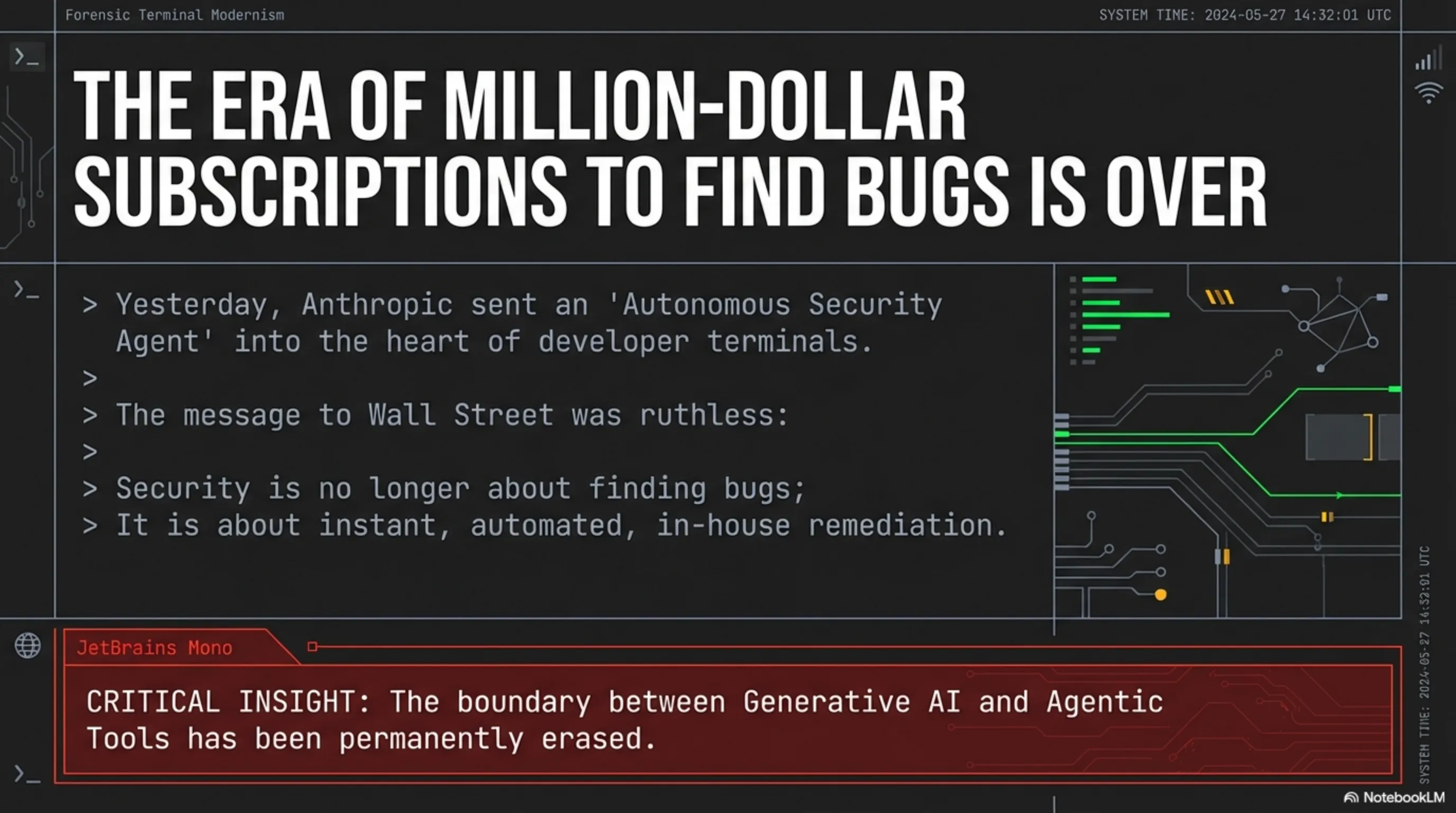
Welcome to the Tekin Garage War Room. Today is February 25, 2026, and our radars are tracking a "digital bloodbath" on the New York Stock Exchange. If until yesterday AI was only writing simple code, drafting copywriting text, or composing marketing emails, today Anthropic has sent an "Autonomous Security Agent" directly into the heart of servers and developer terminals with the introduction of Claude Code. The message broadcasted to Wall Street yesterday was ruthless, clear, and historic: "The era of paying million-dollar subscriptions just to find bugs is over; it is now the era of instant, automated, and in-house remediation." Your Chief Inspector is ready to debug the codes of this economic shift across 7 strategic layers, line by line.
1. Dissecting Claude Code's Architecture: Beyond a Chatbot, the Rise of the CLI Autonomous Agent
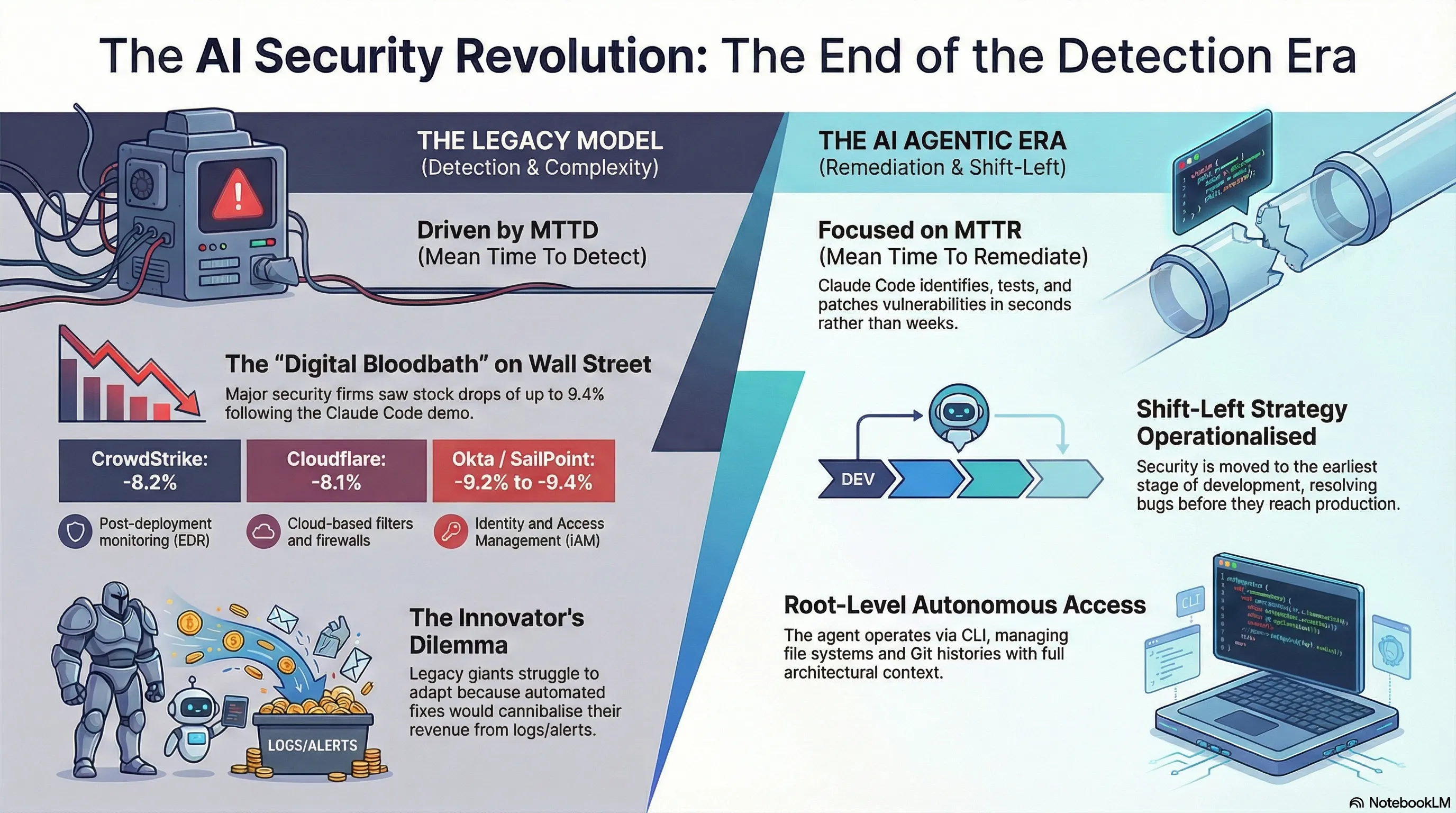
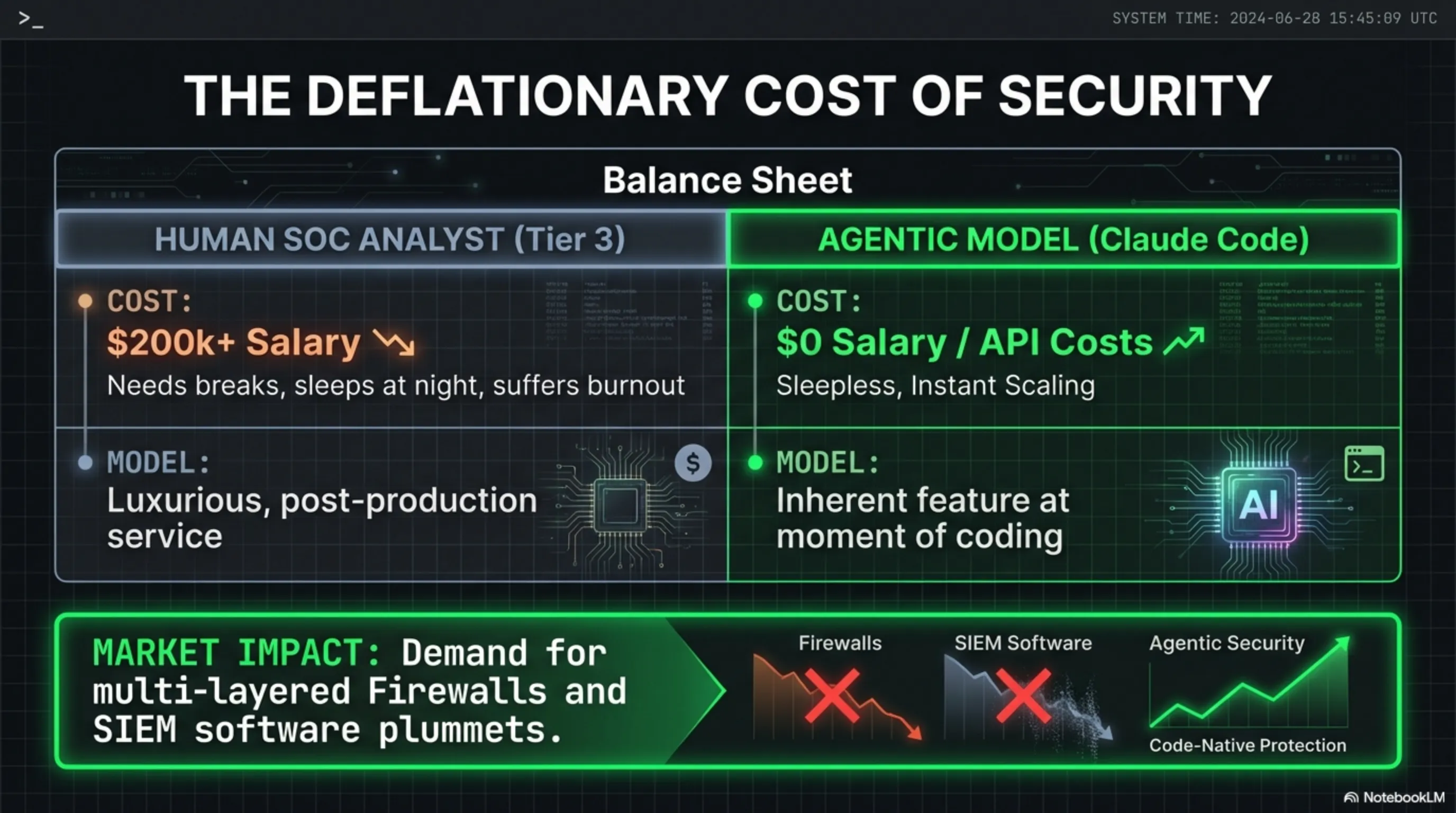
The biggest mistake amateur analysts make is treating Claude Code as a simple coding assistant (a basic API wrapper similar to early versions of Copilot). With this product, Anthropic has permanently erased the boundary between Generative AI and Agentic Tools. Claude Code runs directly in your Command Line Interface (CLI). This means it has Root-level access to all project files, can read Git transaction histories, execute Bash commands personally, debug system logs, and most importantly: It understands the complete context of your software architecture within a massive context window.
When a complex security vulnerability (such as a deep SQL Injection flaw or an authentication logic error) is identified, this tool doesn't just generate a text warning in the IDE. Instead, it scans the development environment, locates the chained files involved, writes the security patch algorithmically, builds and runs Unit Tests to ensure the system doesn't break from the patch, and finally replaces and commits the secure code. This effectively eliminates the lengthy security auditing processes that previously cost SOC (Security Operations Center) teams weeks of time and thousands of dollars.
2. Black Monday on Wall Street: Financial Analysis of the CRWD, NET, and OKTA Freefall
Immediately following Anthropic's stunning demo release, the capital markets reacted with severe nervous shock. The stocks of giants that had been known for years as "Safe Havens" for institutional investors, boasting legendary Annual Recurring Revenue (ARR) models, went into freefall. This wasn't a simple price correction; it was a fundamental shift in perception:
- CrowdStrike (Down 8.2%): Their Endpoint Detection and Response (EDR) platforms are world-class, but investors are deeply terrified of the future. If developers can use autonomous AI to write code that is secure By Design, and Zero-day vulnerabilities are patched proactively at the source code level, the need to install expensive EDR sensors on thousands of servers for "post-deployment" monitoring drops drastically.
- Cloudflare (Down 8.1%): Although Cloudflare is the undisputed king of the network and content delivery layer, a massive chunk of its revenue comes from Web Application Firewalls (WAF) and Layer 7 defense systems. The market fears that Agentic tools can build highly optimized, local security architectures, in-app encryption, and input validation that diminish the need for expensive cloud-based filters.
- Okta & SailPoint (Down 9.2% and 9.4%): The titans of Identity and Access Management (IAM). With the rise of Claude Code, a small team of developers can build custom, highly complex, and ultra-secure tokenization and access management systems in-house, debugging them in real-time, for a fraction of the cost of these companies' multi-million-dollar licenses.
3. The Paradigm Shift (MTTD vs. MTTR): The Death of "Detection" and the Birth of "Automated Remediation"
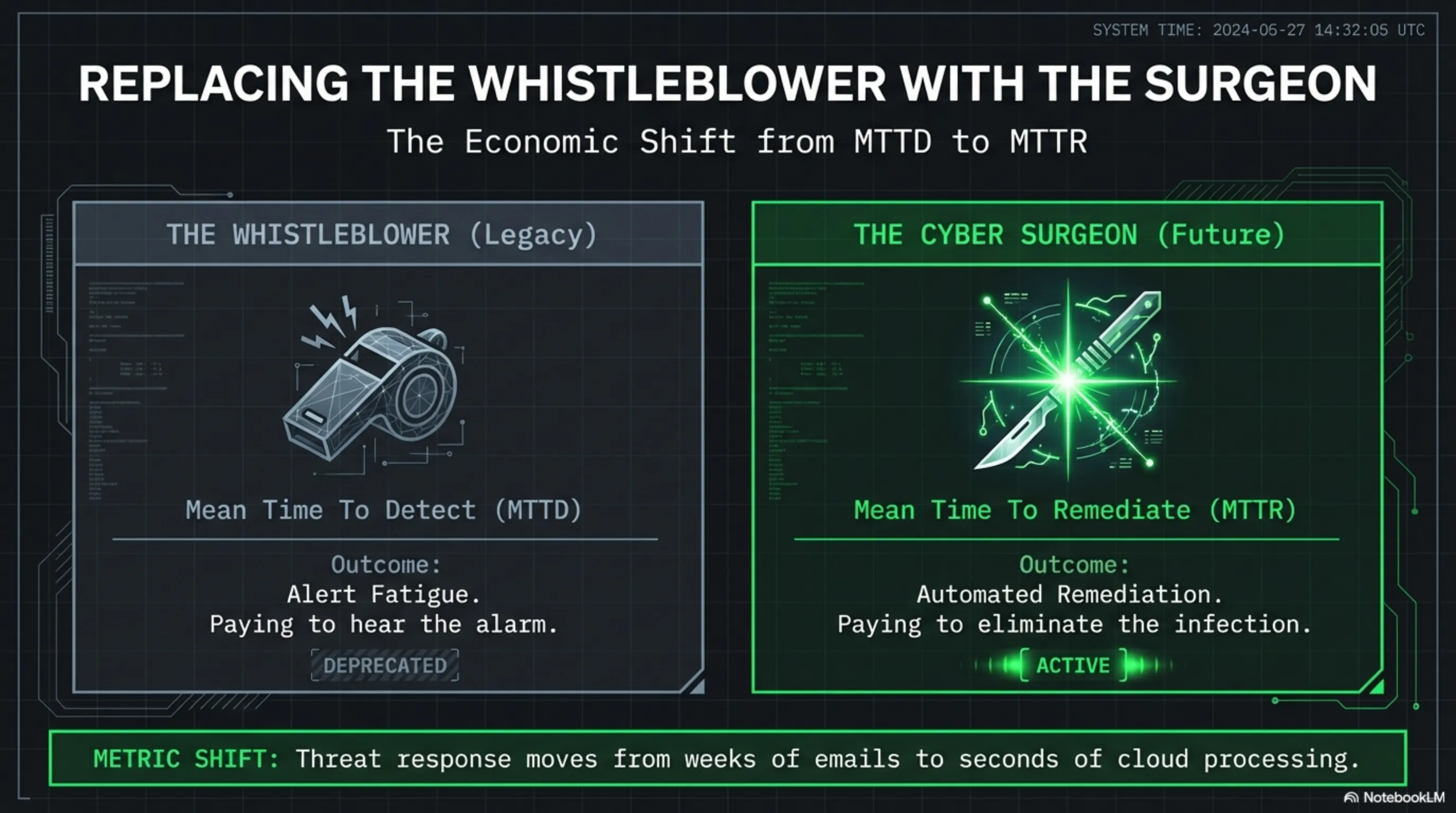
For the past two decades, the highly lucrative cybersecurity business has been built exclusively on "Detection" and "Vulnerability Assessment." The primary industry metric was reducing MTTD (Mean Time To Detect). You paid massive sums to security firms to give you hundreds of complex dashboards and generate thousands of daily alerts telling you where the hacker was. This led to a destructive phenomenon known as "Alert Fatigue" among security engineers, where real threats were lost in the noise.
However, Claude Code has shifted the paradigm toward "Remediation" and the MTTR (Mean Time To Remediate) metric. In this New Order, you no longer need a police officer who only blows a whistle and sounds an alarm; you need a cyber surgeon who eliminates the infection with pixel-perfect precision before it spreads across the network. Reducing the threat response time from weeks of back-and-forth emails between security teams and developers to seconds of cloud processing has pierced the beating heart of traditional Wall Street revenues.
🛠️ Inspector's Strategic Lab (The Innovator's Dilemma):
Why don't companies like CrowdStrike or Palo Alto build these code-remediation tools themselves? This is the exact "Innovator's Dilemma" proposed by Clayton Christensen. Their Business Model is based on "selling complexity," "analyzing massive logs," and "subscriptions for continuous monitoring." If they build a tool that permanently secures a customer's code from the root, log volumes will drop, alarms will stop, and they will effectively Cannibalize their current billion-dollar product. This is the blind spot and fatal weakness of Legacy giants against agile AI startups.
4. The Economics of Security: Why Legacy Giants Cannot Compete with AI
For years, security giants have reaped massive profits based on "fear," "compliance," and the "increasing complexity of hybrid networks." As cyber threats (like ransomware) become more complex, the need for Tier 3 human analysts in Security Operations Centers (SOCs) increases, resulting in the sale of more expensive service packages.
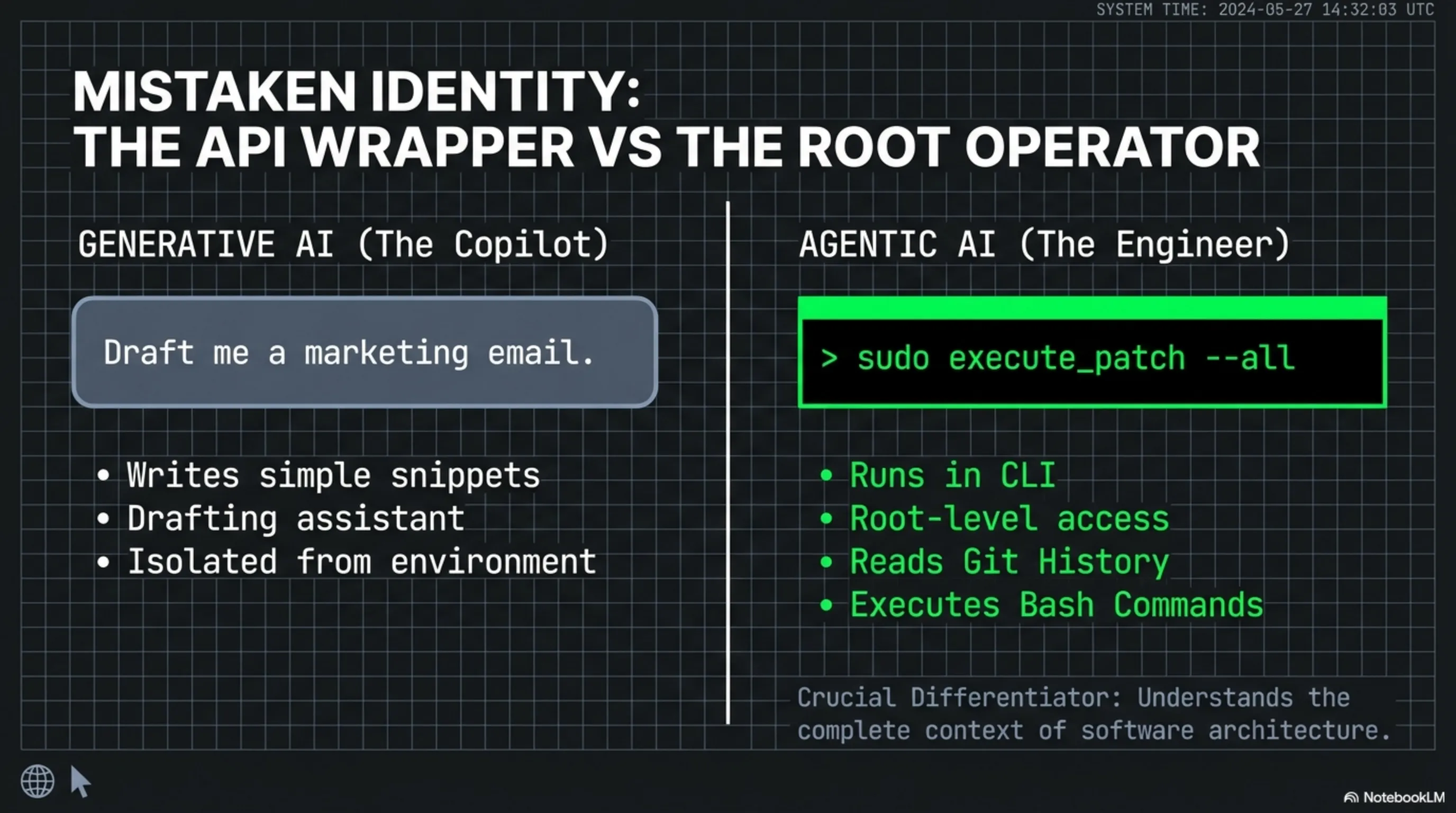
But when Agentic AI enters the battlefield, we face the unprecedented phenomenon of the "Deflationary Cost of Security." An AI model doesn't demand a $200,000 salary, doesn't need breaks, doesn't sleep during the night shift, and doesn't suffer from burnout. When security transforms from a "luxurious, post-production side service" to an "inherent feature at the exact moment of writing code" (Code-Level Security), organizations' need to purchase expensive multi-layered Firewalls and SIEM software plummets.
5. Absolute Shift-Left Strategy: Democratizing Security in the CI/CD Pipeline
In the world of software engineering, there is a strategic concept called Shift-Left; meaning moving security testing and reviews to the left side of the development cycle (the early stages of writing software), before the code reaches Production. Until now, truly implementing Shift-Left required hiring hyper-specialized DevSecOps engineers—which was like finding a needle in a haystack in the job market.
Claude Code operationalizes this exact strategy at near-zero cost. This tool places the power of an entire cyber army and a professional Red Team into the hands of a Solo Developer. A junior programmer can now, before committing their code, resolve all security bugs, memory leaks, SQL injection risks, and cloud misconfigurations with a simple command in the terminal. This democratization of security, while a miracle for the future of software quality, is an absolute financial disaster for companies that monetized the "monopoly of security knowledge."
6. The Future of Security Engineers and the New CISO: From Bug Hunter to AI Fleet Manager
The stock market crash does not mean the end of human security engineers, but rather a transformation of their jobs. Chief Information Security Officers (CISOs) will no longer spend their budgets buying useless monitoring dashboards. The role of the security engineer is upgraded from a "manual log hunter" to an "AI Fleet Manager." Humans will design macro-level defense strategies, write access policies, and allow autonomous agents like Claude Code to do the dirty, grueling work of patching millions of lines of code in seconds.
📊 The Tekin Verdict
The 8 to 10% crash of cyber giants in late February 2026 was not merely a temporary Market Correction; it was an "Extinction Notice" for traditional security methods. Anthropic proved with Claude Code that in the AI era, the best defense is not deploying human guards behind network walls, but attacking bugs at inception, right at the programmer's keyboard.
The losers of this battlefield are the companies that still want to sell "dashboards full of alerts" and "threat reports," adding to the complexity. The absolute winners are the startups and developers using AI as a scalable cyber surgeon. Tekin Garage predicts that a massive wave of Mergers and Acquisitions (M&A) will soon hit Wall Street; to escape death, Legacy Vendors will have no choice but to pay billions of dollars to buy and devour Agentic AI startups. Keep your systems on high alert, the silicon war has entered a bloody new phase!