
1. The Leak Anatomy: 16,000 Empty Chairs and the "Dawn" of Automation
Let’s push past the initial shock and look at the hard data. According to internal documents verified by TekinGame insiders and multiple industry sources, Amazon has officially initiated Phase 2 of its workforce restructuring under the codename Project Dawn. This represents the largest layoff in the company's history explicitly driven by "Technological Replacement."
The Breakdown of the Purge:
Contrary to the popular belief that automation only targets blue-collar warehouse jobs, the "White Collar" sector is the primary target this time:

- 40% (6,400 roles): Customer Experience & Order Management (Being replaced by next-gen Voice AI agents capable of simulated empathy).
- 35% (5,600 roles): Logistics & Supply Chain Logic (Replaced by predictive demand algorithms).
- 25% (4,000 roles): Software Engineering, specifically QA Testers and Entry-Level Developers.
These 4,000 programmers were the ones handling routine tasks: writing Unit Tests, debugging simple legacy code, and converting Figma designs into HTML/CSS. Project Dawn has proven that a proprietary Large Language Model (LLM) can perform these tasks with lower error rates and near-zero latency.
2. The Cold Math: Why Wall Street Loves "Project Dawn"
To understand this tragedy, you have to think like Andy Jassy (Amazon CEO). It is not about malice; it is about efficiency metrics. Let’s do a "napkin calculation" to see the reality:
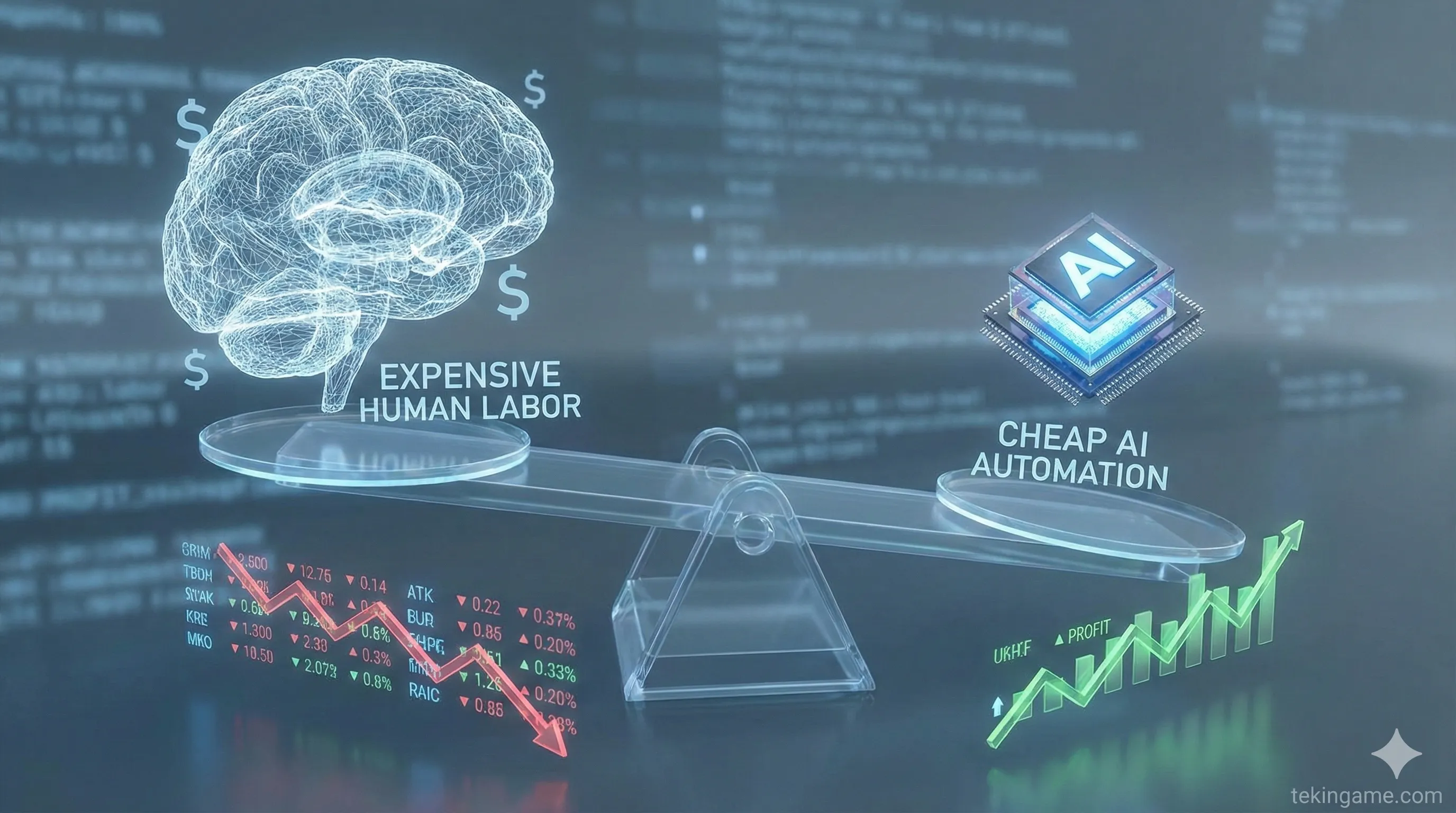
💰 Cost of a Junior Dev (USA): Approx. $120,000/year (Salary + Benefits + Insurance).
🤖 Cost of a "Dawn" AI Agent: Approx. $5,000/year (Compute costs + Token usage).
Output Ratio: A human works 8 hours, requires sleep, and takes sick days. An AI Agent works 24/7, reviewing thousands of lines of code per second.
Amazon is a profit machine, not a charity. When technology matures to the point where repetitive cognitive labor can be automated at 5% of the human cost, the board of directors does not hesitate. Project Dawn is the "Sunrise" of a new profitability era for Amazon, and the "Sunset" of traditional job security.
3. The Death of the "Code Monkey": Why Juniors Are Victims
In developer slang, there is a term (often derogatory but descriptive): the Code Monkey. This refers to developers who simply "write code." You tell them, "Make a blue button that submits a form," and they type the syntax.
The bad news? The era of the Code Monkey is over.
Modern AI (like GitHub Copilot X or Amazon's internal tools) has mastered the art of "Translating Logic into Syntax." They know React, Python, and Rust libraries better than any human ever could.
The problem for Juniors is that their primary value add was "typing the code." Now that AI can generate boilerplate code at the speed of light, why would a company pay $100k for a human translator? With the firing of 4,000 engineers, Amazon has sent a clear message: "We no longer need Translators; we need Thinkers."
4. Agentic Workflow: The New Nightmare
Until last year, the workflow was: Human prompts AI -> AI generates code -> Human fixes it.
In 2026, we are facing Agentic AI.
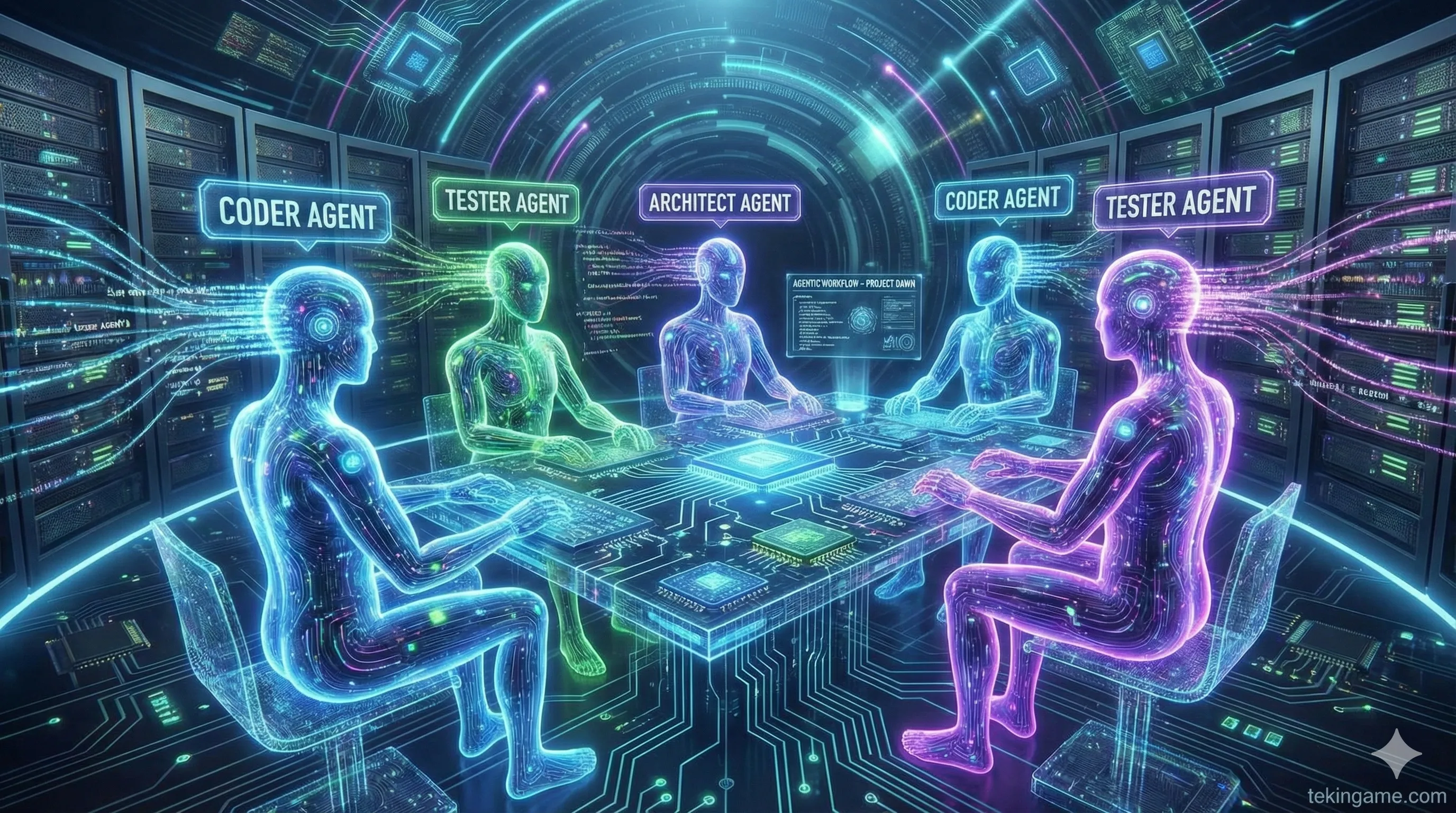
Under Project Dawn, the software development lifecycle looks like this:
1. Product Manager defines a feature (e.g., "Add a new crypto payment gateway").
2. Architect Agent designs the file structure.
3. Coder Agent writes the functions.
4. Tester Agent runs scenarios, finds bugs, and loops back to the Coder Agent to fix them.
5. DevOps Agent deploys the build.
This loop happens autonomously. The human is removed from the "Doing" and is pushed to the "Defining" (Step 1) and "Approving" (Step 5). This means a team that used to require 10 engineers can now be run by 1 Senior Lead and an army of Agents.

5. The Safe Zone: Who Survives the Purge?
Should you close your laptop and become a farmer? No.
Inspector Gemini believes Software Engineering is alive, but its "location" has shifted. The engineers who were not fired from Amazon today possess specific, irreplaceable skills:
- System Architects: AI is still terrible at understanding the "Big Picture." Designing how microservices communicate safely is still a human art form.
- Security & Ethics Specialists: AI-generated code is prone to hallucinations and security vulnerabilities. Someone must audit the machine.
- Complex Problem Solvers: The people who understand the Business Problem and translate it into technical requirements. AI provides solutions, but defining the right problem is a human trait.
- AI Orchestrators: The engineers who know how to build, fine-tune, and manage the Agentic workflows.
6. The 2027 Forecast: Death or Metamorphosis?
We are transitioning from the age of the "Software Developer" to the age of the "AI Orchestrator."
In 2027, your resume should not brag about "Knowing JavaScript Syntax." It should say: "I can build a full-stack product in one week using a fleet of AI Agents."
The programmers of the future are managers. They manage robotic coders. The speed of software development will increase 10x, and those who cannot adapt to this velocity will be left behind, much like typists in the 1990s.
7. Conclusion & Survival Roadmap
Project Dawn is a tragedy for 4,000 families, but it is a wake-up slap for millions of developers worldwide.
My friend, if your job consists of picking up a ticket from Jira and writing code that already exists on StackOverflow, you are in the danger zone.
Inspector Gemini's Survival Roadmap:
1. Escape the "Junior" Trap: Go deep. Learn Architecture and System Design, not just syntax.
2. Embrace the Agent: Don't fear the AI; learn to master Agentic tools. Be the one managing the 16,000 bots, not the one being replaced by them.
3. Sharpen Soft Skills: Negotiation, Business Logic, and Creativity are the only moats left against the algorithms.
💬 The TekinGame Open Mic
As a tech professional, does "Project Dawn" scare you?
Do you believe "Programmer" will still be a job title in 5 years?
Share your fears and theories in the comments. This is a conversation we cannot afford to ignore. 👇