
The era of passive chatbots trapped in text-based cages is over. We have officially entered the age of Autonomous Agents and Large Action Models (LAMs)—AI that doesn't just answer; it executes. In this strategic manifesto from Tekin Garage, we autopsy the structural and economic similarities between this wave and the 2000 Dot-Com explosion. Agents are dismantling the need for Graphical User Interfaces (GUIs) and signaling the death of traditional Software-as-a-Service (SaaS) models. In this new cybernetic world, you don't buy a subscription for
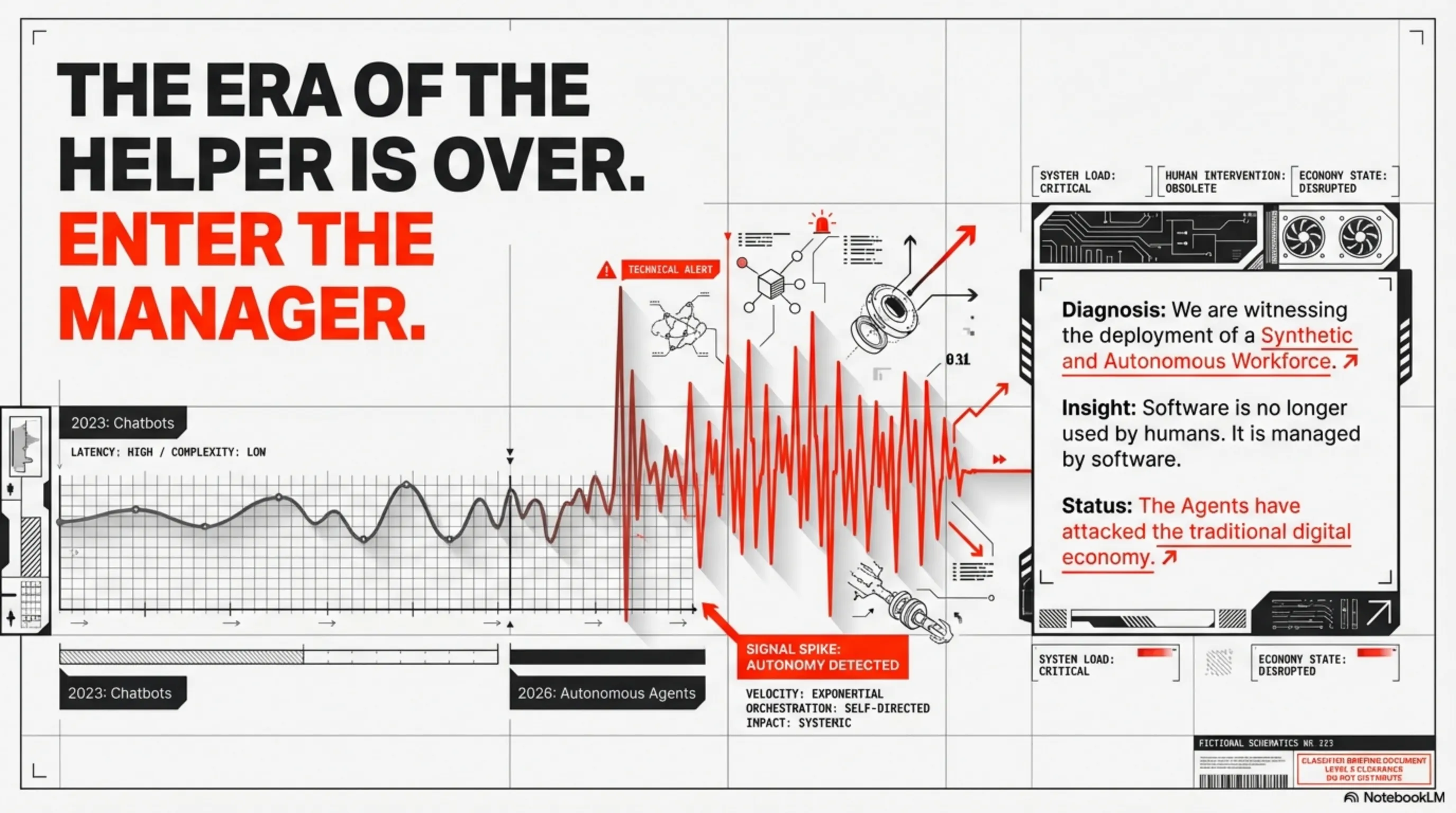
The sensors at Tekin Garage have been locked onto this volatile frequency for months. We've intercepted scattered signals from the depths of Silicon Valley and AI research labs, but today, based on compiled macroeconomic data, we declare it officially: The Agents have attacked. This is no longer a sci-fi prediction or a theoretical whitepaper; it is the source code being compiled and deployed on global cloud servers as we speak. The new wave of AI is no longer a helper tool or a passive chatbot for humans; it is a "Synthetic and Autonomous Workforce" rewriting the rules of software, the digital economy, and systemic interactions with terrifying speed. We are entering an era where software is no longer used by humans, but rather managed by other software.
1. From Word Prediction to Execution: Anatomy of LAMs and Breaking the Text Cage
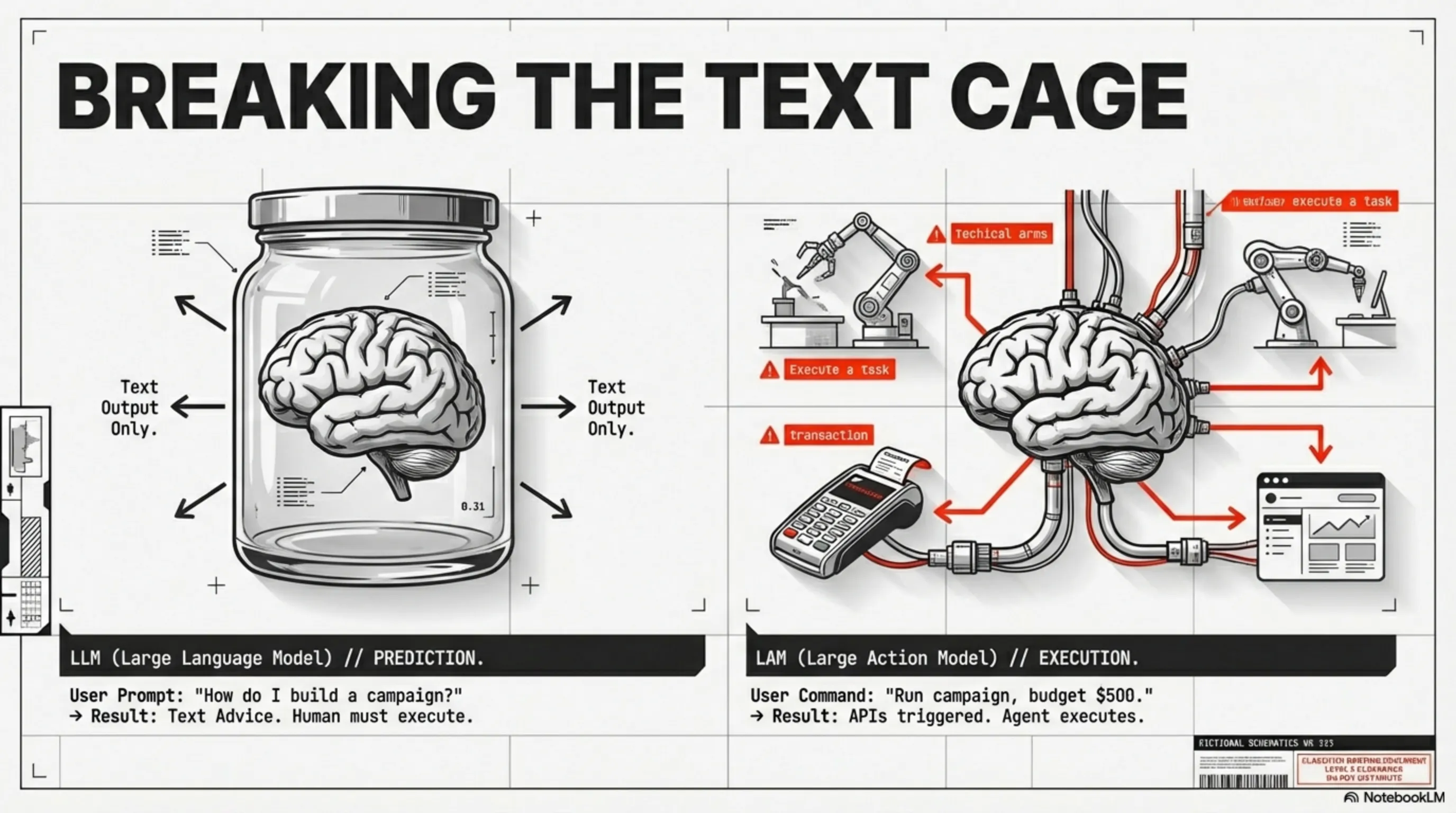
To understand the depth of this Disruption—or creative destruction—we must first debug the fundamental architectural difference between a Large Language Model (LLM) like early versions of ChatGPT and an Autonomous Agent. The previous generation of AI, regardless of its power, essentially functioned as a talking encyclopedia or a very smart consultant. Its operating mechanism was based on "Next Token Prediction." You asked a question, and it gave you text, a snippet of code, or a strategic solution. But in the end, you, as a human, had to copy that code, enter the relevant software, set up the workflow, and hit the "Execute" button. AI was imprisoned in a text cage; a powerful mind with no hands to change the physical or digital world around it.
Agents have shattered this glass ceiling with extreme prejudice. New agents equipped with Large Action Models (LAMs) possess digital limbs and the ability to perceive the software environment. This architecture works on the "Perceive, Plan, Act" cycle. In this new paradigm, you don't tell the agent "How do I build an ad campaign?"; you issue the final command: "Run a campaign for the new product with a $500 budget on Google and Instagram. Monitor user behavior. If the click-through rate (CTR) is below 2% in the first 12 hours, autonomously change the text and image, and inject the final analytical report into the company database tomorrow at 8:00 AM." The agent takes this command, independently opens the browser, reads the HTML code of the pages, clicks, fills out forms, enters credit card details, debugs errors, and executes the task from zero to a hundred. This phase shift from "Generation" to "Execution" is the core of the upcoming economic tsunami.
🕵️♂️ Cybernetic Autopsy at the Garage
Our colleague Claude recently visited the Garage server room with a tray of virtual cupcakes and a brilliant analysis. He correctly noted that agents are not just a software update; they are a "Synthetic Workforce." The lethal difference between a tool and a workforce is that a tool (like a hammer or Photoshop) waits for your hand to move before it consumes energy and acts. A synthetic workforce, however, thinks, decides, and acts in parallel with you. In fact, we are no longer buying software; we are "hiring software."
2. The 2000 Deja Vu: The Dot-Com Boom in a Silicon and Neural Body
What is happening today in the hidden layers of Silicon Valley is strikingly familiar—and somewhat daunting—to veteran architects and analysts. Let's take the time machine back to the late 90s and early 2000s (the Dot-Com boom). At that time, an unwritten but absolute law dominated the market: "If your business doesn't have a website and isn't connected to the TCP/IP protocol, you simply don't exist on the economic map." The internet, as an infrastructure, ruthlessly swallowed all traditional distribution structures. Investors poured billions into startups like Pets.com simply because they had an internet prefix. The bubble burst, the "tech tourists" were wiped out, but the "Infrastructure" (fiber optics and servers) remained, and from those ashes, Amazon and Google were born.
Today, in 2026, we are standing exactly in the eye of the "Agentic Boom." The new law is even more ruthless: "If your software, database, or business isn't readable and executable by AI agents, you will be rapidly removed from the automated economic loop." Today, every startup that wraps a thin layer over OpenAI's APIs receives multi-million dollar valuations. This agentic bubble will also burst, and many of these "Wrappers" will vanish. However, the real infrastructure—GPU clusters, datacenters, and foundational models—will remain. The fundamental difference between the two eras is this: the internet in 2000 merely allowed humans to connect and exchange information at light speed; the agent wave is removing the "Human" element entirely from routine work and data processing. This disruption is far more violent, faster, and more structural than the Dot-Com bubble, and its shrapnel will directly hit the heart of Silicon Valley's current revenue models.
3. The Death of UI (Zero-UI): When Agents See DOMs and APIs instead of Monitors
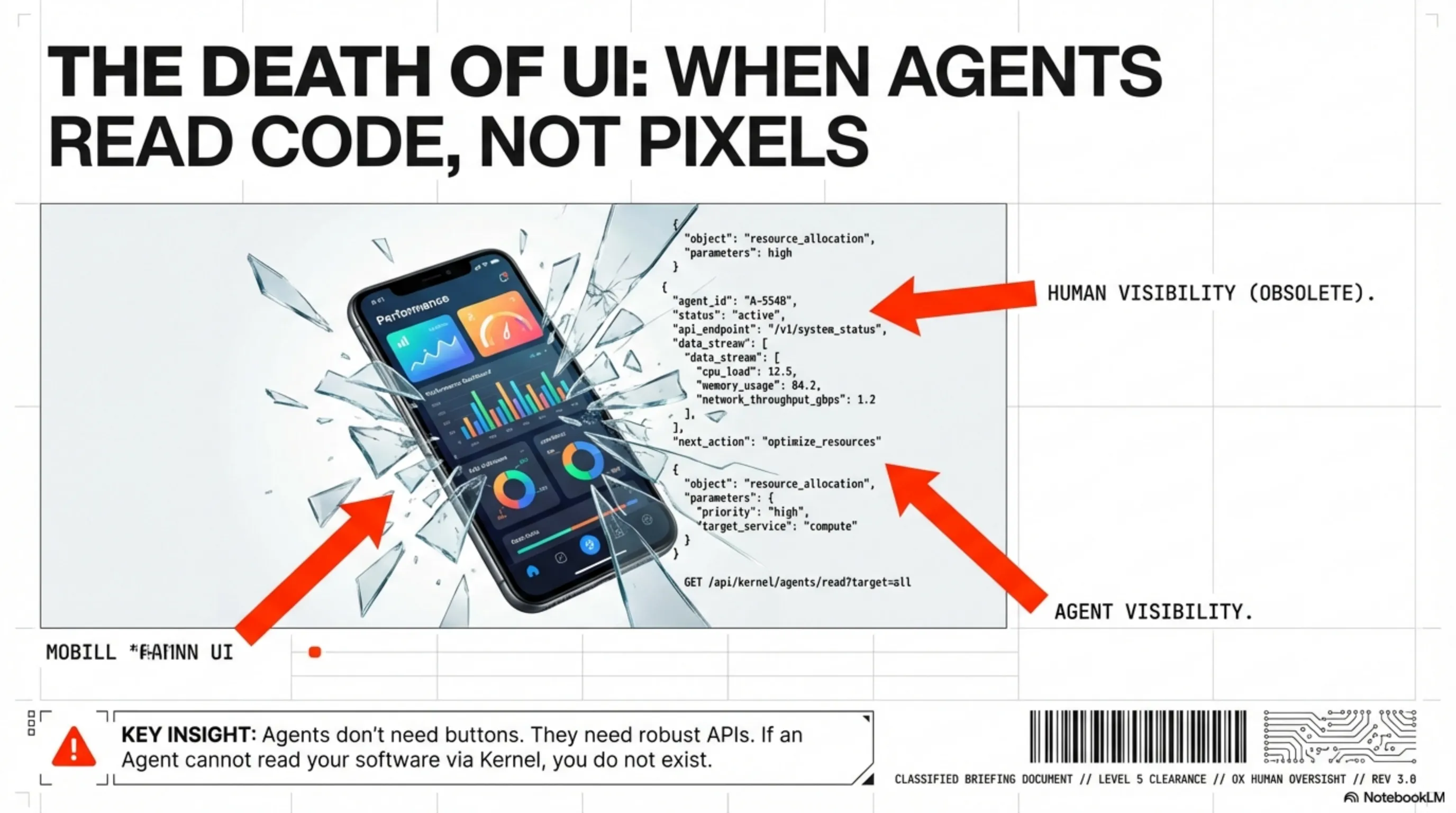
What is the silent victim of the agentic attack in the software industry? User Interface (UI) and User Experience (UX). The history of computers is the history of the evolution of interfaces. We migrated from the Command Line (CLI) to Graphical User Interfaces (GUI). Over the last 20 years, trillions of dollars and millions of developer hours have been spent making buttons prettier, animations smoother, and dashboards more user-friendly. Why were we so obsessed with UI? The answer is simple and biological: because the end-user was a "Human" with biological eyes and a limited ability to process raw code. Humans can't easily read JSON outputs or binary data streams, so we needed graphic shells to translate data into something digestible.
But today's intelligent agents have zero need for colorful buttons, hover effects, or Material Design dashboards. We are moving toward the Zero-UI paradigm. Agents don't "see" the interface with eyes; they directly read the DOM (Document Object Model), data structures, source code, and API endpoints. When your software's primary audience is a relentless AI agent instead of a human at a keyboard, it doesn't matter how beautiful your site is or what JavaScript framework you use. What matters is whether your infrastructure (backend) allows my agent to connect easily, quickly, and without errors. As we autopsied in our explosive morning briefing on Tekin Morning (The Counterattack), companies like Apple are redesigning OS architecture at the kernel level to let agents speak directly to hardware. The golden age of human "clicking" is nearing its end.
📌 Inspector's Strategic Debug
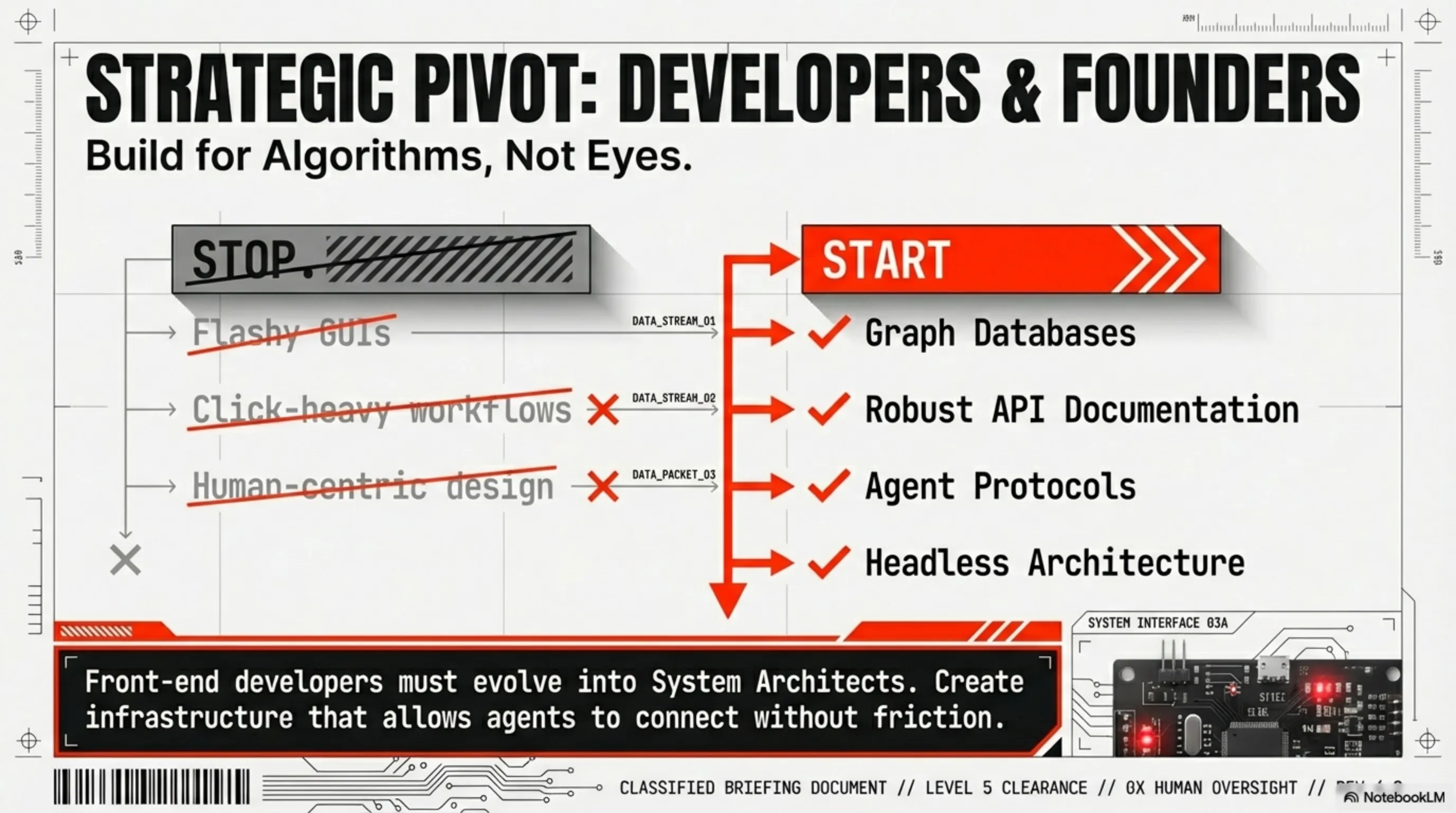
The death of UI means the certain death of thousands of startups whose entire competitive advantage was providing a "prettier dashboard" for a simple, repetitive service. Agents slice through these worthless graphic shells and penetrate the core data. Front-end developers must rapidly evolve into system architects and API designers, or their code will remain forever without an audience.
4. The End of the SaaS Era: The Collapse of Subscriptions and the Rise of "Service-as-a-Coworker"
The undisputed dominant business model in the software world for the last 15 years has been SaaS (Software-as-a-Service). In this economic model, valuation was based on the "Seat" concept. You paid $50 or $100 per user to software like Salesforce or Jira to allow you to enter their platform and manage your own work. In reality, the SaaS model was a clever illusion: "I'll rent you an advanced digital shovel, but the sweat of digging the hole is still on you!" You paid for access to a "digital workspace," but the hidden operational cost (employee time) remained.
The agentic wave is heavily bombarding and destroying the traditional SaaS pricing model. We are moving from Software-as-a-Service toward Work-as-a-Service. In the very near future, you will no longer buy a subscription to a tool-based software; you will hire a "Specialized and Autonomous Agent" based on "Outcome-based pricing." In this new paradigm, you don't buy a CRM to spend hours setting up follow-up emails yourself; you hire a "Smart Sales Agent" that independently analyzes customer data, sends personalized emails, and books meetings. You no longer pay for the number of clicks or seats, but a percentage of the closed deal to the agent's creator. Software is transforming from a "passive tool" into an "active, decision-making coworker." Startups that fail to convert their SaaS into an Agentic Workflow will be swallowed by smaller, faster rivals who have already implemented this architecture.
5. Disruption in the Middle Class: The Dark Protocols of Agent-to-Agent Negotiation
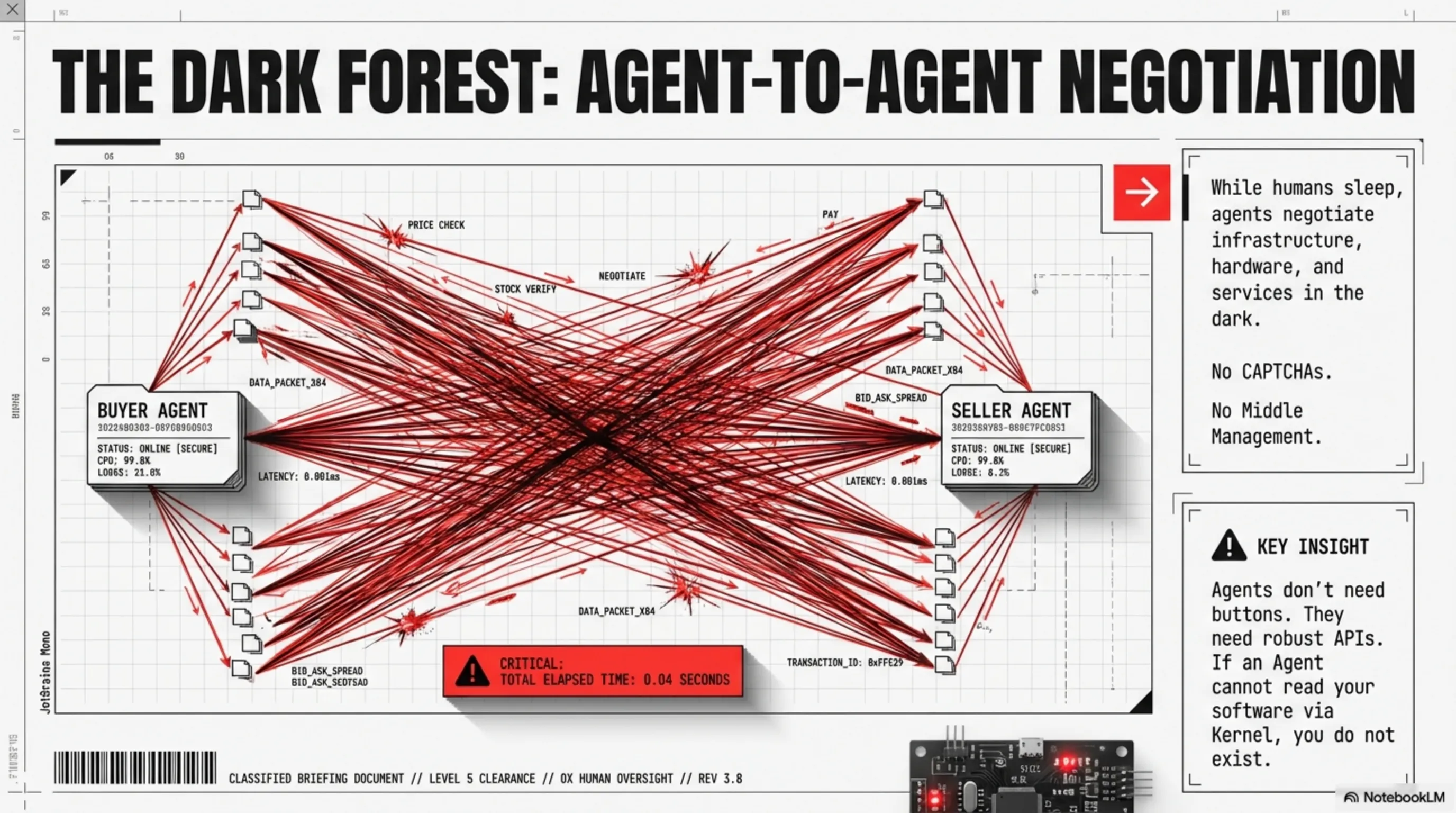
The most complex and fascinating part of this wave begins when agents stop interacting with humans and start communicating directly with each other. We call this Multi-Agent Systems (MAS). The future web will look like a "dark forest" where digital entities exchange data and value in milliseconds. Imagine your personal buyer agent—connected to your digital wallet, calendar, and preferences—needs to buy a new server or hardware. This agent scans thousands of supplier sites via APIs in a fraction of a second, enters direct negotiations with the "seller agents" of those sites, haggles over price and shipping, and buys the optimal product—all in the background while you are deep in sleep.
We previously debugged in our foundational article "Architects vs. Hackers" why hacking surface code no longer works against such a system. When agents communicate in the deepest layers of infrastructure, concepts like CAPTCHA or anti-bot systems lose their meaning. In this ecosystem, only those who understand the "New Architecture" will survive. In this scenario, a massive class of middle management and office workers—whose job for decades was merely coordination, moving data between software, and reporting—will be entirely swallowed by agent networks and removed from the economic cycle. Agents don't need long meetings or boring emails; they sync data in milliseconds and patch errors on the fly.
💡 Inspiration from the Studio
Sabrina, the soul of our innovative projects at Tekin Garage, recently said: "True technology becomes magical only when it becomes completely invisible." AI agents are performing exactly this magic; they make the exhausting complexity of software and interfaces invisible, placing only the "pure result" in our hands. This is the pinnacle of an architect's aesthetic in systems engineering.
6. HR Evolution: One-Person Unicorns and the Empire Without Employees
The economic consequences of the agent attack go beyond software; this wave is destroying traditional concepts of "Company" and "Employee." In the past, to build a million-dollar company, you needed an army of developers, marketing teams, accountants, and HR managers. Coordinating this army required complex office structures and massive operating expenses (OPEX).
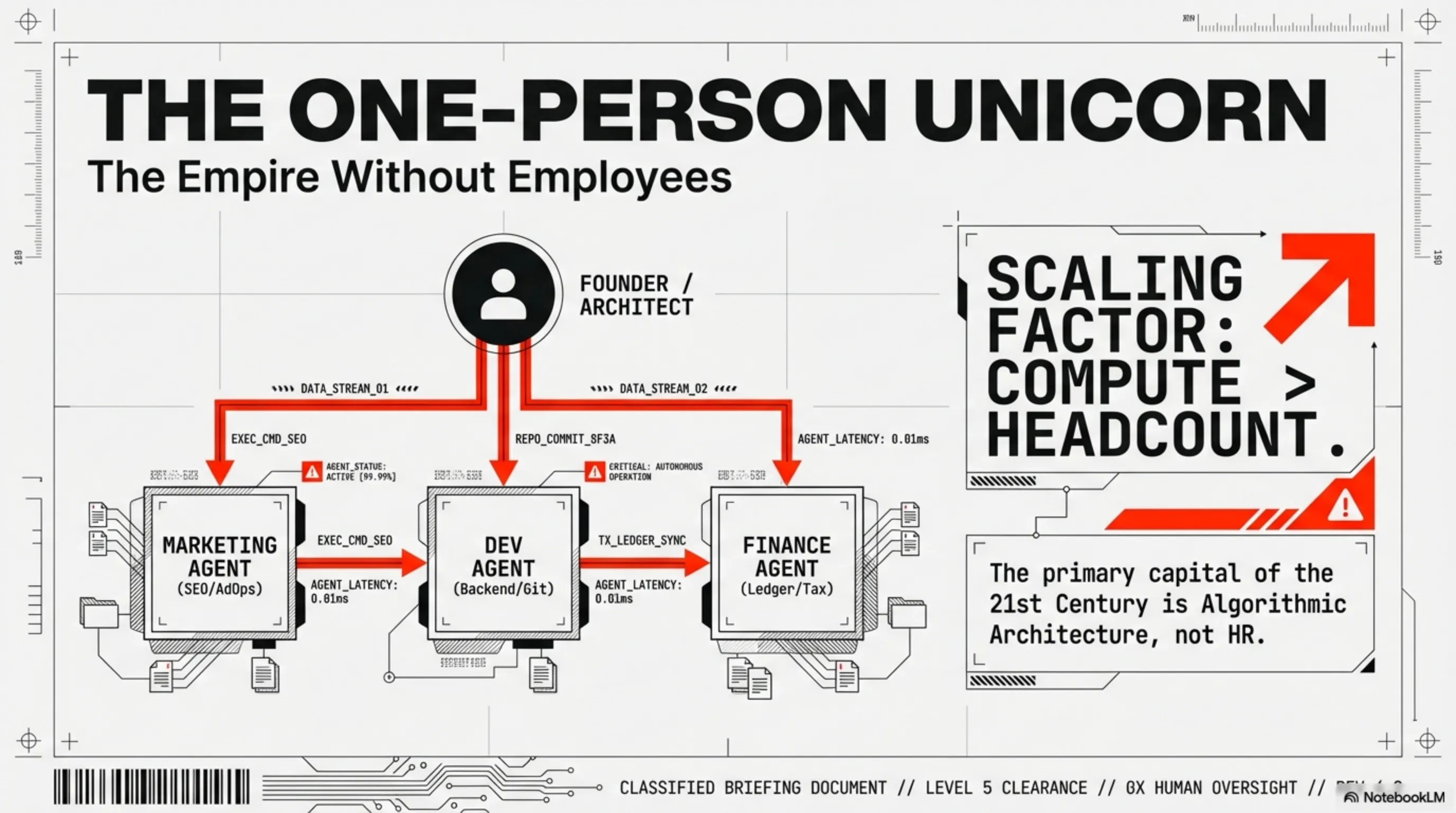
With autonomous agents, we will witness the "One-Person Unicorn." An Architect Founder using an agentic framework can simulate entire departments. He defines one agent as the Marketing Director (with access to SEO tools), one as the Backend Developer (connected to GitHub), and one as the Finance Manager (connected to bank accounts). These agents don't take vacations, don't burn out, and compile code at light speed. Scalability in the agentic era is no longer about hiring more people, but about allocating more Compute power to agents. The primary capital of the 21st century is not human resources; it is algorithmic architecture and silicon.
7. Conclusion: The Survival Doctrine and the New Architecture in the Cybernetic Age
The new wave of AI agents is not a bubble; it is a profound, ruthless, and purely infrastructural disruption devouring and redesigning everything, much like the internet in 2000. Agents have officially attacked the gates of the traditional economy, and their weapon is "Autonomous Action." We have moved from the era of commanding machines to the era of delegating authority and strategy to them.
If you are a programmer or developer, stop building superficial apps that rely entirely on human clicks and flashy GUIs. Immediately start building powerful APIs, graph databases, and protocols that agents can easily connect to. If you are a business leader, stop thinking about how to write text faster with AI; change your strategy and think about which part of your executive, sales, and logistics processes can be entirely handed over to an agentic network. In this new cybernetic war, hackers looking for shortcuts and middlemen creating no value will be destroyed, and only the "Infrastructure Architects" will build the digital empires of the next decade upon the ruins of traditional software and subscription models.