
1. Introduction: The End of Incremental Upgrades and the Brutal Return of the Resolution War
The smartphone industry between 2024 and late 2025 suffered from a palpable sense of hardware stagnation and repetitive iteration. Instead of physically upgrading lenses, imaging sensors, and battery capacities, major tech conglomerates funneled their entire focus, multi-million-dollar R&D budgets, and massive advertising campaigns into the integration of Generative AI chatbots and software-side gimmicks. During this era, hardware innovation was reduced to millimeter alterations in display bezels or the introduction of new titanium colorways. However, consumers dropping over $1,500 on a premium flagship device are starved for tangible physical innovations and genuine hardware leaps.

Amidst this backdrop, the recent explosive report by the analytical outlet TechRadar in mid-February 2026 acted like a seismic shockwave across specialized tech forums (like XDA and Reddit). The Xiaomi 18 Pro, the upcoming Chinese flagship, is allegedly slated to host two simultaneous 200-megapixel sensors within a single camera module. If you recall the history of the Megapixel War (dating back to the Nokia Lumia 1020 era up through the introduction of 108MP sensors), you understand this news heralds the aggressive, triumphant return of the spec-sheet battle. But this time, we are facing a fundamentally different engineering paradigm: the astronomical numbers printed on the retail box are no longer there to deceive the uninformed buyer; rather, these numbers serve as the foundational photonic building blocks to feed a terrifyingly powerful AI processor designed to reproduce visual reality.
2. Engineering Autopsy of the TechRadar Report: Two 200MP Monsters in One Chassis
According to highly classified schematics leaked from the supply chains in Taiwan, Japan, and South Korea (the primary suppliers for advanced Sony IMX and Samsung ISOCELL sensors), Xiaomi engineers intend to mount two extreme-resolution modules side-by-side on a single unified motherboard. Previously, pioneering behemoths like the Galaxy S24 or S25 Ultra featured only a single 200MP sensor (exclusively reserved for the primary wide lens), while the remaining optical array (ultrawide and telephoto) was restricted to 50MP or 12MP sensors with significantly smaller physical dimensions. The radical architecture of the Xiaomi 18 Pro shatters this conservative tradition.
2.1. The Primary Wide Sensor: Conquering Photons with 1-Inch Optics
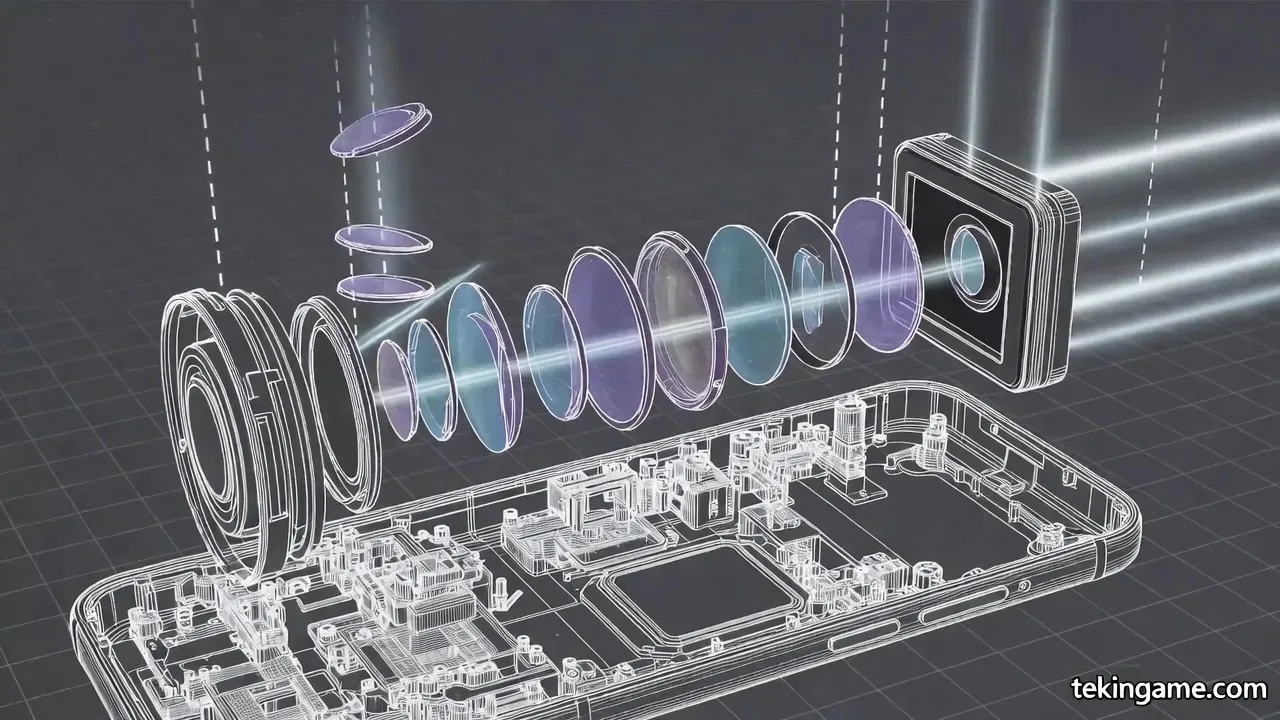
Technical forecasts and schematic analyses suggest that the first sensor (the device's primary lens) will be a physical giant measuring 1 inch diagonally (or remarkably close to it, matching the format of advanced compact point-and-shoots). This sensor is engineered exclusively for maximum photon absorption and the capturing of microscopic details in vast landscapes, architectural photography, and studio portraits. Squeezing 200 million physical pixels onto a 1-inch sensor is a massive physical challenge. Each individual pixel must be shrunk down (to roughly 0.6 micrometers) to fit the footprint. However, by utilizing an 8-element glass lens array (8P Lens) coated with ultra-advanced Anti-Glare technology, Xiaomi guarantees that light is directed straight into the heart of these 200 million pixels without any chromatic aberration or light scattering.
2.2. The Telephoto Sensor: Lossless Hybrid Zoom and In-Sensor Cropping
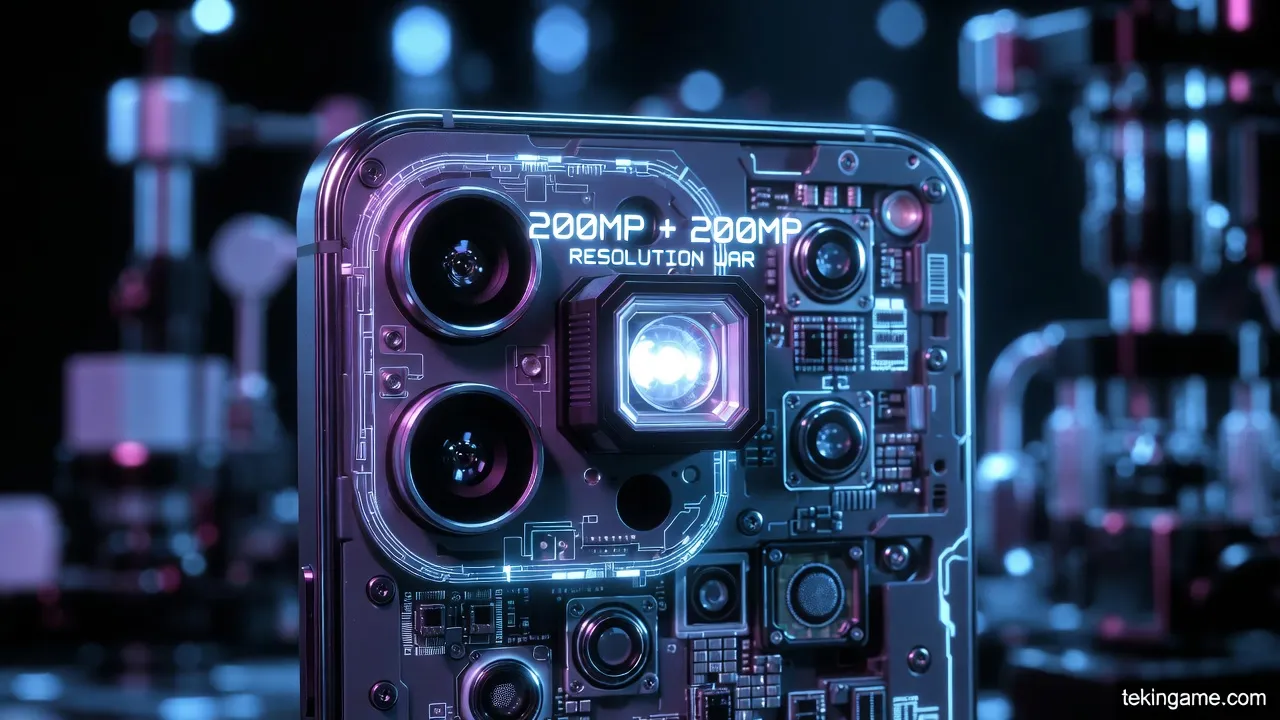
The true marvel, and the turning point of this report that has engineers at Apple and Samsung on edge, is the second sensor: a periscopic telephoto lens boasting a staggering 200-megapixel resolution. Many analysts ask: why does a zoom lens, typically used for distant subjects and tight framing, require such massive resolution? The answer lies in the technology of "Lossless Hybrid Zoom" and the technique of "In-Sensor Cropping."
The physics of mobile lenses do not allow for the use of large moving glass elements (like the telephoto lenses on DSLR cameras). Therefore, by having 200 million pixels on the telephoto lens, the device's processor can zoom into the dead center of the image and discard the peripheral pixels. This means that even at 10x optical zoom or 100x digital "space" zoom, the image produced is as crisp as a dedicated lens, devoid of annoying pixelation noise or muddy, watercolor-like textures. This technology officially marks the end of blurry distant subjects at concerts or sporting events.
3. Computational Photography and the Limits of Silicon
The most significant challenge facing Xiaomi's R&D team is not optics; it is the brutal limitations of mathematics and binary processing. When you tap the shutter button on the Xiaomi 18 Pro, the device does not simply "take a picture." In reality, 400 million pixels of data (from both sensors simultaneously for depth mapping and light merging) are generated in a fraction of a millisecond and flooded into the motherboard. This colossal volume of photonic data requires a miniature nuclear processing plant. At this exact point, the physics of lenses end, and the magic of mathematics and Edge AI begins.

3.1. The Critical Role of Snapdragon 8 Gen 5 and the Image Signal Processor (ISP)
The beating heart and mastermind of this complex operation will undoubtedly be the ultra-fast processors of 2026 (almost certainly the custom Qualcomm Snapdragon 8 Gen 5 or MediaTek's powerful Dimensity 9000 series equivalent). The ISP (Image Signal Processor), known commercially in Qualcomm chips as "Spectra," is fully integrated with the Neural Processing Unit (NPU) accelerator architecture in this generation.

The processing pipeline works like this: the moment a photo is captured, the ISP evaluates all 200 million pixels across multiple exposure layers (Exposure Bracketing) in a fraction of a second. Subsequently, AI algorithms identify and eradicate Luminance Noise on a pixel-by-pixel basis. They then reconstruct lost textures (such as human hair blowing in the wind, fine fabric weaves, or the edges of leaves in the background) using Generative Adversarial Networks (GANs) and Diffusion Models instantly. This process, which demands tens of trillions of operations per second (TOPs), can only be executed by the heterogeneous architecture of next-generation 3-nanometer silicon.
3.2. The Fatal Challenge of Shutter Lag at Extreme Resolutions

Historically, the biggest Achilles' heel of high-resolution cameras has been a phenomenon known as Shutter Lag—the agonizing delay between pressing the button and the image actually writing to storage. This delay caused moving subjects (like running children or pets) to turn into blurry messes. To conquer the processing weight of 200MP data, the Xiaomi 18 Pro desperately needs Zero Shutter Lag (ZSL) algorithms. These algorithms continuously buffer frames in the background RAM so that before your finger even fully depresses the shutter, the perfect image has already been captured. This represents a breathtaking achievement in camera software engineering.
4. The Bandwidth and Storage Crisis: The Explosion of RAW Data

High resolution comes at a steep price in the digital world: the ruthless, rapid, and costly consumption of device storage space. If a user wishes to utilize the full potential of the sensor and shoot in the Computational RAW format (a 14-bit raw format that retains all optical data and dynamic range without aggressive compression), a single photo from a 200MP sensor can easily demand between 120MB to 180MB of storage.
4.1. Why UFS 5.0 is a Strict Survival Requirement for the Xiaomi 18 Pro

Let’s run the basic math: if a professional photographer wants to shoot a rapid burst of 5 continuous photos in one second at full resolution, the smartphone's processor must write nearly 1 Gigabyte of data to the physical flash storage within that single second. Current UFS 4.0 storage drives (used in expensive 2024 and 2025 flagships) suffer from a severe Bandwidth Bottleneck under this processing load. When the storage cannot keep pace with the data generation, the phone experiences severe lag, UI freezing, and extreme overheating during photography.
Therefore, the presence of dual 200MP sensors in the Xiaomi 18 Pro makes the engineering mandate for next-generation UFS 5.0 storage drives absolute and unavoidable. These drives, boasting sequential write speeds exceeding 8 Gigabytes per second (speeds rivaling the SSDs inside a PlayStation 5), allow the torrential flood of optical data to be logged to flash memory without a single microsecond of hesitation.

4.2. LPDDR6 RAM: Buffering 400 Million Pixels in Milliseconds
Beyond permanent storage, the temporary memory (RAM) is also heavily taxed in this process. For the ISP to suspend 400 million pixels in memory prior to final storage, allowing dozens of AI effects and Color Grading adjustments to be applied, the Xiaomi 18 Pro will highly likely be the first commercial device to utilize LPDDR6 RAM modules. These modules will feature processing frequencies surpassing 10,000 MHz and bandwidths exceeding 100 GB/s. The capacity of this RAM must be a minimum of 16GB to 24GB to ensure the Android OS does not suffer frame drops while the camera app is active.

5. The Thermal Engineering Challenge: Preventing Silicon Meltdown
One of the biggest, most heavily guarded secrets of mobile manufacturers is the sheer amount of thermal energy generated by processors during heavy image processing. Simultaneously processing the output of two 200MP sensors while recording computational 8K video or shooting RAW bursts generates terrifying heat (often exceeding 55°C / 131°F) across the motherboard and the surface of the chipset. If this heat is not dissipated within seconds, the processor will aggressively lower its clock speed to prevent melting its microscopic connections (a phenomenon known as Thermal Throttling), resulting in dropped video frames, camera app crashes, and forced device shutdowns.

5.1. 3D Hybrid Vapor Chambers and Graphene Cooling Systems
To tame this thermal dragon, Xiaomi cannot rely on traditional thermal paste. They are forced to equip the 18 Pro with a massively enlarged, multi-layered 3D Vapor Chamber cooling system. In this system, a liquid coolant absorbs the processor's heat, evaporates, travels to the edges of the chassis, cools down, and condenses back into liquid. Previously, the dimensions of such coolers were only justified inside high-end gaming laptops. The application of high-density graphene sheets and thermal pastes infused with synthetic nanodiamonds will define the razor-thin line between a stable engineering masterpiece and a total hardware catastrophe.

6. Optical Physics: The Miracle of 16-in-1 Pixel Binning
After all these complex explanations, the logical question for the average consumer remains: what is the actual, everyday secret and utility of 200MP cameras? Do we really need 100MB, 200-megapixel photos to share on Instagram or Telegram? The engineering reality is that 95% of the time, you are not taking 200MP photos at all. The Xiaomi 18 Pro utilizes an ultra-advanced technique at the sensor and pixel-architecture level known as Pixel Binning.
6.1. Hexadeca-Binning and Creating Cyberpunk Night Vision
In low-light scenarios (such as night photography, dark clubs, or indoors), the sensor's hardware algorithms merge 4x4 blocks (meaning 16 physically adjacent pixels) together, electromagnetically and computationally transforming them into a single, gigantic "super-pixel" (measuring roughly 2.4 micrometers). In this mode, the final output is a standard, high-quality 12.5-megapixel photo (200 divided by 16), but the volume of light photons these super-pixels can absorb from the environment is simply incomprehensible.
This advanced technology allows the Xiaomi 18 Pro to capture images in absolute, pitch-black darkness that look as if they were shot using military Night Vision equipment or professional studio lighting rigs. Image noise (the annoying colored grain seen in the dark) drops to absolute zero thanks to this pixel merging, Dynamic Range is dramatically expanded, and colors are captured with a vivid, cyberpunk-esque accuracy in the dead of night.
7. Technical Analysis Table: Xiaomi 18 Pro vs. 2025 Flagship Standards
To better comprehend the magnitude of this hardware leap and its impact on the entire mobile ecosystem, let's compare the rumored specs of the Xiaomi 18 Pro against the highest standard of last year's flagships in a specialized table:
| Hardware & Processing Evaluation Metric | 2025 Flagship Standard (e.g., Galaxy S25 Ultra) | Xiaomi 18 Pro Processing Platform (2026 Architecture) |
|---|---|---|
| Primary Camera Module Architecture | 1x 200MP Sensor + 50MP/12MP Auxiliary Sensors | Dual Independent & Simultaneous 200MP Sensors (Wide + Tele) |
| Pixel Binning Technique (Optical Merging) | 4-in-1 (Quad) or Maximum 9-in-1 (Nona) Binning | 16-in-1 (Hexadeca Binning - Creates super-pixels for astronomical light absorption) |
| Peak Raw Data Load | ~250 Million Pixels instantly upon shutter press | Over 400 Million Pixels simultaneously with full AI activation |
| Storage Speed & Memory Buffering Requirement | Fully supported by UFS 4.0 architecture & LPDDR5X RAM | Absolute mandate for UFS 5.0 (8GB/s speed) & LPDDR6 RAM to prevent freezing |
| Thermal Management Solution | Standard mobile Vapor Chamber | 3D Hybrid Vapor Chamber (Approaching Ultrabook laptop dimensions) |
8. Strategic Conclusion: Has the Death Knell Sounded for DSLR Cameras?
The TechRadar report and leak regarding the engineered equipping of the Xiaomi 18 Pro with dual 200MP modules carries a terrifying, clear, and severe warning for traditional camera manufacturers (like Canon, Nikon, Sony Alpha, and Leica). While professional DSLR and Mirrorless cameras on the market are still maneuvering around 24MP, 40MP, or at most 60MP sensors—relying entirely on the physics of heavy, bulky, and exorbitantly expensive glass—the smartphone industry is aggressively replacing the physical limitations of glass with the infinite power of silicon computation.
The Xiaomi 18 Pro, by merging ultra-fast next-gen 3nm processors, active and autonomous Edge AI, and an insane 400-million-pixel resolution, does not merely "capture" a photo; it "analyzes, generates, and reconstructs" it pixel by pixel. If these leaks and documented rumors materialize in the final retail model, we must confess that the Megapixel War is no longer a deceptive, hollow strategy to upsell consumers. It marks ground zero for a computational revolution where software and AI bypass the strict laws of optical hardware physics. The year 2026 is the year smartphones, relying on their monolithic processors, will finally relegate heavy photography equipment to tech museums and conquer the darkness of night and the distance of the horizon forever.