
1. Introduction: When the Wall of Reality Crumbles
Fear is the oldest and strongest emotion of mankind, and the oldest and strongest kind of fear is fear of the unknown. HP Lovecraft said that a century ago, but he never played a video game running on Unreal Engine 5.
For decades, horror games relied on abstraction. Silent Hill 1 (1999) was terrifying because you couldn't see clearly. The fog was a technical limitation used to hide the short draw distance of the PlayStation 1. Your imagination filled in the blanks.
In 2026, the paradigm has flipped. We are no longer imagining; we are seeing. The graphical fidelity is so high that the brain's "suspension of disbelief" is no longer required. The simulation is indistinguishable from a GoPro video. This shift forces us to ask: What happens to the human psyche when digital nightmares become indistinguishable from waking life?
2. 💡 Lumen & The Psychology of Light: Why Dynamic Shadows Trigger Paranoia
In the history of game development, lighting was traditionally "baked." This means artists painted shadows onto the textures before the game shipped. A shadow of a chair remained on the floor even if you moved the chair. It was static. Safe.
Lumen, UE5’s fully dynamic Global Illumination system, changes the laws of physics in the virtual world. It calculates the bounce of light rays in real-time.
The Evolutionary Fear of Shadows
Why does Lumen make games scarier? The answer lies in evolutionary biology. Our ancestors didn't survive by fearing the dark; they survived by fearing movement within the dark.

- Indirect Lighting (Bounce Light): If you shine a flashlight onto a red carpet in a dark hallway, the light bounces off the carpet and tints the white walls red. This creates a suffocating, bloody atmosphere that changes dynamically as you look around. It feels "alive."
- Soft vs. Hard Shadows: In 2026 games, shadows represent distance. A monster standing far down a corridor casts a long, soft, diffused shadow that dances on the walls. As it gets closer, the shadow sharpens. This visual cue triggers a primal Paranoia. You aren't scared of the monster; you are scared of the shadow that you think you saw moving in the corner of your eye.
In recent tech demos, we’ve seen how extinguishing a single light source can cause darkness to "flood" a room realistically, not just turning a texture black, but simulating the absence of photons. It’s terrifyingly effective.
3. 🧱 Nanite & The Horror of Texture: Digital Decay
Before UE5, developers had to use "Normal Maps" to fake details. A brick wall was actually a flat plane with a trick of light applied to it. Nanite (Virtualized Geometry) removed the polygon limit. Developers can now import film-quality assets with hundreds of millions of polygons directly into the game.
The Aesthetics of Disgust (Abjection)
Horror relies heavily on "Abjection"—the feeling of repulsion caused by decay, bodily fluids, and rot. Nanite allows for a level of gross detail that was previously impossible.
- True Geometric Rust: Rust on a pipe isn't a flat texture anymore; it flakes off. You can see the layers of corrosion.
- Visceral Gore: In body-horror games, Nanite allows for wounds that have actual depth. You can see the separation of skin, fat, and muscle tissue. This triggers a visceral "gut reaction" of disgust in the player.
- Cluttered Environments: Imagine a hoarder's house or an abandoned asylum. Nanite allows every single piece of trash, every dead cockroach, and every shard of glass to be a unique 3D model. This "Visual Noise" is exhausting for the brain to process, creating a sense of unease and claustrophobia.
4. 🚪 Liminal Spaces: The 'Backrooms' Phenomenon
A massive trend in 2026 horror is the exploration of Liminal Spaces—transitional locations like empty hotel hallways, parking garages, or office spaces that feel "wrong" when devoid of people.
The Horror of 'The Loop'
Powered by UE5’s procedural generation capabilities, developers are creating games based on "The Backrooms" that are infinite. The lighting is sterile (fluorescent buzz), the geometry is non-Euclidean (rooms that shouldn't fit together), and the detail is perfect.
Here, the horror isn't a monster chasing you. The horror is the Architecture itself. The realism provided by Lumen makes these spaces feel like a trapped memory. You open a door, walk down a hall, and realize you are back where you started. This psychological torture is only effective because the lighting feels so grounded in reality.
5. 🌫️ Intelligent Fog: The Renaissance of Silent Hill 2
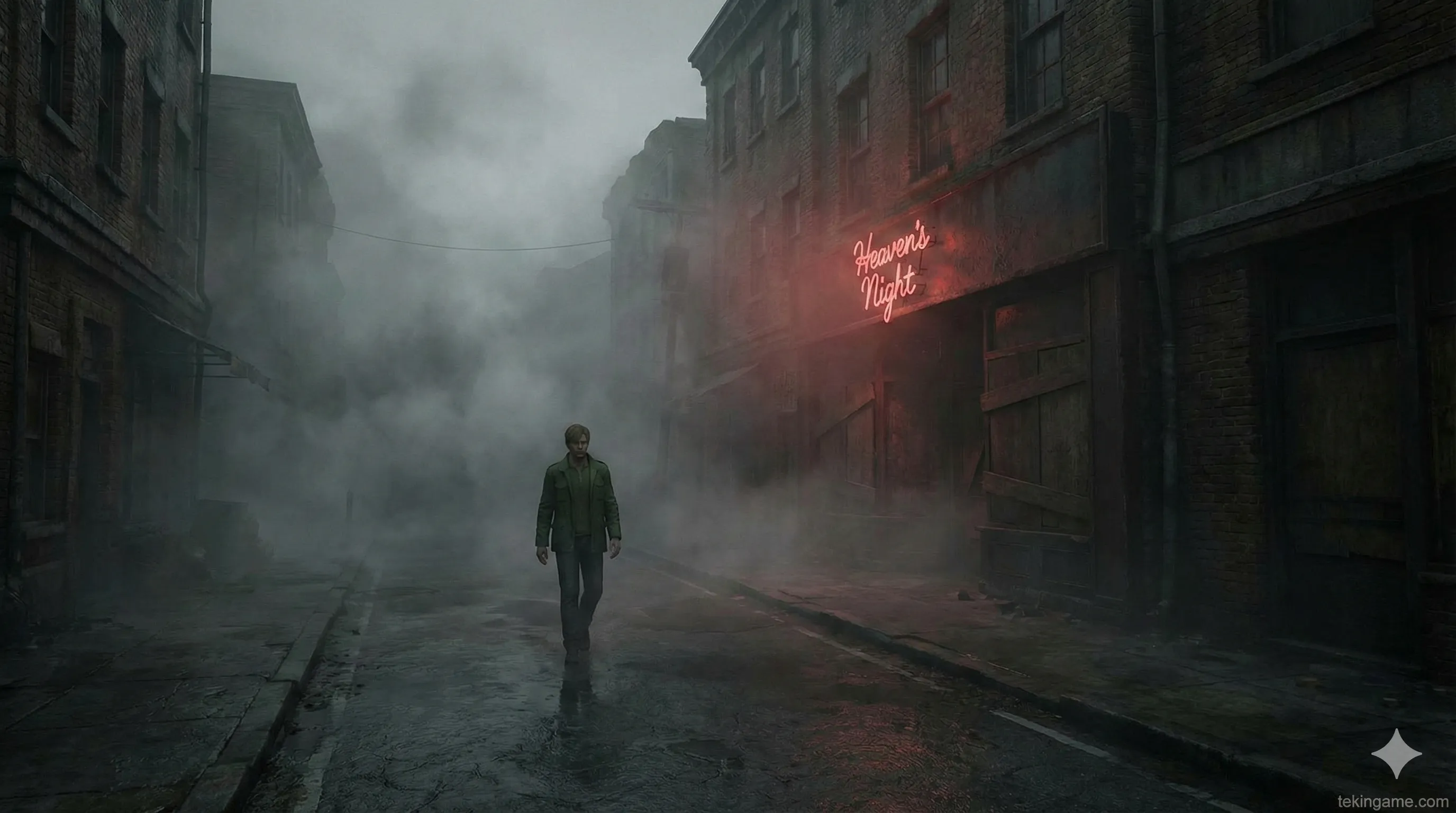
When Bloober Team approached the Silent Hill 2 Remake, their biggest challenge was the Fog. In 2001, it was a tech limitation. In 2026, it is a Character.
Volumetric Voxel Fog
In Unreal Engine 5, fog is not a 2D screen filter. It is a 3D volumetric material that interacts with light.
When James Sunderland walks through the streets, the fog swirls around his legs (fluid simulation). When the red neon sign of "Heaven's Night" flickers, the light scatters through the moisture particles in the air, creating a sick, hazy glow. This "Intelligent Fog" obscures vision dynamically. It forces the player to rely on audio cues, heightening the sense of sensory deprivation and isolation. You aren't just looking at a screen; you feel damp and cold.
6. 🎥 The Bodycam Trend: Hacking the Brain with Lens Imperfections
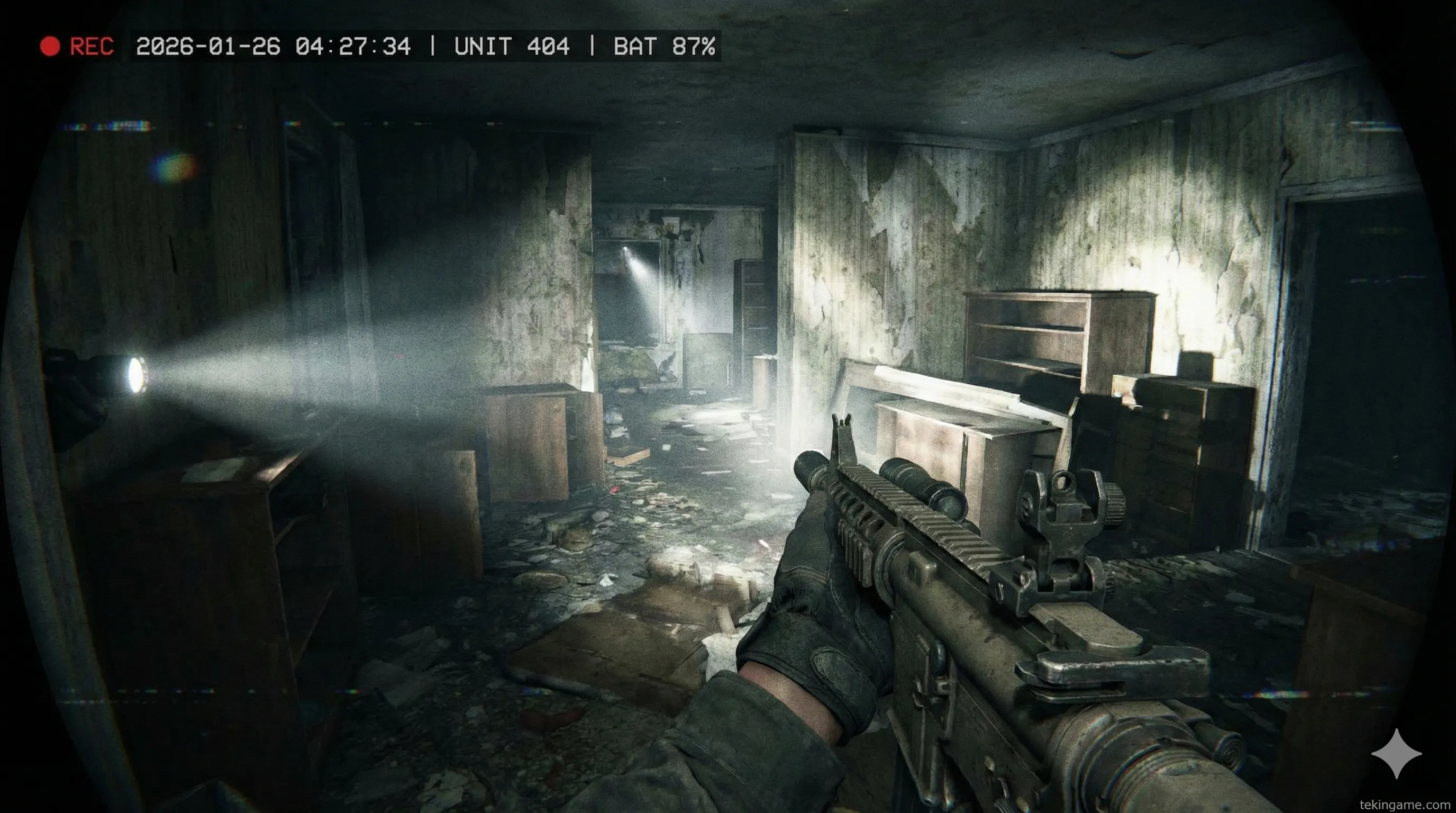
Perhaps the most controversial trend of 2026 is the rise of Bodycam Horror (games like Unrecord, Paranormal Tales, or Lost Fragment). These games simulate the perspective of a police chest camera.
Why is it so disturbing?
These games hack the brain by simulating the imperfections of reality, rather than perfection:
- Fisheye Distortion: The curvature at the edges of the screen mimics a wide-angle lens.
- Auto-Exposure Shock: When you move from a dark room to a bright exterior, the screen "blinds" you for a second while the virtual camera adjusts—just like a real eye or sensor.
- Independent Movement: The gun/hands move independently of the camera (head/chest), creating a disorienting, realistic aim.
This aesthetic mimics the visual language of "Found Footage" or news leaks. Because our brains associate this visual style with real-world violence (police footage, war zones), playing these games feels illicit, almost like watching a snuff film. It bypasses the "it's a game" filter entirely.
7. 🧠 Metahumans & Project OD: Crossing the Uncanny Valley
Hideo Kojima’s OD (Overdose), created in collaboration with horror director Jordan Peele, utilizes Epic Games' Metahuman technology to create the most realistic digital faces in history.
Mirror Neurons and Empathy
Previously, game characters had "mask-like" expressions. Metahumans simulate subsurface scattering (light passing through skin ears/nose), micro-tremors in the eyelids, and the dilation of pupils.
In OD, the goal isn't just to scare you with a monster; it's to scare you with The Face of Fear. Humans are social animals. We have "Mirror Neurons" that make us feel what others feel. When you see a hyper-realistic digital Sophia Lillis screaming in absolute terror, sweating, eyes darting around—you feel her panic biologically. Kojima is weaponizing empathy.
8. 🔊 Ray-Traced Audio: When Walls Have Ears
We focus on graphics, but audio is 50% of the horror experience. Unreal Engine 5 utilizes Project Acoustics or "Audio Ray Tracing." Just like light, sound waves now bounce off geometry.
- Material Awareness: If a monster walks upstairs, the engine calculates the sound passing through wood vs. concrete. It sounds muffled and heavy.
- Diffraction: If a scream comes from around a corner, the sound waves "bend" around the obstacle realistically, rather than passing through the wall.
- Binaural Precision: With modern spatial audio, you can pinpoint a threat's location with your eyes closed.
This creates a sense of "Presence." You are no longer safe just because you can't see the threat. You can hear its breathing, its footsteps, and its distance with terrifying accuracy.
9. 🤖 Adaptive AI: The Predators That Learn
Finally, what good is a realistic world if the monster is stupid? In 2026, AI enemies utilize Machine Learning patterns.
In games like Alien: Isolation 2 (hypothetically) or newer indie titles, the enemy learns your playstyle.
- Do you always hide in lockers? The AI will start checking lockers first.
- Do you use the flashlight too much? The AI will track the light cone.
- Do you sprint? It will listen for footsteps.

10. Inspector's Verdict: Have We Gone Too Far?
Commanders, we have entered the Golden Age of Horror. The convergence of Unreal Engine 5, AI, and next-gen hardware has given creators the tools to manifest their darkest nightmares without compromise.
But an ethical question lingers: When the graphics are so real that shooting a zombie feels visually identical to shooting a human, and when the screams are ray-traced to sound like they are in your room, does the entertainment value come with a psychological cost? Creators like Kojima argue that fear is a catalyst for survival. These games are not just "scary"; they are Survival Simulators. They test our nerve in a safe environment.
Are we ready for this level of immersion? Probably not. Will we line up to play it on day one? Absolutely. Because there is no rush quite like surviving a nightmare.
⚠️ THE ADRENALINE TEST
Which of these technologies terrifies you the most?
Drop your choice in the comments. (Warning: Sleep with the lights on tonight!) 👇