
In 2026, the video game industry finds itself at an unprecedented intersection of technological innovation and an existential identity crisis. Unity Technologies, a company that recently lost a massive portion of its trust among independent developers following the disastrous "Runtime Fee" pricing controversies, has returned to the battlefield with an incredibly radical, aggressive, and highly controversial strategy. Unity executives have officially announced that the company's second strategic pillar for 2026 is an absolute focus on a concept
In the history of the technology and entertainment industries, there are defining moments that alter the trajectory of a medium forever. From the advent of 3D graphics that revolutionized the industry to the smartphone revolution that put gaming in everyone's pocket. However, what is currently unfolding in the corridors of Unity Technologies is far beyond a simple graphical or platform shift; it is a fundamental alteration of the "concept of the creator." The official announcement of the AI-driven authoring strategy for 2026 has sent unprecedented historical tremors throughout the community of programmers and game developers worldwide.
1. An Earthquake in Silicon Valley: Unity's New Strategy for 2026
Throughout its history, the Unity game engine has always been synonymous with the alluring and attractive slogan of "Democratizing Game Development." Over the past decade, this engine empowered individuals and small studios to build masterpieces like Hollow Knight or Cuphead without needing to write complex graphics engines from scratch or wrestle with low-level coding. But now, Unity executives have pushed the definition of democratization to its most extreme and radical limit. Unity's second strategic pillar for 2026 is reaching a point where an entirely average person (with zero lines of coding knowledge in C#, Python, or C++) can generate a complete, playable casual video game simply by typing a basic text prompt into a box—exactly like using ChatGPT or Midjourney today.
1.1. From the Runtime Fee Crisis to the AI Asylum
To truly understand this maneuver, we must look backward. In recent years, Unity committed arguably the greatest strategic blunder in its history by introducing the disastrous "Runtime Fee" policy (charging a fee per game install). This decision completely decimated the trust of independent studios, triggering a massive wave of migration toward free, open-source engines like Godot and Unreal Engine. Now, having failed to re-attract professional developers, Unity has decided to stop begging for their return. Instead, with the power of artificial intelligence, they intend to create a new generation of creators from scratch; creators who are no longer "programmers," but rather "prompt engineers."
2. Dissecting AI-Driven Authoring: From Prompt to Final Game
To determine whether Unity's claim is realistic or merely a "Marketing Buzzword" designed to appease shareholders and inflate stock prices on Wall Street, we must look under the hood of this technology in the Tekin Analysis lab.
Generating a single image or a block of text with AI is a fundamentally static process. A video game, however, is a highly dynamic, mathematical, and interwoven system. If the character's jump code is out of sync with the collision detection system by even a single frame, the game "breaks" and becomes completely unplayable.
2.1. System Architecture: How Do LLMs Understand Game Logic?
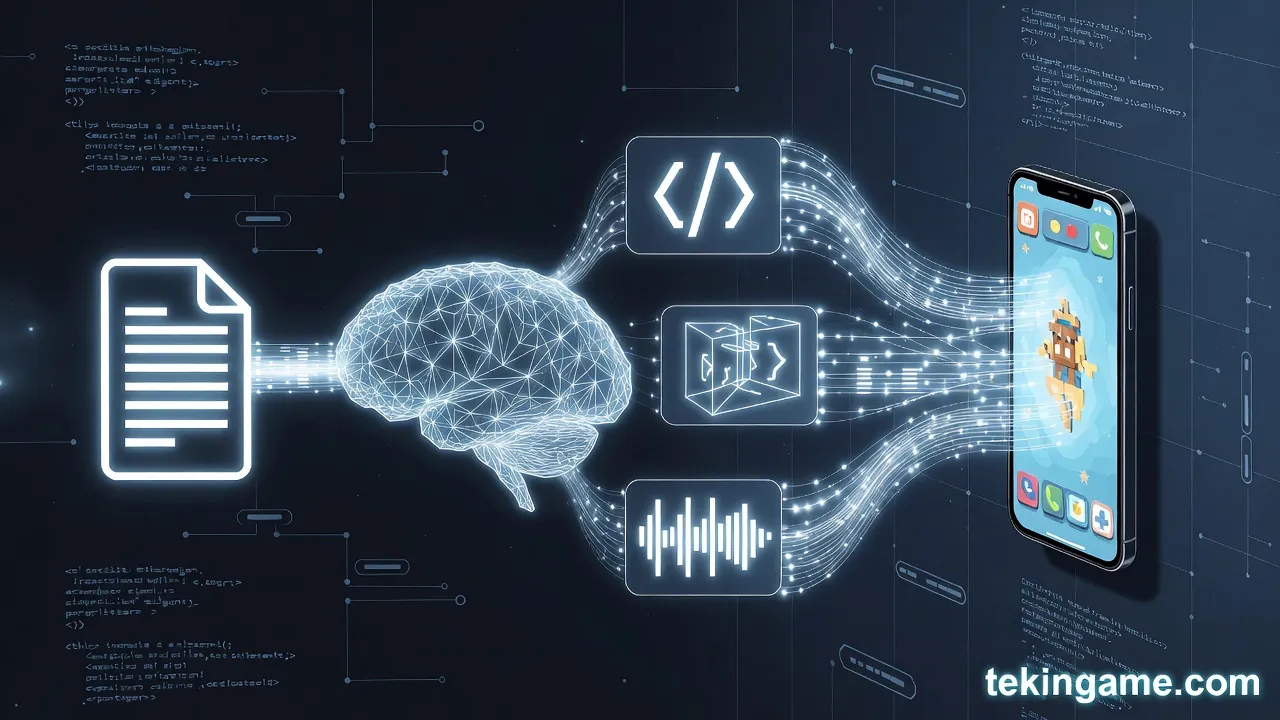
Imagine typing the following into the Unity panel: "Build a mobile game where a robot jumps over static laser obstacles. The graphics should be neon cyberpunk, and it scores a point for every successful jump." To achieve this, Unity is utilizing a combined Multimodal architecture:
- Natural Language Processing (NLP): The AI engine first breaks down your idea into logical blocks (Movement Mechanic = Platformer, Enemy = Static Laser, Visual Style = Neon Cyberpunk).
- On-the-fly Graphic Generation: Textures and artworks are applied directly onto 3D objects or 2D sprites using advanced Diffusion Models.
- Extracting Pre-written Code: Instead of the AI writing physics code line-by-line from scratch, it utilizes a massive database of Unity Prefabs and standard scripts (trained on millions of lines of existing code), merely adjusting the variables.
- Automated Compilation: Finally, the system builds the output, delivering a ready-to-play APK or iOS file.
3. The Illusion of Democratization: Why Indie Developers Are Furious
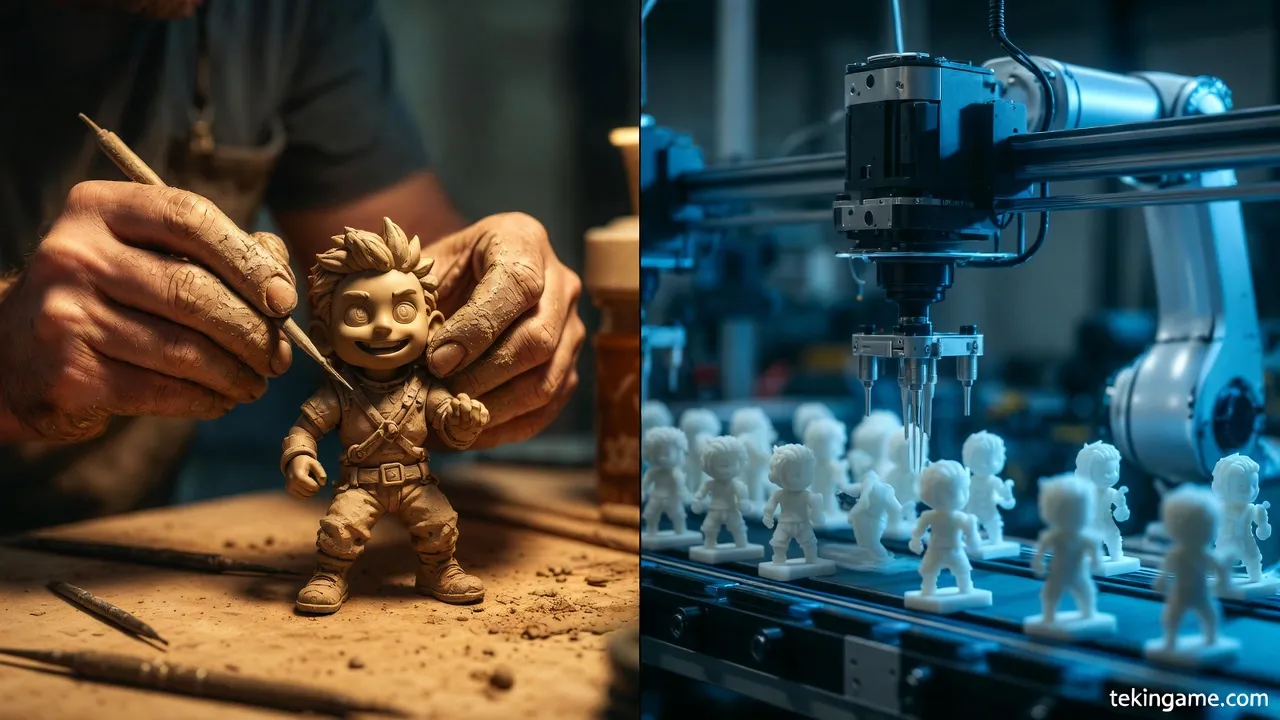
Despite these theoretically dazzling achievements, the reaction from the independent game development (Indie Game Devs) and software engineering communities has been a potent mixture of smirks, mockery, and deep-seated fury. Hashtags and Reddit threads demonstrate that a vast majority of developers not only reject this tool but view the system's output as a direct insult to their art form.
3.1. The Absence of "Soul" and the Enigma of Game Feel
Game development is not a sterile engineering process; it is a highly interactive art form. There is a critical concept in game design known as "Game Feel." This concept encompasses the meticulous tuning of microscopic details: exactly how many milliseconds a character pauses in the air at the apex of a jump to convey weight (Hang time), how much leniency is given to the player to jump after walking off a ledge (Coyote Time), the precise frequency of the camera shaking upon taking damage (Screen Shake), and how seamlessly animations blend.
Human game designers spend months manually tweaking these mathematical values so the game "feels" incredibly fluid and satisfying to the player. Professional developers argue that Unity's AI might be able to assemble a rapid prototype, but it can never comprehend that "final polish" and "emotional balancing." A machine does not understand what is inherently "fun." A prompt-driven output will result in a mechanical, plastic, heavily bugged, and intensely soulless experience.
4. The Plastic Economy: A Tsunami of Asset Flips on Steam and App Stores
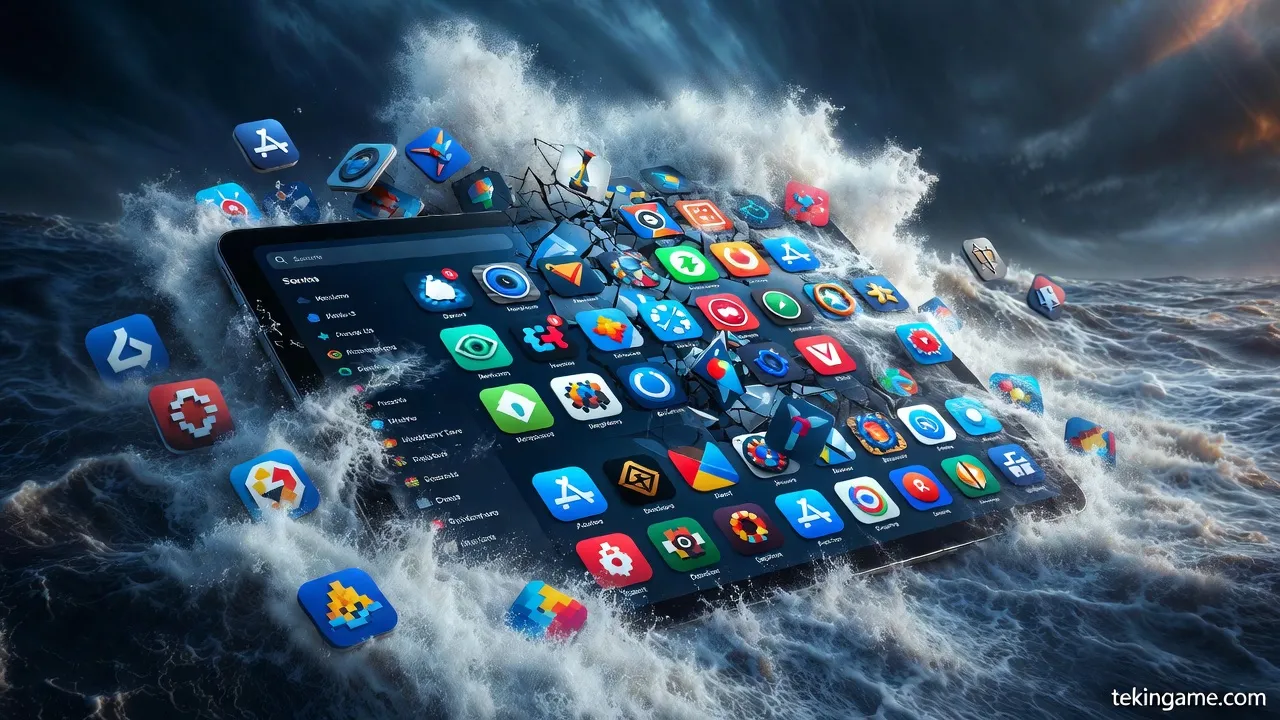
The greatest nightmare for small studios is not the technological aspect of AI, but rather the destruction of the game marketing ecosystem. Even today, finding a valuable, high-quality game amidst the thousands of low-effort titles released daily on storefronts like Steam or Google Play is a massive challenge.
If Unity's AI-Driven Authoring tool becomes publicly accessible, we will face an industry phenomenon known as an "Asset Flip" (rapidly throwing together pre-made assets for quick cash), but on an apocalyptic, industrial scale! Bots, spammers, and scammers will connect APIs to this tool, generating tens of thousands of AI-made casual games daily. These will be published across storefronts with varied names, AI-generated icons, and SEO-optimized metadata. This impending tsunami of "AI Garbage" will ensure that Discoverability for genuine indie developers—who spend years hand-crafting their art—will effectively drop to absolute zero.
4.1. The Hyper-Casual Revenue Model and AI's Role in It
Hyper-casual games operate on a brutally simple economy: rapid production, rapid market testing, and bombarding the user with in-app advertisements (Ad Monetization). These games do not require deep narratives or artistic graphics; they only need a simple, addictive mechanic. Unity's new tool is designed specifically to conquer this exact market. When the cost of producing a game drops from thousands of dollars to mere cents, ad agencies can produce hundreds of games daily until one finally goes viral. This signifies the ultimate death of quality in exchange for absolute quantity.
5. Unity's Strategic Pivot: Targeting Marketers Instead of Programmers

Senior economic analysts at Tekin Analysis believe that Unity's aggressive push toward generative AI is less about technological innovation for the sake of developers, and much more about a defensive economic strategy for corporate survival.
Having lost the hearts and minds of hardcore developers, Unity has entirely shifted its commercial Target Market. Who is the new target audience? Average users, teachers, marketers, and advertising agencies. Unity aims to become a platform where a beverage company can generate a promotional mobile game (Advergaming) for its summer campaign using a single text prompt, without ever hiring a single programmer or game studio. This shift in focus represents a dangerous paradigm shift away from "Art and Quality" toward "Mass Consumption and Quantity."
6. The Copyright Nightmare: Who Owns an AI-Generated Game?

Another monumental, unresolved hurdle Unity and its users will face in 2026 involves legal crises and intellectual property rights. Suppose you provide a highly detailed prompt into Unity's tool and generate a fantastic puzzle game that starts earning thousands of dollars monthly. Are you truly the Copyright Holder of that game and its underlying code?
6.1. The Stance of the US Copyright Office on AI
Currently, the United States Copyright Office (USCO) and international courts have explicitly established a precedent: works created exclusively by artificial intelligence (without significant, physical human creative input) are not eligible for copyright protection. Legally, this means your generated game instantly falls into the "Public Domain." If a game you prompt becomes successful, any rival studio or malicious hacker can download the exact code, clone it, and publish it under their own name. You would have absolutely no legal weapon to sue them!
7. The QA Nightmare: Debugging the Algorithmic Black Box
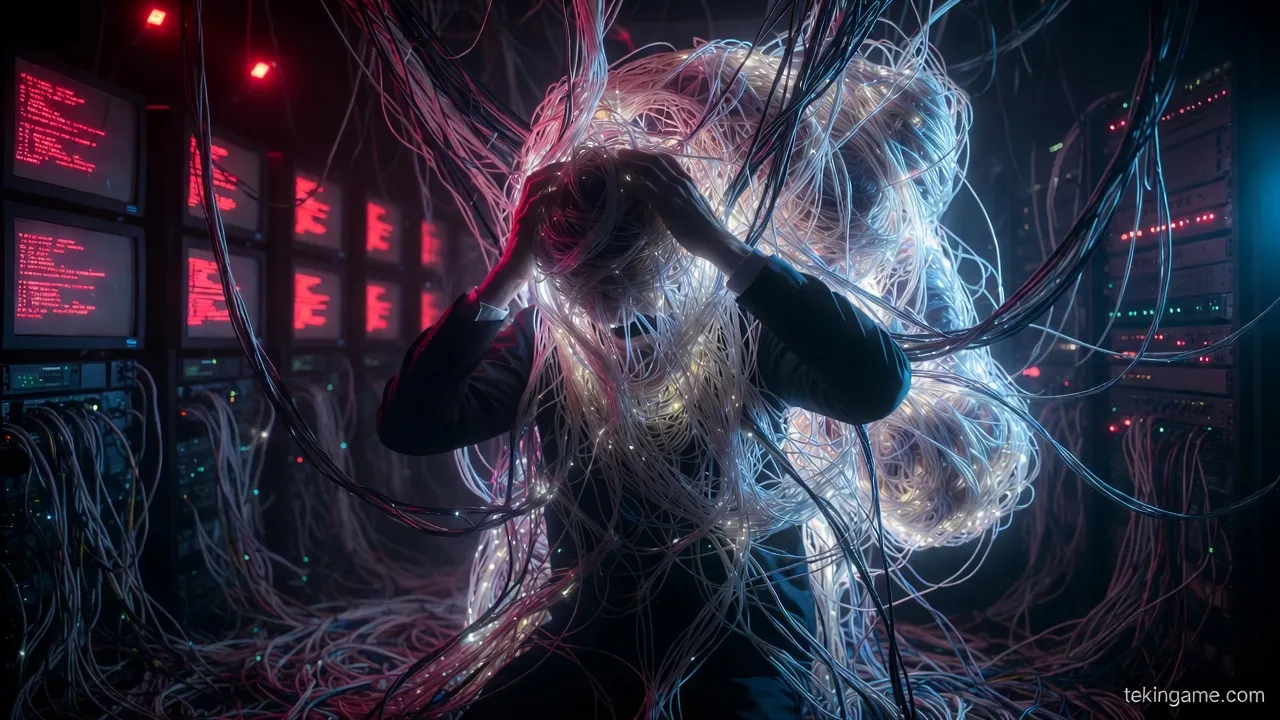
One critical aspect heavily overlooked by Wall Street investors is the reality of Quality Assurance (QA) and debugging. When a human software engineer writes code, there is a logical architecture and a traceable flow of data. If a bug occurs, the programmer can read the logic and fix it. However, LLM-generated code often resembles "Spaghetti Code"—a chaotic, tangled mess of scripts that somehow functions but lacks structural integrity.
If a marketer with zero coding knowledge uses a prompt to generate a game, what happens when a memory leak causes the game to crash on older Android phones? The AI might try to generate a patch, but without a human architect to oversee the engine's core limitations, the project quickly degrades into an unfixable, broken application. The "Black Box" nature of AI means that while creating the game takes 5 minutes, fixing a critical post-launch bug might be mathematically impossible for a non-developer.
8. The Ethical Black Hole: Scraping the Indie Soul
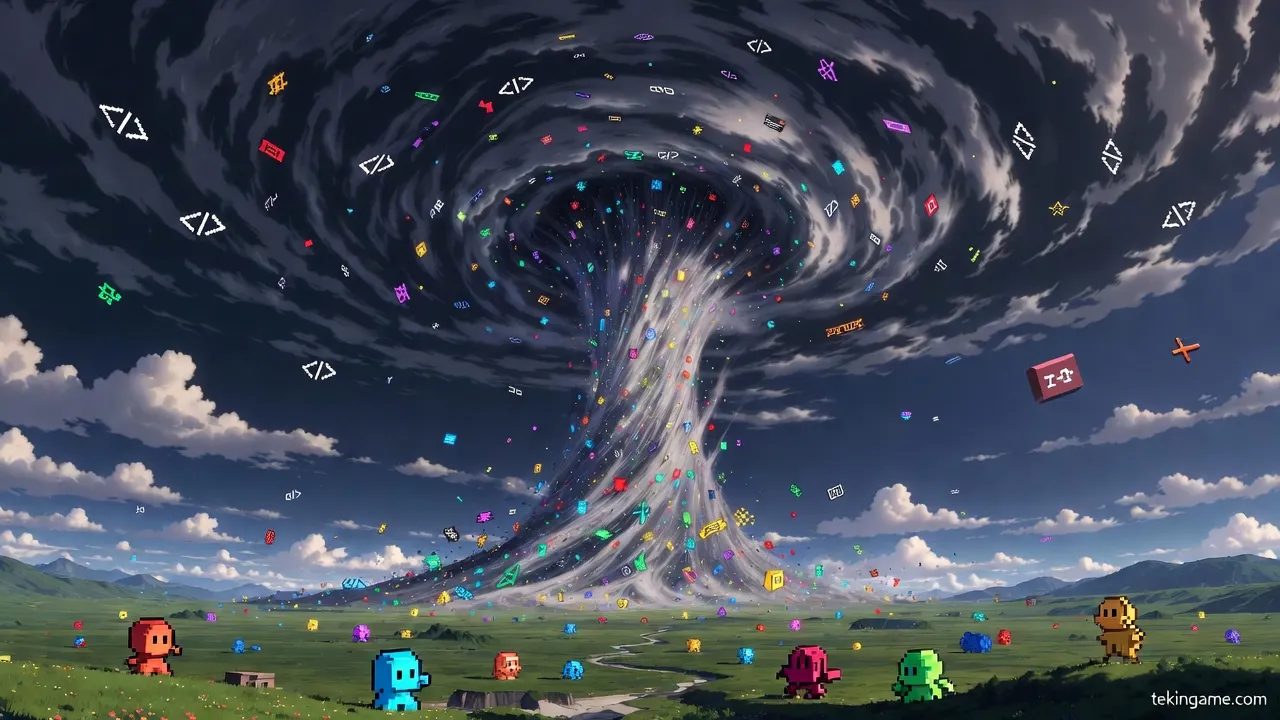
Beyond the technical flaws lies a massive ethical dilemma. Unity's generative AI models did not materialize out of thin air. To write functional C# scripts and generate 3D assets, these neural networks were trained on terabytes of data scraped from GitHub repositories, Unity Asset Store packages, and forums where thousands of developers shared their hard-earned knowledge for decades.
The indie game community feels deeply betrayed. Unity is effectively utilizing the collective, unpaid labor and artistic styles of traditional developers to train a machine designed specifically to replace them in the casual market. This ethical black hole is fueling boycotts and accelerating the mass migration to Godot, which strictly adheres to transparent, community-driven open-source principles.
9. Impact on Education: Is Learning C# Obsolete in 2026?

This is the burning question occupying the minds of thousands of software engineering students. If Unity can just generate the code, why spend years mastering the C# language?
9.1. AI vs. Unity's DOTS and ECS Architectures
The response from Tekin Analysis experts is crystal clear: Coding is not becoming obsolete; the required level of expertise is simply elevating. In recent years, Unity has introduced highly complex, performance-oriented architectures known as DOTS (Data-Oriented Technology Stack) and ECS, which are challenging even for senior programmers. Currently, AI can only generate routine tasks and simple Object-Oriented Programming (OOP) scripts.
To debug the convoluted code an AI writes, to optimize Memory Management for lower-end platforms, and to break the engine's inherent limitations, you will always need a human software engineer with a profound knowledge of C#. The programmers of the future will not merely be "code typists," but rather the essential architects and supervisors of Artificial Intelligence.
10. Final Conclusion: The Battle of Hand-Crafted Art vs. The Algorithm
Unity Technologies' new promise to generate casual games via text prompts is a terrifying yet fascinating double-edged sword. Lowering the barrier to entry for game development is technologically spellbinding, allowing anyone with an idea to create a playable product. However, this technology poses an existential threat to authenticity, legal security, and Discoverability within the gaming industry. Humans will always hunger for hand-crafted art, but in the mobile market, a bloodbath of algorithmic games is on the horizon.
The Final Verdict: TekinGame Newsroom
- 🎮 A Survival Strategy, Not Artistic Innovation: Unity’s push toward prompt-based game creation is a desperate attempt to attract marketers and corporate brands after failing to retain the trust of independent developers.
- 🎮 The Asset Flip Tsunami is Coming: Digital marketplaces like Steam and Google Play will soon be flooded with thousands of soulless, plastic, and generic "garbage" games churned out by bots.
- 🎮 The Absence of Soul and Game Feel: AI can compile code and draw images, but it is currently incapable of understanding "Game Feel" or crafting a balanced, entertaining, and truly artistic experience.
- 🎮 The QA Nightmare: Generating a game takes 5 minutes, but debugging the AI's "spaghetti code" when the game crashes will be impossible for non-programmers.
- 🎮 Software Engineers Remain Kings: To invent never-before-seen mechanics, optimize heavy codebases, and utilize complex architectures like DOTS, the expertise of a human C# programmer remains entirely irreplaceable.
What are your thoughts? Would you be willing to spend your time or money on a game generated by an AI in 5 minutes? Share your expert analyses in the comments below and forward this to your game dev friends!