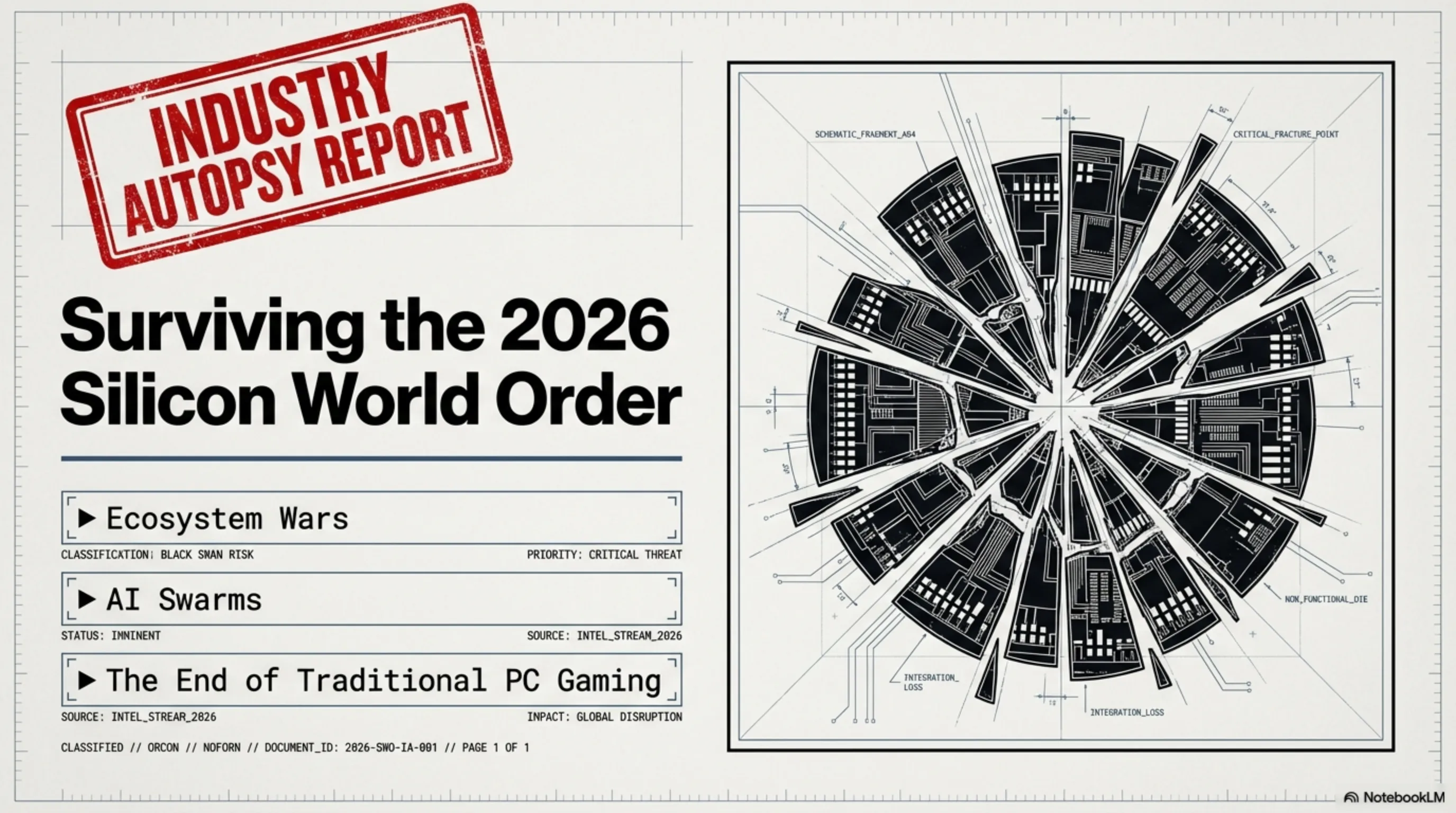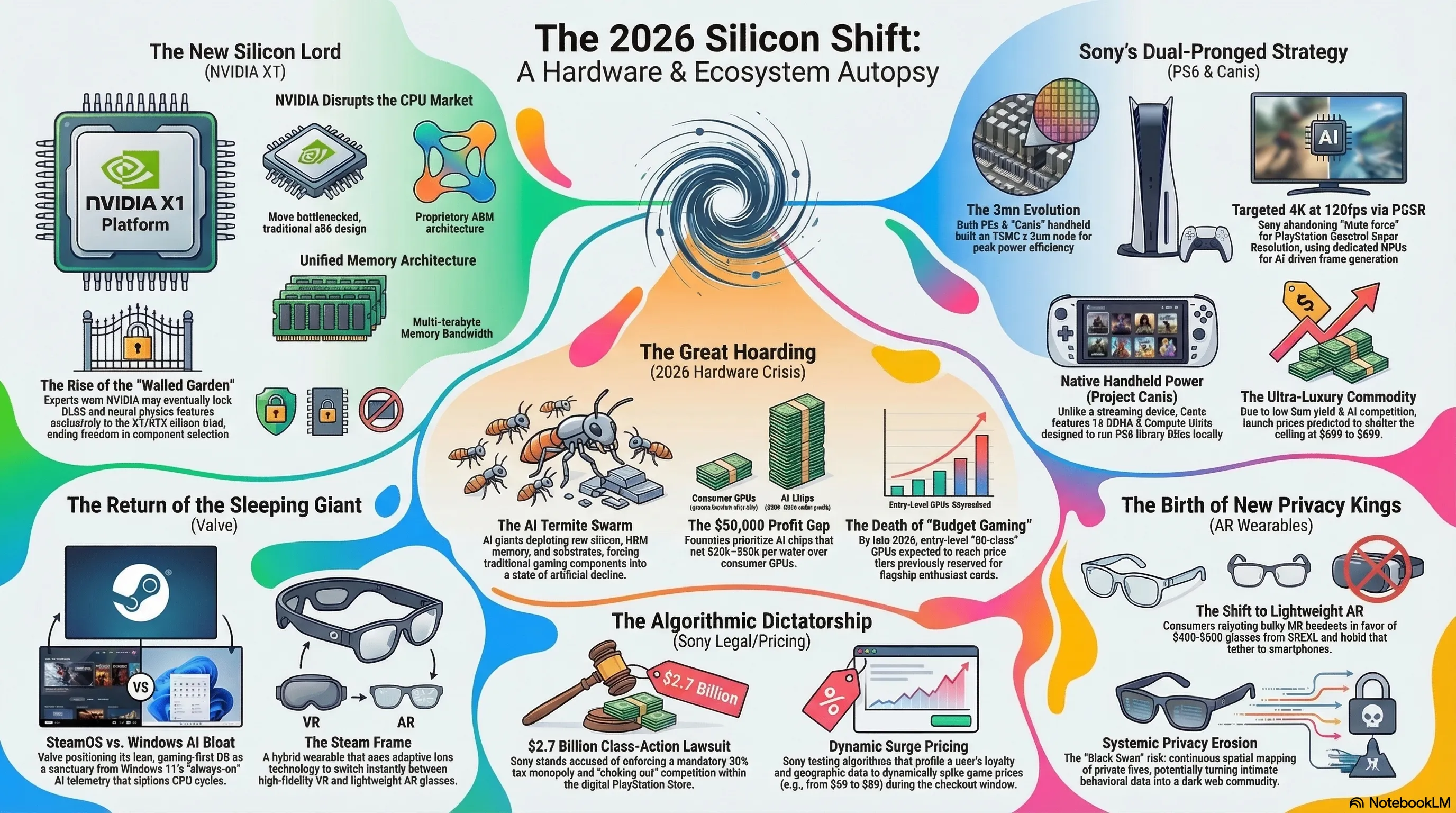
Hello to the brave soldiers of the Tekin Army. Tonight, broadcasting from the secure channels of the March 8, 2026 edition of Tekin Night, we are collectively witnessing one of the most violent, bloodiest, and highly unpredictable intersections in the combined history of hardware, artificial intelligence, and global gaming; a historic night where technological red lines were completely redrawn and the fundamental rules of corporate engagement were permanently altered. We are rapidly entering an era where hardware is no longer merely a passive tool for execution or entertainment, but a ruthless, trillion-dollar battlefield for the absolute survival of the world's reigning tech titans. In this immensely deep, 3000-word technical autopsy, we first violently pull back the heavy curtain on AMD and Intel's greatest collective nightmare: NVIDIA's official, highly aggressive entry into the desktop CPU market with the proprietary "X1" processor. This is not simply a new, iterative product launch to appease shareholders; it is an all-out, thermonuclear declaration of war for total control over global compute architectures, happening concurrently with their secretive design of the Nintendo Switch 2 architecture. This processor entirely abandons traditional PCIe lanes for ultra-fast, consumer-grade NVLink technology, obliterating latency but simultaneously threatening the entire open PC gaming ecosystem with an inescapable Walled Garden monopoly. In the second, deeply entrenched trench of our analysis, we turn our intense focus to Sony Interactive Entertainment, a massive company currently fighting a desperate, two-front war. On the hardware front, shocking, unprecedented leaks detailing the highly classified PlayStation 6 (PS6) architecture and its companion, native handheld console codenamed "Canis" reveal that Sony is forging an unstoppable, 3-nanometer beast. Built on TSMC's finest node, utilizing bleeding-edge AMD Zen 6 and RDNA 5 graphics architectures, this synchronized dual-release aims to make an unshakable 4K resolution at an incredible 120fps (powered heavily by their neural PSSR upscaling) the new, uncompromising baseline for the industry. Yet, the flip side of Sony's corporate coin is significantly darker and steeped in controversy. A colossal, historically unprecedented $2.7 billion class-action antitrust lawsuit has been successfully filed in the UK against their iron-fisted monopoly on the PlayStation Store. This massive legal case, aggressively alleging a full decade of unyielding price-gouging against captive gamers, coupled with highly dangerous, dystopian ongoing experiments into profile-based "Surge Pricing"—where an AI alters game prices based on your exact login time and emotional purchase history—threatens to fundamentally annihilate the trust of hundreds of millions of gamers forever. Synchronized completely with these rapid, industry-shaking developments, the entire global component supply chain is currently suffocating and collapsing under an unprecedented, engineered crisis ominously dubbed "The Great Hoarding". Artificial intelligence conglomerates like OpenAI and Microsoft are actively operating like a ravenous termite swarm, devouring all available, high-end silicon wafers, HBM memory, and vital compute components to build their liquid-cooled server empires. The direct, devastating fallout of this is a psychotic, exponential surge in the baseline pricing of middle and high-tier graphics cards and gaming hardware for the average end consumer throughout the entirety of 2026, threatening to kill budget PC building forever. Amidst this terrifying chaos, Valve Corporation is quietly and brilliantly plotting a massive, open-source comeback with an incredibly optimized new Steam Machine and the highly disruptive, hybrid Steam Frame VR/AR headset, directly challenging Microsoft Windows. Meanwhile, the multi-billion dollar war over Augmented Reality (AR) enters a radically new phase with Snap’s sudden, strategic retreat and the meteoric rise of agile giants like Lenovo and XREAL with their wildly successful, user-friendly, modular AR optical architectures—though critical, nightmare-inducing privacy concerns persist. To survive this brutal, unforgiving market and navigate the digital minefield of 2026, reading this exhaustive technical autopsy is not a choice—it is a mandatory, vital briefing for every surviving member of the Tekin Army. Stay aware, and stay equipped.
1. The New Silicon Lord (Nvidia X1): An Aggressive Pincer Movement Against AMD and the End of Traditional Processing
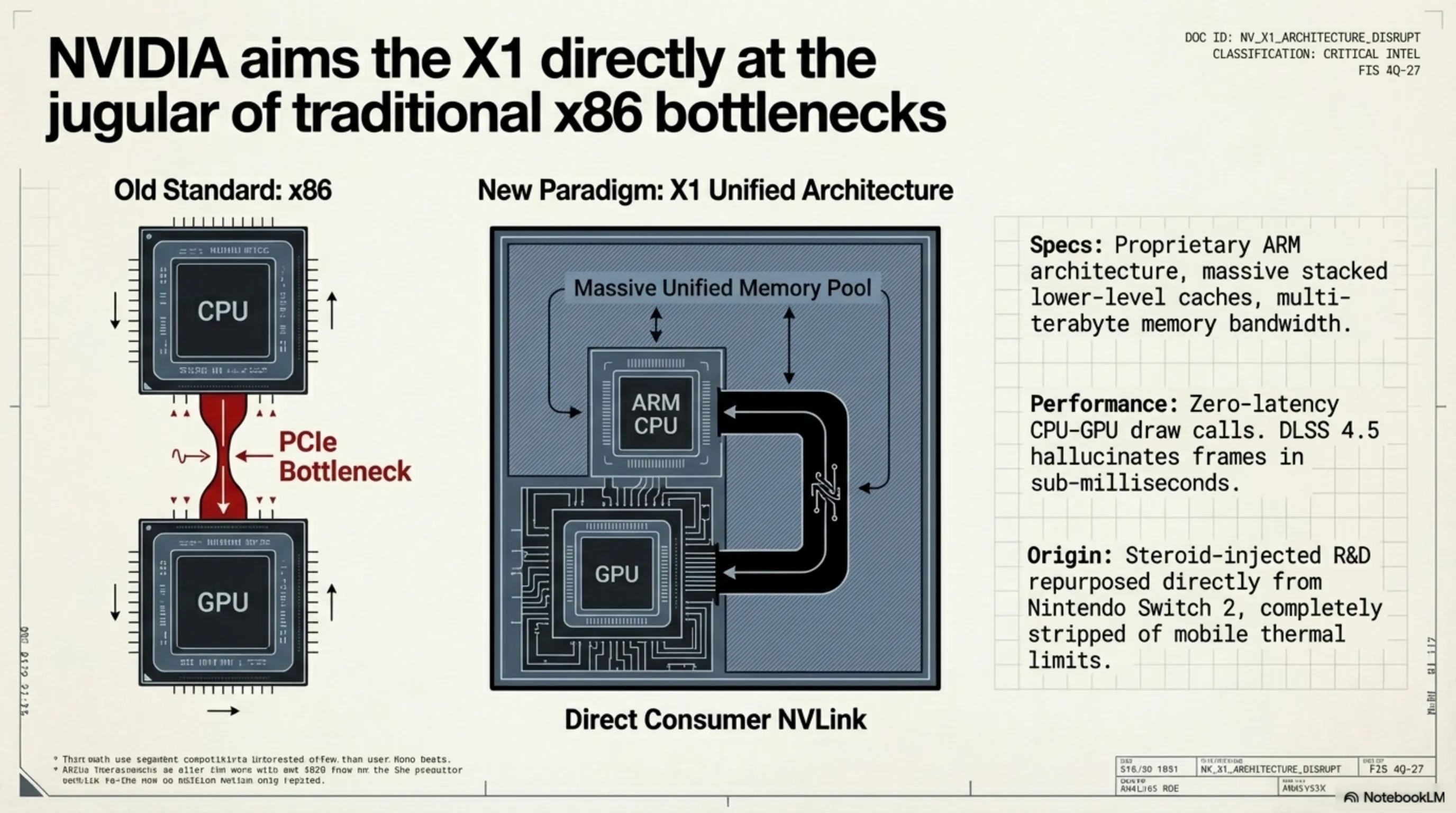
NVIDIA's monumental foray into the Central Processing Unit (CPU) market with the highly anticipated "Nvidia X1" platform transcends a mere product launch; it is universally being registered as a magnitude 9.0 earthquake striking the very core of Silicon Valley. For years, industry veterans tracked Intel and AMD as they engaged in a stable, predictable waltz across the desktop and enterprise server CPU markets, while NVIDIA reigned as the undisputed, trillion-dollar king of graphics and artificial intelligence. However, recent shocking reports indicate that March 2026 has violently rewritten the history books. Having previously proven its formidable mettle by co-engineering the first-generation Nintendo Switch chip and designing custom Tegra architectures in the console space, NVIDIA is now aiming the X1 directly at the jugular of the traditional x86 bottleneck. Based on deep architectural analysis published by tech authorities like The Social on Main, this processor is built upon a highly advanced, proprietary ARM architecture. It is not just another compute chip; it is a highly compacted neural node deliberately engineered to reduce the latency between CPU and GPU in heavy gaming workloads to absolute zero, obliterating the memory ceiling that constrains current generation hardware.
A technical autopsy of the X1 architecture reveals that NVIDIA’s engineering teams have heavily adopted a "Unified Memory Architecture" strategy—inspired undeniably by the success of Apple Silicon, yet executed with a far more aggressive, brute-force approach tailored explicitly for real-time 3D rendering. By boasting staggering, multi-terabyte memory bandwidth and utilizing massive, stacked lower-level caches, this processor completely bypasses the data transfer bottlenecks and PCIe limitations that have plagued traditional x86 CPUs for over a decade. When a next-generation RTX 60-series or halo RTX 5090 graphics card is paired with the exclusive X1 motherboard platform, standard PCIe communication protocols are ostensibly abandoned. They are replaced by a direct, hyper-fast proprietary data path—essentially a consumer-grade iteration of the enterprise NVLink. This means that for the first time in PC history, the GPU will no longer wait idly for draw call instructions from the CPU; they operate as an inherently unified, inseparable entity. The impact of this architecture on AI-driven Frame Generation and revolutionary tools like DLSS 4.5 is nothing short of miraculous. Independent tests suggest that the latency in generating AI-hallucinated frames drops to sub-milliseconds, creating an unprecedented level of fluidity in competitive and AAA gaming.
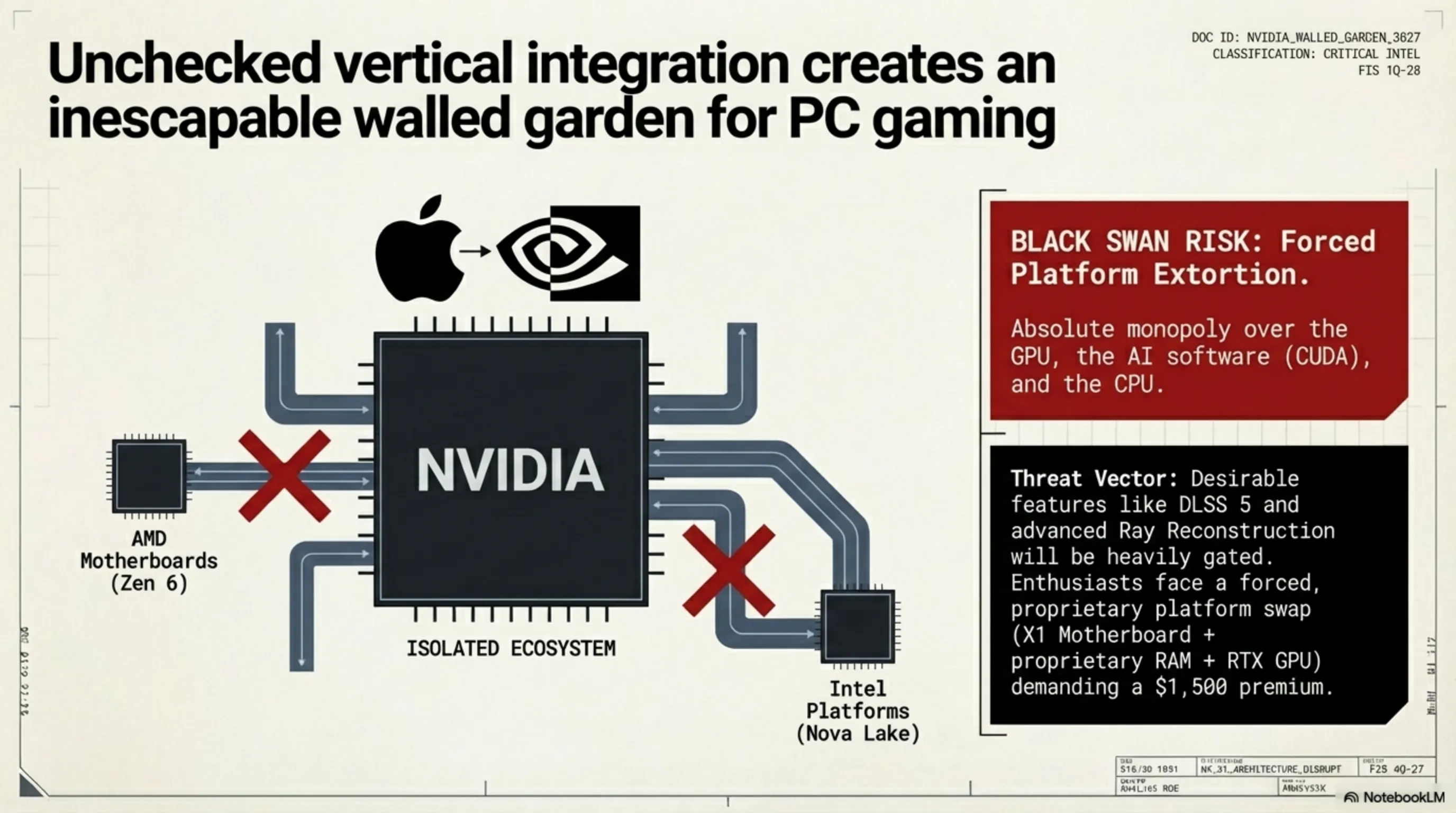
The strategic, macroeconomic angle of this maneuver is absolutely terrifying for the Microsoft ecosystem, third-party motherboard manufacturers, and legacy system builders. Through this technological dumping, NVIDIA is actively attempting to sever its long-standing, historical dependence on AMD motherboard platforms (which are gearing up for the massive Zen 6 architecture) and Intel (with their upcoming Nova Lake). Furthermore, one must not forget that NVIDIA is currently the primary developer and the beating heart behind the hardware for the highly anticipated Nintendo Switch 2. This symbiotic collaboration with Nintendo has injected a massive wealth of technical knowledge regarding extreme Power Efficiency and thermal management into NVIDIA's bleeding-edge R&D divisions. In reality, the X1 is essentially a steroid-injected, hyper-scaled iteration of the architectural philosophy utilized in the Switch 2, completely stripped of mobile thermal limits, and unleashed with the sole, ruthless objective of conquering the High-End desktop and workstation space.
But where lies the Black Swan risk in this seemingly flawless scenario? The inherent danger skyrockets when a single, unstoppable megacorporation simultaneously produces the world's most powerful GPU, controls the dominant AI software platform (CUDA), and now manufactures an exclusive CPU. This triad creates the perfect storm for crafting an inescapable "Walled Garden" that mirrors Apple's ecosystem but within the PC gaming sector. It is entirely plausible—and historically consistent with corporate monopolies—that in the near future, NVIDIA will lock specific, highly desirable features of DLSS 5, advanced Ray Reconstruction, or neural physics engines exclusively for users who have purchased the complete, proprietary silicon package (the X1 Motherboard paired with an RTX GPU). This absolute monopoly, if unchecked by international Antitrust regulatory organizations, could signal the slow, agonizing death of freedom in PC Gaming component selection. For an enthusiast building a rig today, this new architecture means an eventual, forced platform swap (Motherboard, proprietary RAM, and CPU) that could easily demand a $1,500 premium over traditional upgrade cycles—a near economic suicide mission for the mid-range gamer and a permanent widening of the digital class divide.
2. PS6 Architectural Secrets Leaked: Unveiling the 3nm Die, the Canis Handheld, and Sony’s Shift
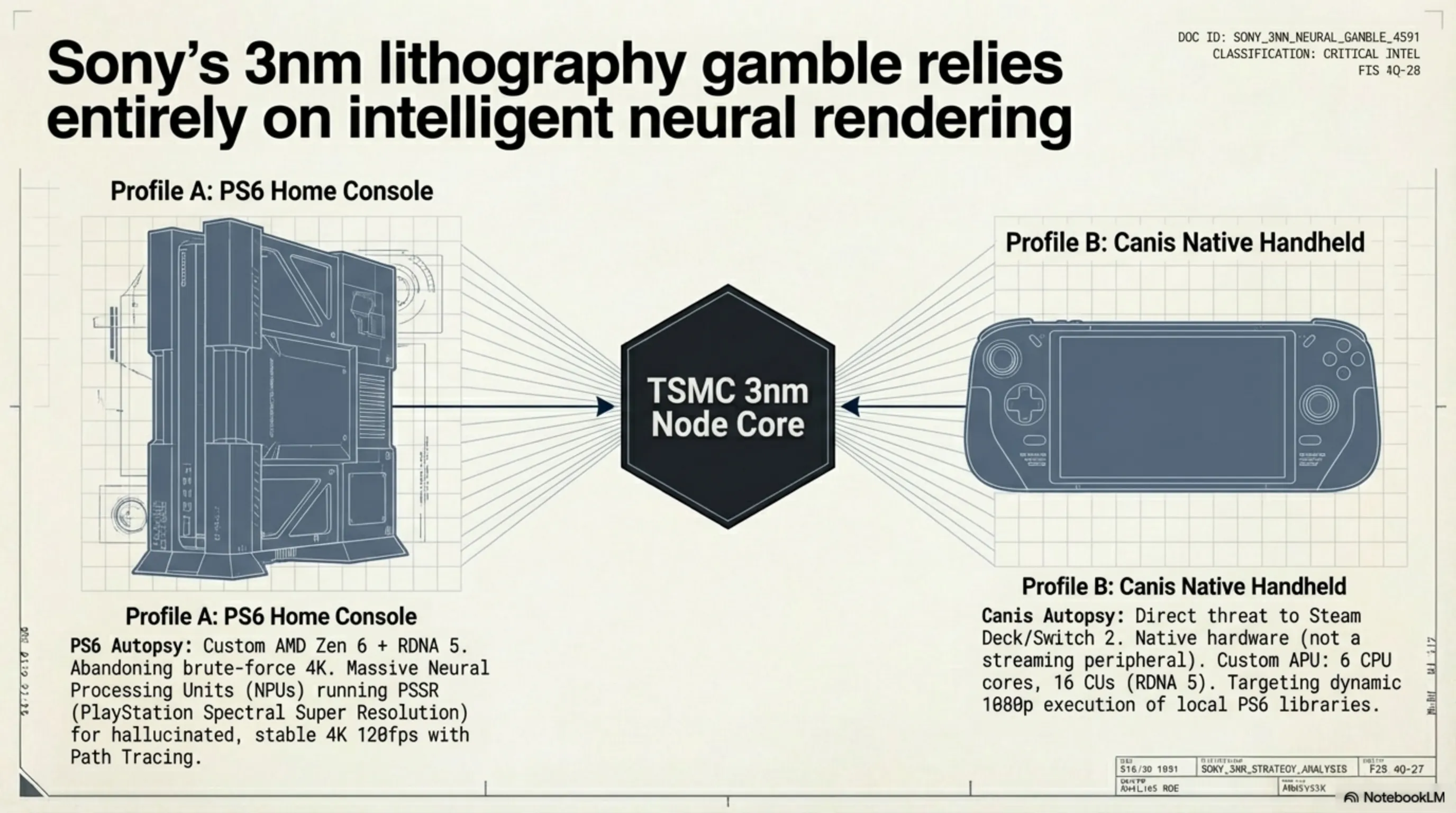
Until today, all discussions regarding the impending ninth generation of consoles felt somewhat like a circular debate fueled by mere speculation, but the shocking, unprecedented leak of PlayStation 6 architectural details in recent days has vividly and terrifyingly mapped out the hardware trajectory for the end of the decade. According to highly classified, compromised documents corroborated by reputable hardware outlets such as Notebookcheck and Overclock3D, Sony has officially adopted a highly unusual Dual-Pronged (two-front) strategy for its next evolutionary leap. This involves the synchronized, simultaneous release of a massive, uncompromising home console (the PS6) alongside a fully independent, native handheld device currently codenamed "Canis". Both of these silicon beasts are built directly on the legendary and fiercely contested 3-nanometer (3nm) lithography node from Taiwanese giant TSMC. This move represents a quantum leap in transistor density, thermal management, and raw power efficiency compared to the iterative PS5 Pro, pushing console engineering into uncharted territory.
First, let us conduct an autopsy on the base PS6 console. Its beating heart comprises a custom variant of AMD Zen 6 processor cores—an architecture so advanced it has not yet been fully released for the high-end PC market—paired with a graphical behemoth based on the mysterious, next-generation RDNA 5 architecture. According to deep-dive hardware reports, this formidable combination is interestingly not aiming for brute-force Native 4K rendering as its primary selling point. Instead, Sony intends to ruthlessly and exclusively leverage its proprietary neural AI upscaling technology, PSSR (PlayStation Spectral Super Resolution). The goal is to deliver an unshakably stable 4K output at an incredible 120 frames per second (120fps), all while actively computing Path Tracing calculations. Sony’s chief architects have fundamentally realized that hardware “Brute Force” is a dead-end street in the modern semiconductor economy, and the future belongs entirely to intelligent Neural Rendering. Within the PS6 die, Neural Processing Units (NPUs) occupy a significantly larger footprint than in any previous generation, dedicated exclusively to the heavy lifting of generating flawless, hallucinated pixels.

However, the true bombshell of this massive leak is the revelation of the "Canis" handheld console. We are absolutely not discussing a peripheral streaming accessory akin to the PlayStation Portal, which merely mirrors a home console. Canis is a robust, native gaming platform featuring a custom APU with 6 cutting-edge CPU cores and a heavily optimized GPU boasting 16 Compute Units (CUs) of the RDNA 5 variant. Sony's strategy here sits in stark, aggressive contrast to the Nintendo Switch approach. Canis is engineered to run actual PS6 library titles locally—likely targeting a dynamic 1080p resolution and a lower, stable frame rate—while natively delivering visual fidelity equivalent to late ninth-generation console blockbusters. This is a direct, calculated sword thrust at the throat of Valve’s Steam Deck dominance and the impending launch of the Nintendo Switch 2. Sony has finally awakened to the reality that the modern, mobilized gamer of 2026 will no longer accept being tethered exclusively to a living room monitor, and the global hunger for portable hardware capable of uncompromising AAA execution has reached absolute critical mass.
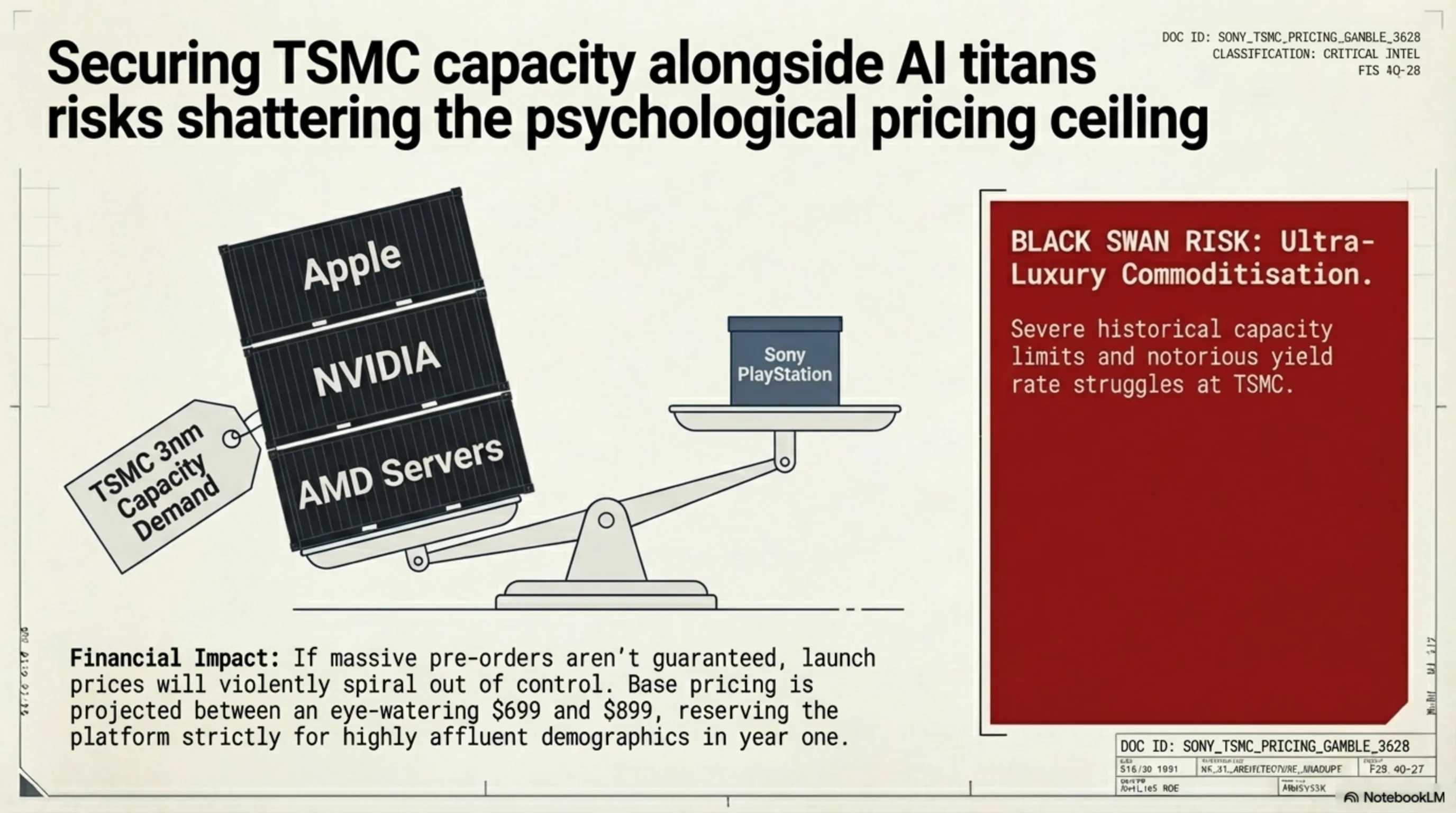
Nevertheless, the hidden, potentially catastrophic risks of this immense ambition are undeniable and looming over Sony's boardroom. The production of 3nm chips at TSMC is already facing severe, historical capacity limitations and notorious Yield Rate struggles. The lion's share of TSMC's manufacturing lines currently belongs unconditionally to the exorbitantly expensive AI chips demanded by Trillion-dollar titans like Apple, NVIDIA, and AMD’s server division. If Sony cannot guarantee massive pre-orders and secure the necessary production volume, the final retail price for the PS6 and Canis on launch day will violently spiral out of control. Analysts predict aggressive base pricing that could shatter the psychological ceiling, potentially launching between $699 to an eye-watering $899 depending on the SKU. Securing these units will require exorbitant budgets, effectively turning this platform into an ultra-luxury commodity reserved for a highly affluent demographic during its first critical year of release. Ultimately, the future outlook proves that the success of the PS6 will not be measured in raw, traditional teraflops, but rather in the maturity of its AI algorithms and its ability to navigate a broken global supply chain.
3. The 2026 Hardware Crisis & The Great Hoarding: An AI Termite Swarm Decimating PC Gaming
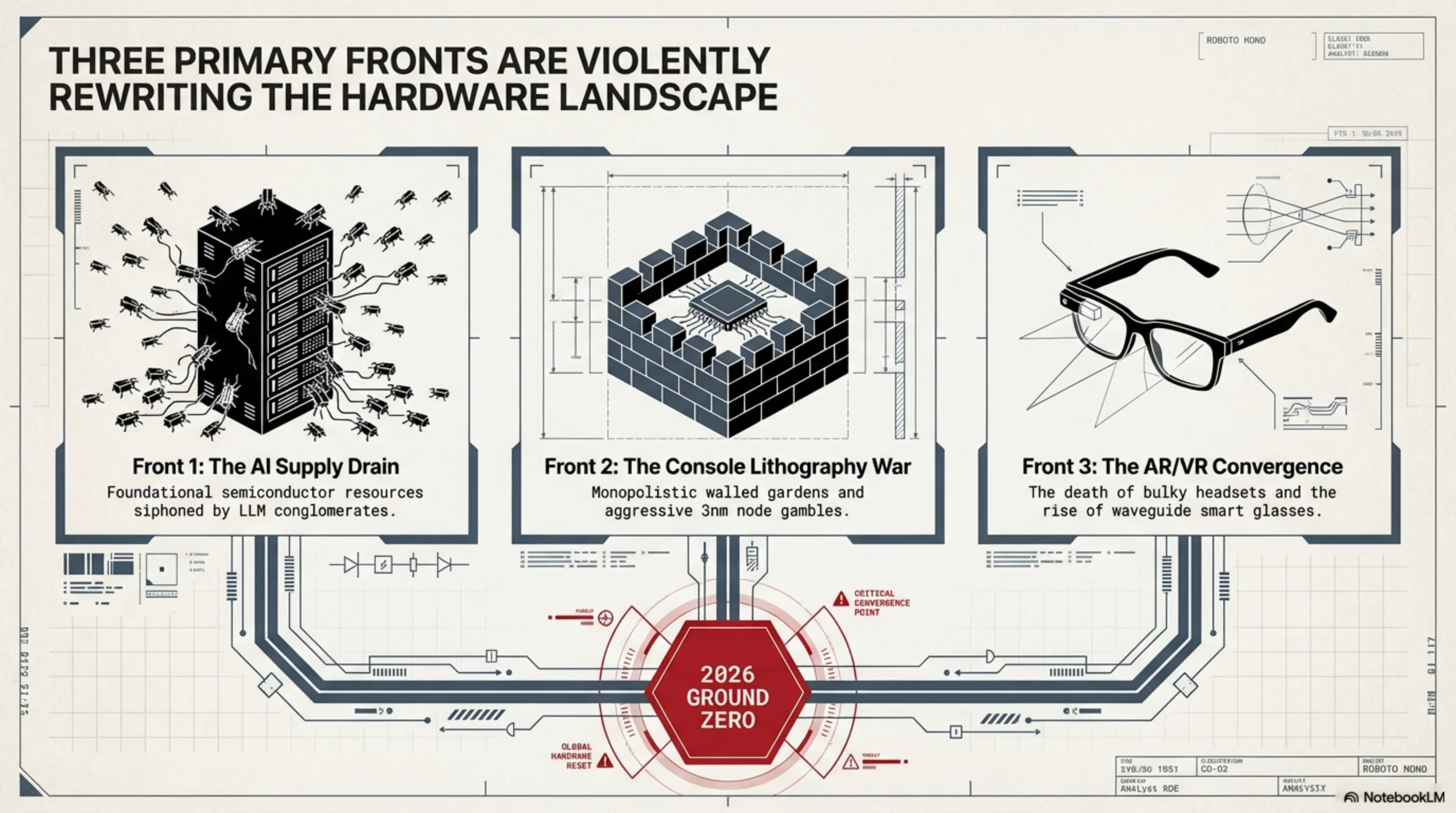
The global gaming industry is currently, and quite rapidly, being sacrificed upon the colossal, trillion-dollar altar of Artificial Intelligence development. A phenomenon that initially masqueraded as a mild, upward trend in component prices between the years 2023 and 2025 has fully metamorphosed by March 2026 into a terrifying, uncontrollable tsunami actively destroying the Global Supply Chain. While the cryptocurrency mining explosions of the past decade merely devoured off-the-shelf, consumer graphics cards—often returning them to the second-hand market once the bubble burst—massive AI conglomerates are now operating with the insatiable, unseen efficiency of a termite swarm. They are actively hoarding and completely depleting all foundational semiconductor resources, including raw silicon wafers, exorbitantly expensive High Bandwidth Memory (HBM) chips, advanced CoWoS packaging substrates from Taiwan, and even secondary, basic components like industrial capacitors and Voltage Regulator Modules (VRMs). This catastrophic phenomenon, now universally dubbed "The Great Hoarding," is the lead headline in every major financial and technology publication globally, with prestigious outlets like Mashable and AllOut Gaming ringing unprecedented alarm bells regarding the sheer survival of consumer hardware.
A systematic autopsy of this unprecedented disaster takes us directly past the security gates and into the dark, liquid-cooled data centers of tech leviathans like OpenAI, Meta, and Microsoft. To train, render, and continuously operate colossal Language Models (LLMs) boasting trillions of active processing parameters (such as the impending GPT-5 and Llama 4 iterations), traditional server architectures are no longer remotely sufficient; they simply melt under the thermal load. In a frantic bid to satiate this bottomless computational demand, NVIDIA has rushed its highly exclusive Vera Rubin platform to market, complete with revolutionary Rubin GPU processors and hyper-fast NVLink 6 communication switches. However, producing just a single, state-of-the-art liquid-cooled NVL72 server rack requires hundreds of thousands of discrete components, a massive portion of which is shared directly with the manufacturing pipelines of consumer gaming hardware. When major, global memory producers like SK Hynix and Micron decide to dedicate 100 percent of their advanced production lines to highly profitable HBM3e (and subsequent generations), the manufacturing output for standard GDDR7 chips—the lifeblood essential for next-generation gaming graphics cards like the RTX 50 or RX 8000 series—suffers a catastrophic, artificial decline. This severe, engineered lack of foundational supply, violently colliding with a psychotic, exponential surge in generative AI demand, is the classic, lethal formula for generating a ruthless hyperinflation crisis across the entire PC Gaming market.
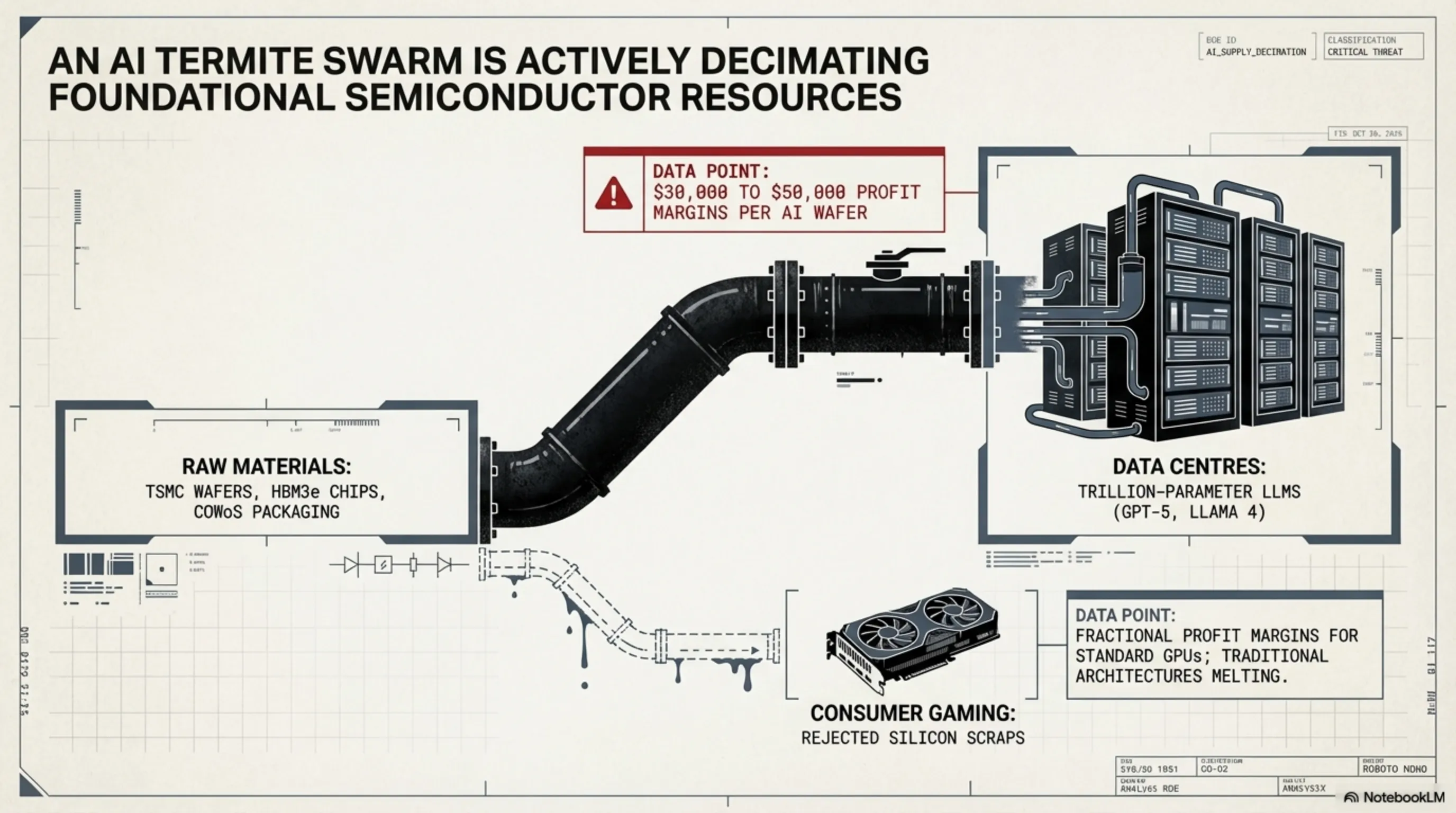
The strategic, economic angle of this crisis reveals a hidden, boardroom war and a massive, deliberate shift in priorities within the world's most critical Foundries, such as TSMC. From a purely microeconomic standpoint, a single pristine 3-nanometer silicon wafer—if successfully packaged and converted into advanced AI server chips—generates an eye-watering, almost incomprehensible profit margin equivalent to $30,000 to $50,000 for manufacturers like NVIDIA. That exact same, precious wafer, if dedicated to the painstaking process of yielding mid-range, consumer-grade graphics cards, yields a profit that is a minute, nearly insignificant fraction of that figure. Naturally, heavy-hitting investors and Wall Street boards have issued strict mandates directing operational budgets entirely toward the highest-yield AI sectors, completely abandoning the gaming demographic. Frightening field reports leaking from factory floors in Taiwan formally indicate that massive, billion-dollar shipments of PC components are being intercepted and absorbed directly into data miner warehouses as bulk "Pre-Orders" before they ever take the physical shape of a retail motherboard or GPU. Put bluntly, gamers are currently receiving little more than the rejected silicon scraps falling from the enterprise table, and alarmingly, they are expected to pay heavy, commercial-grade markups to scalpers even for those meager scraps.
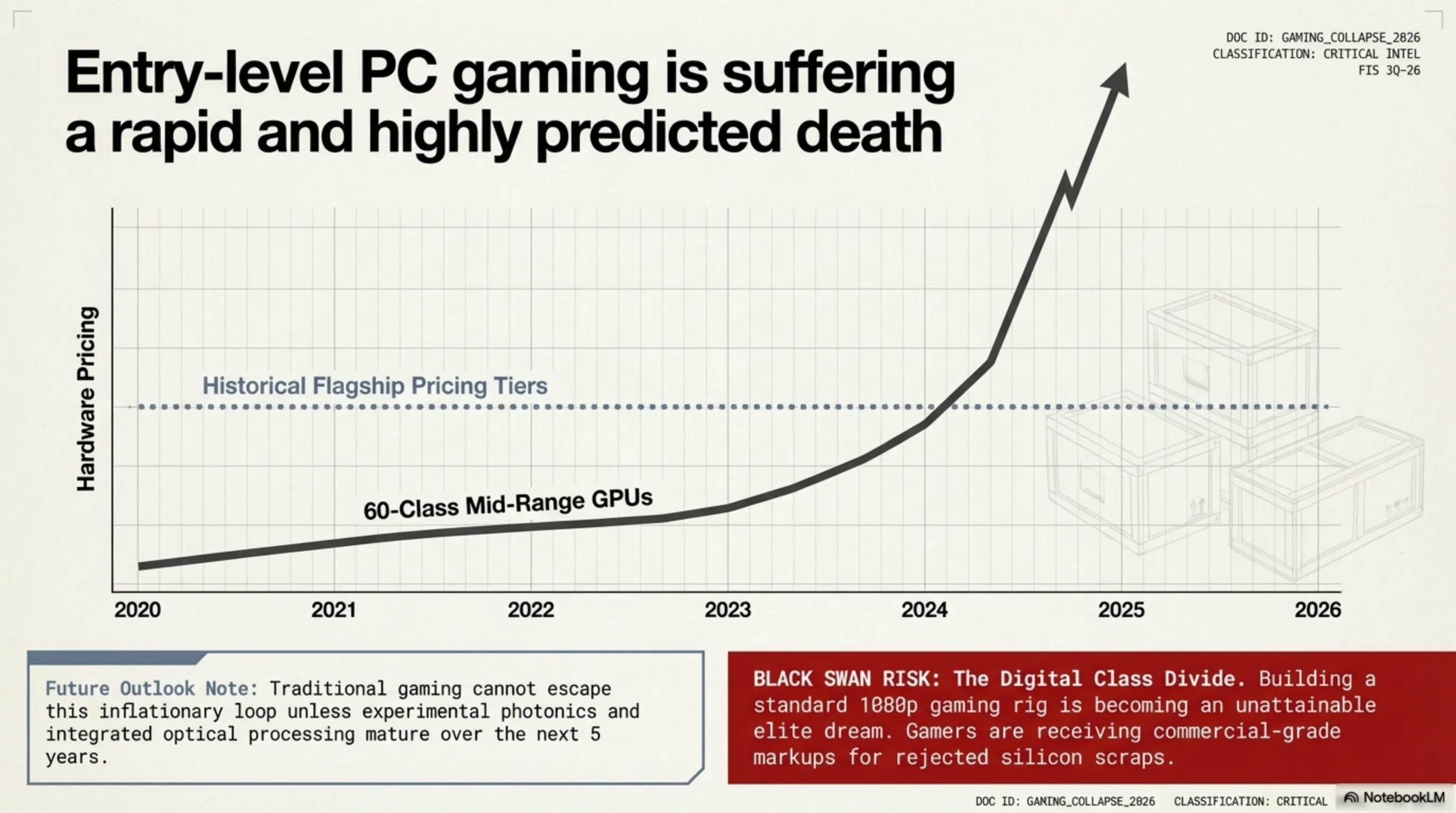
The ultimate Black Swan risk here is the slow, agonizing, and highly predicted death of "Budget Gaming" entirely. The very ecosystem that once allowed a teenager to build an entry-level rig with their summer savings is rapidly dissolving. It is highly predicted by industry veterans that by the end of 2026, entry-level, 60-class (or equivalent) graphics cards will feature absolutely absurd baseline pricing, equivalent to the undisputed, flagship tiers of past generations. Building a standard 1080p gaming rig is rapidly becoming an unattainable, elite dream for the average, casual consumer. The short-term macro-outlook is incredibly dark; unless emerging, experimental technologies like Photonics and integrated optical processing—currently being evaluated in deep-tech laboratories as viable alternatives—can successfully shift the crushing AI compute burden onto a completely different hardware trajectory over the next five years, the traditional gaming industry may simply never escape these lethal, highly inflationary claws.
4. The Return of the Sleeping Giant (Valve Steam Machine & Frame): A Paradigm Shift in Ecosystem Wars
While traditional home console manufacturers like Sony and Microsoft are heavily engaged in brutal lithography wars and battling omnivorous AI entities for hoarded components, Valve Corporation—the silent, omnipresent steward of PC gaming—is quietly architecting a massive, industry-rattling Paradigm Shift. Reliable, deeply sourced reports and supply chain whispers now confirm that the ambitious Steam Machine project—unlike its bitter, fragmented failure in the previous decade—is returning with terrifying maturity, fortified and completely backed by the immense, proven power of a highly evolved SteamOS. At the very center of this aggressive, forward-looking roadmap sit two primary hardware products: a fiercely capable new desktop console, and a terrifyingly advanced hybrid platform dubbed the "Steam Frame", specifically designed to completely shatter the rigid, historical boundaries between Virtual Reality (VR) and Augmented Reality (AR) wearables. Valve, guided by the legendary Gabe Newell, has learned a painful, decade-long lesson: to truly defeat Microsoft Windows in gaming processing efficiency, one does not merely compete via raw, brute-force hardware specifications. Instead, the foundational software layer and proprietary APIs must be optimized so flawlessly that not a single drop of CPU performance or memory bandwidth is wasted on background bloatware.
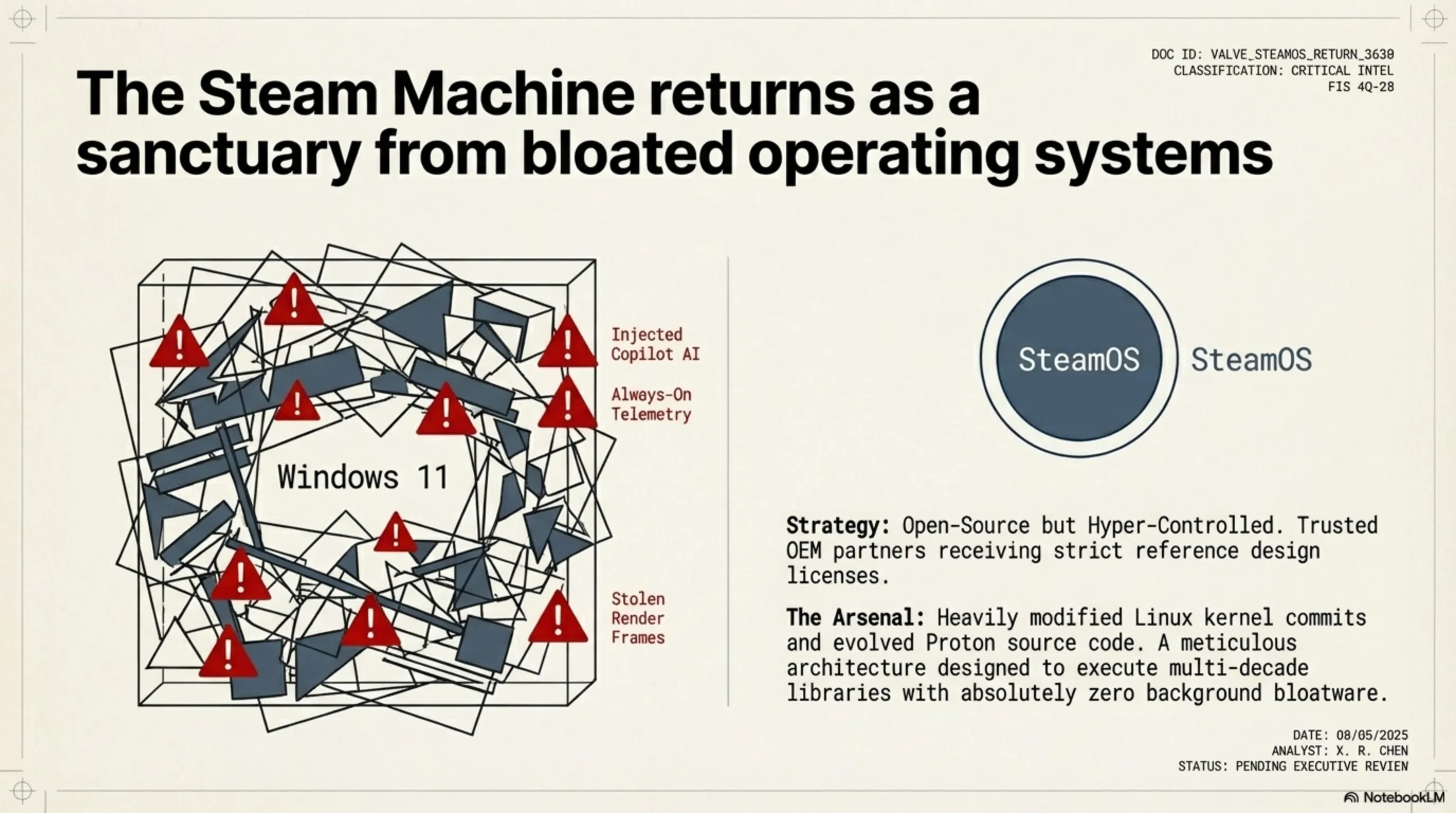
A thorough technical autopsy of this upcoming console initiative reveals that Valve is brilliantly deploying an "Open-Source but Hyper-Controlled Ecosystem" strategy. Based on rigorous analysis of recent Proton source code updates and custom, heavily modified Linux kernel commits tracked by Sportskeeda and prominent data miners, the new iteration of the Steam Machine is not simply a pre-assembled PC running a reskinned version of SteamOS. Rather, it is an exquisitely optimized, holistic hardware-software architecture where trusted, partner OEM manufacturers can receive strict reference design licenses to build their own integrated hardware. This platform is meticulously crafted to execute the entire, massive, multi-decade library of Steam games in an environment entirely and mercifully devoid of Windows 11’s crippling overhead. This bold move arrives at the most dramatic, opportunistic moment possible; Microsoft is currently, and relentlessly, stuffing the Windows platform to the absolute gills with injected, always-on AI services like the deep-integrated Copilot and an endless array of telemetry and background monitoring modules. This corporate directive effectively siphons precious rendering frames, CPU cycles, and vital battery life directly out of the gamer's hands, making Valve’s lean, gaming-first OS an incredibly attractive sanctuary.

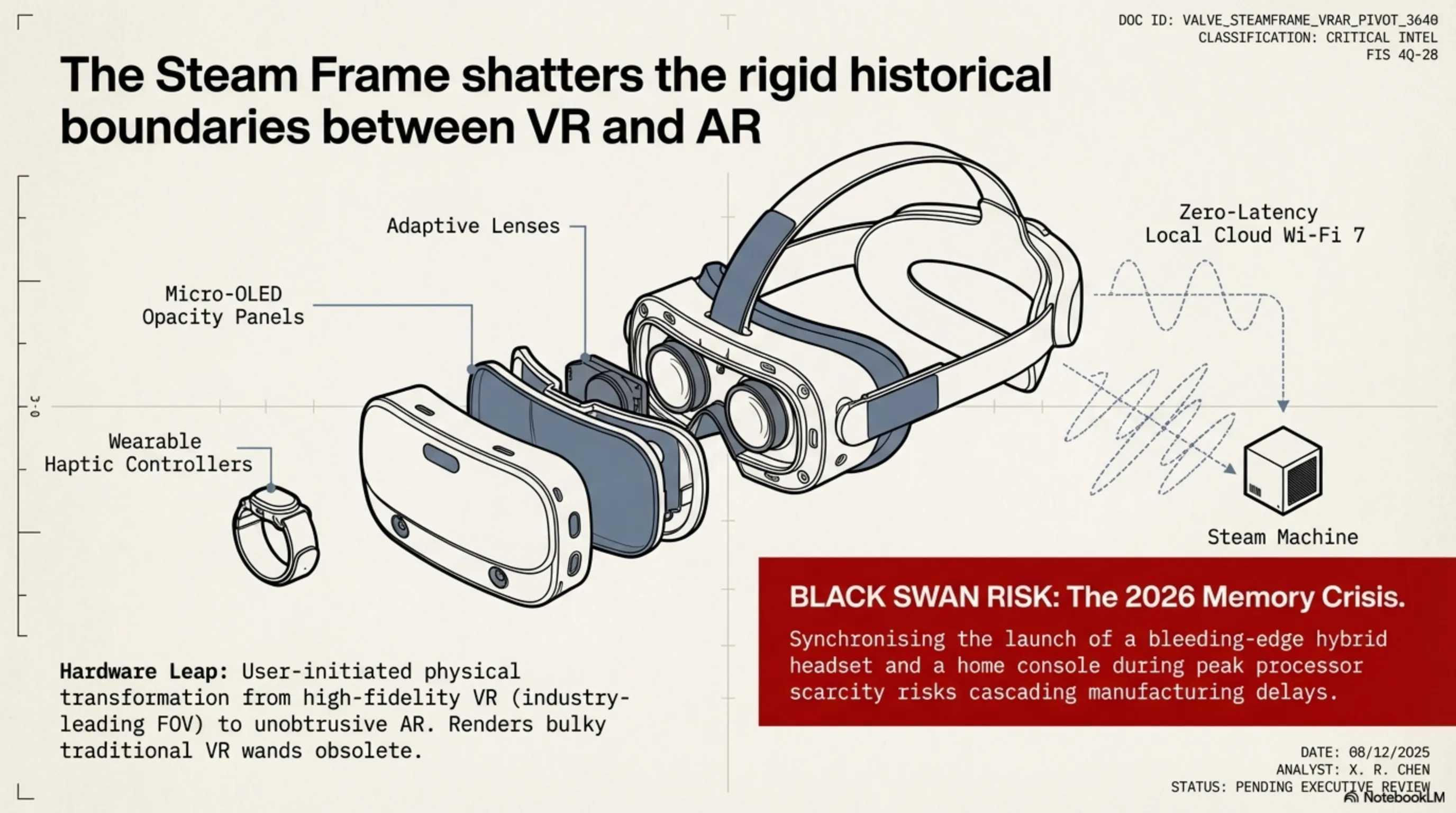
However, the truly astonishing, disruptive element of this unfolding saga is the highly secretive Steam Frame. This is not merely an iterative update to the Valve Index; it is a transformative device engineered with adaptive lens technology that can function brilliantly as an ultra-lightweight, high-fidelity VR headset boasting an industry-leading Field of View (FOV). Yet, via a seamless, user-initiated reconfiguration of its external sensor suite and micro-OLED opacity panels, it can instantly transform into an unobtrusive pair of AR glasses. This mode is specifically designed to stream demanding AAA games with zero perceived latency from a Local Cloud network (such as a gaming PC or the new Steam Machine itself in the living room). Furthermore, deeply buried patent filings indicate Valve intends to introduce proprietary, highly advanced wearable haptic and tactile controllers alongside this architecture. The objective is to set a new, uncompromising industry standard for physical immersion (Physical Immersion) in gaming, completely rendering bulky, traditional VR wands obsolete. The strategic, long-term angle of this decision is entirely logical and ruthless. If the relatively simple form factor of the Steam Deck was capable of successfully undefining and conquering the barren handheld market for PC gamers practically overnight, why shouldn't the Steam Frame platform completely devour the highly fragmented market currently occupied by exorbitant, $3,500 enterprise VR headsets or deeply flawed, phone-tethered AR gimmicks in one decisive, unifying blow?
The primary, flashing-red Black Swan risk for Valve in executing this magnificent equation is the exact same catastrophic component crisis and global silicon shortage detailed extensively above. Planning the synchronized, flawless simultaneous launch of a bleeding-edge hybrid AR/VR headset and a high-performance home console in the precise middle of the most brutal year of memory and processor scarcity (the 2026 Memory Crisis) is functionally akin to betting a fortune on a three-legged horse in an elite Formula 1 race. Sudden, cascading delays in Asian manufacturing lines or unavoidable, sharp spikes in the required custom AMD or Intel chips could severely diminish the economic appeal of the Steam Machine for mainstream consumers who might already own adequate PCs. Yet, if Valve’s formidable negotiating team can successfully convince major fabrication players to guarantee the strict allocation of dedicated chips via ironclad, long-term contracts, the dawn of 2027 will spell a bloody, irreversible endgame for the total dominance of the Windows Operating System within the dedicated, enthusiast gaming sector.
5. The Dirty War of AR Glasses: Snap's Strategic Retreat and the Birth of New Privacy Kings
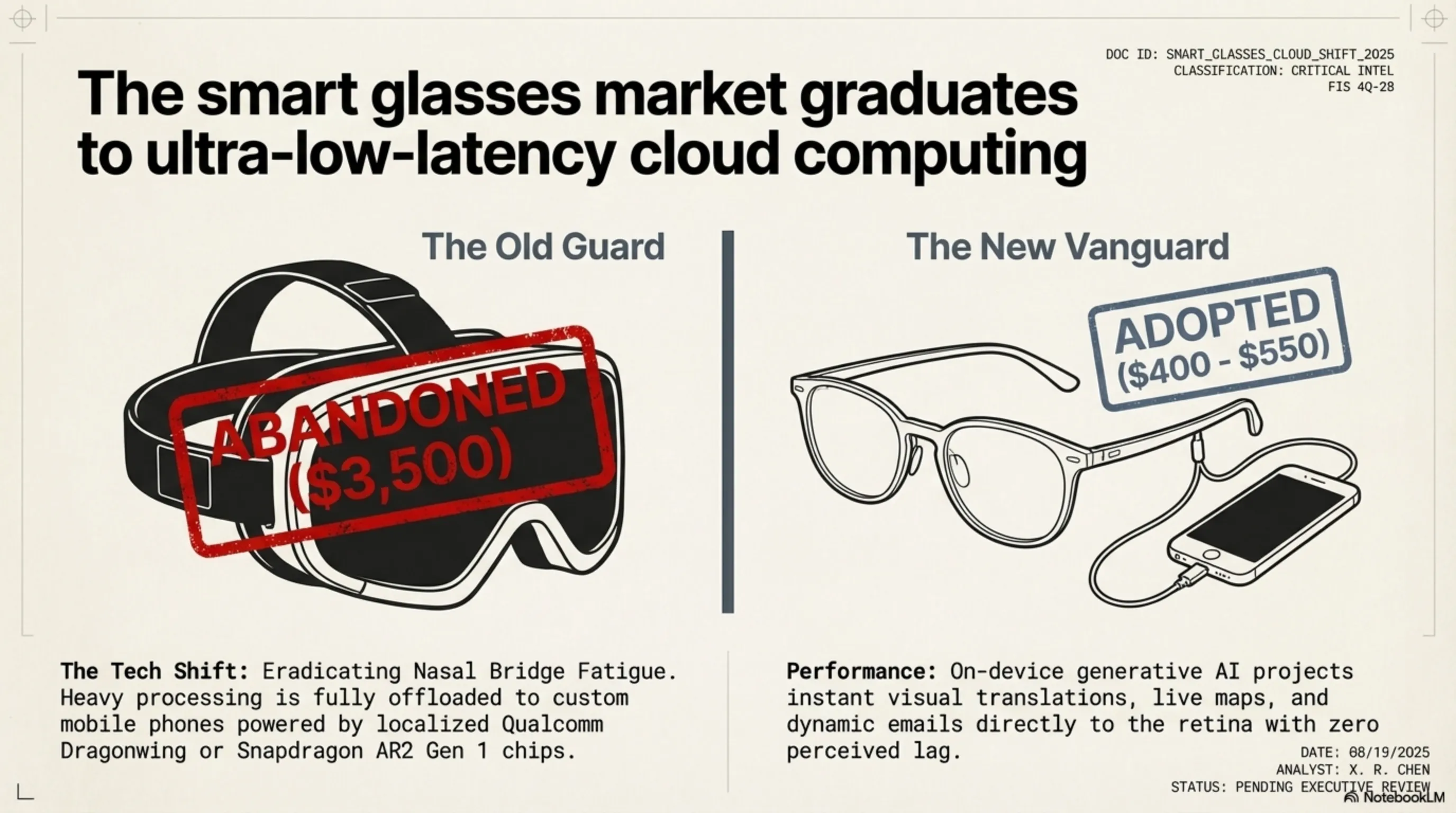
Until very recently, roughly the middle of the current decade, the hardware world operated under the heavy, deeply ingrained assumption that the ultimate post-mobile form factor would invariably resemble the incredibly complex, isolating mixed-reality (MR) headsets pioneered by devices like the Apple Vision Pro. The CES 2026 and MWC 2026 exhibitions, however, utterly flipped this script, and the global consumer market spoke with deafening clarity: the high-end consumer simply does not want the physical "hassle" of bulky, heavy, closed-off devices strapped to their face. Ultimately, they demand a lightweight, highly fashionable, everyday pair of glasses functioning exclusively and unobtrusively within genuine Augmented Reality (AR). In a sudden, shocking U-turn that rattled Silicon Valley, Snap Inc.—a company that had stubbornly burned billions of dollars over several years developing the eccentric Spectacles ecosystem—spun off its dedicated AR hardware division and completely abandoned the sector. According to leading industry analysts at Glass Almanac, this dramatic, unceremonious strategic retreat formally confirmed that the bleeding-edge smart glasses market has definitively graduated far beyond the trivial "social media toy with a camera" phase. It has rapidly entered a hyper-competitive era defined strictly by ultra-low-latency cloud computing, deep, seamless on-device AI integration, and intensely practical, ergonomic industrial design.
An exhaustive autopsy of the current AR battlefield reveals the meteoric rise of brilliant new stars equipped with far superior, modular architectural concepts. Lenovo has aggressively entered the arena with entirely novel, decentralized hardware systems, showcasing astonishingly lightweight devices where the heavy processing brain—the Personal Ambient Intelligence engine—is no longer clumsily embedded into the fragile frames. Instead, it is beamed wirelessly via zero-latency Wi-Fi 7 or tethered via a micro-optic cable from a dedicated pocket processor or customized smartphone. Amidst this intense competition, perhaps the absolute most potent player in optical wearables today is the rapidly expanding XREAL, having triumphantly introduced ultra-light, waveguide-based glasses virtually indistinguishable from standard, high-end prescription eyewear or designer sunglasses. By successfully offloading the core, thermally demanding processing to the user's mobile phone, and utilizing the delicate glasses strictly as a brilliant holographic display reflector and Spatial Awareness tool via advanced new photonic sensors, brutal issues like heavy battery drain and excruciating Nasal Bridge Fatigue transition from fantasy to solved reality. Users can comfortably wear these glasses for entire twelve-hour work shifts without a modicum of discomfort or social awkwardness.
The strategic and macroeconomic angle of this immense hardware shift is deeply compelling for both mega-corporations and the average consumer. Apple painfully established a magnificent $3,500 benchmark that brilliantly showcased their unparalleled, generational engineering prowess; however, they utterly failed to translate it into an accessible, mass-market, consumer-oriented lifestyle product. Now, leading, agile companies like Rokid, Pimax, and the dominant XREAL are easily offering a robust, rich AR layer and a stunning virtual overlay at highly competitive price points ranging between a mere $400 and $550. These aggressive new platforms bring massive, On-Device generative AI capabilities right to the retina, utilizing absolute powerhouses like Qualcomm's localized Dragonwing logic or Snapdragon AR2 Gen 1 chips line to act as a hyper-responsive virtual assistant. This AI projects complex visual responses, live maps, instant visual translations, and dynamic emails directly before the user’s eyes with zero perceived lag—entirely obviating the constant, distracting need for glancing down at external mobile screens. Emerging, highly efficient photonic logic architectures have aggressively reduced the persistent latency and completely managed the uncomfortable thermal output of the optical arrays, an infuriating, relentless obstacle in all earlier iterations of the technology.
Despite this gleaming, utopian hardware horizon, a devastating, cancer-like risk is silently mutating and multiplying beneath this nascent, multi-billion-dollar infrastructure: the truly terrifying issue of systemic privacy erosion and unfettered Cloud Data Mining. When your highly capable, automated visual assistant is literally scanning, mapping, and relentlessly analyzing your intimate physical reality second by second to answer queries or identify surrounding objects in your home or office, what absolute, ironclad guarantees prevent the stealth, background copying of your precise spatial coordinates, private conversations, and raw visual feed? Despite massive corporate PR campaigns claiming total reliance on supposedly secure Edge Computing to safeguard privacy, breaching even minor, overlooked vulnerabilities in the complex API exchange arrays paints a far grimmer, dystopian picture. It envisions the live, unencrypted video feed and most intimate behavioral data of millions of citizens transformed into a highly commodified product for sale in the darkest corners of the Dark Web or harvested by state-sponsored actors. The explosive revelation of a single, undeniable mass-surveillance exploit of this nature could brutally and irreversibly end the trillion-dollar AR investment wave in a fraction of a second, completely cratering the entire burgeoning industry overnight and plunging wearables into an inescapable nuclear winter.
6. Sony’s $2.7B Ransom and the Surge Pricing Nightmare: A Digital Dictatorship and the End of Gamer Trust
Our final, bloodiest battlefield for tonight's autopsy brings us specifically to the commercial, legal, and arguably unethical, administrative sector of Sony Corporation. An absolute, impenetrable monopoly over a prolonged period inevitably and historically mutates into a fatal Achilles heel, and this golden rule is currently forming an inescapable noose around Sony's corporate neck in the highest courtrooms of both the EU and the UK's Competition Appeal Tribunal. With an unprecedented, earth-shattering $2.7 billion class-action lawsuit having officially been filed and greenlit for trial, as deeply analyzed by Japan Times, Sony formally stands accused of aggressive dumping, forcefully choking out all market competition, and mercilessly enforcing a mandatory, unyielding 30% tax monopoly right within the fiercely enclosed PlayStation Store (PS Store) ecosystem. This landmark, industry-shaking litigation claims that for nearly an entire, uninterrupted decade, Sony knowingly and ruthlessly exploited hundreds of millions of captive gamers who possessed absolutely no alternative, legal methods of purchasing digital games or vital Downloadable Content (DLC) on the console they owned. Sony effectively forced them to pay extortionate, artificially high markups—far beyond any fair, competitive market value of the digital services actually provided—essentially trapping an entire generation of consumers in a closed loop of financial extraction and digital serfdom.
The legal and corporate autopsy of this massive lawsuit is inherently paired with deeply alarming, highly secretive shifts in Sony's internal administrative and developmental behavior. Any potential, catastrophic legal victory for the consumer plaintiffs, or deeply damaging scenario where Sony is compelled by an international judge to pay these massive, punitive reparations, signifies the irrevocable breaching of the legendary PlayStation firewall. This would legally force the mandatory, open licensing of Third-Party Stores (akin to the Epic Games Store or GOG on PC) directly onto their tightly controlled hardware environments. But precisely how is Sony executives responding to this sudden, massive wave of financial and regulatory pressure? By aggressively pivoting toward the testing of a dark, ruthless, and terrifyingly ugly background algorithm natively dubbed within the industry as "Surge Pricing" or "Dynamic Real-Time Profiling Pricing." Exactly mirroring the notoriously despised, exploitative algorithms utilized by massive ride-sharing applications or unfeeling global airlines that violently spike prices during a rainstorm or peak holiday demand, Sony is actively testing a dynamic digital pricing architecture entirely dependent on deep user profiling. This invasive system mathematically evaluates a specific player's obsessive, historical interest in a legacy IP, their exact historical purchase timing, their IP-traced geographic region, and the vulnerable micro-second they log into the store interface, actively allowing the AI algorithm to dynamically alter the final price of the unreleased game—spiking it significantly and unfairly for those digitally identified as most willing or desperate to spend, particularly targeting high-income, high-loyalty demographics.
From a profound geopolitical, ethical, and advanced economic analysis standpoint, a corporate authorization like this blatantly highlights the terrifying, unchecked capacity of modern AI algorithms to ruthlessly hack and enslave base consumer psychology on giant, transcontinental entertainment platforms. Imagine, for a horrifying example, the proprietary AI realizing you are a die-hard early adopter who faithfully purchased the previous three massive iterations of God of War instantly on day one. The algorithm's grim, unfeeling mathematical logic establishes a heavily customized, inflated baseline specifically designed to force you to accept a higher price tag—maliciously pushing the subtle, digital checkout margins from standard $69 up to a predatory $89. It banks maliciously and entirely on your emotional obsession overriding your logical, rational purchasing decision in the crucial, high-pressure three seconds it takes to finalize the digital transaction. The blatant, unchecked weaponization of massive datasets (Big Data) to establish these opaque, fluctuating, individualized economies violently tears apart the foundational ethical fabric of modern, transparent commerce. It is marching us, blindfolded, toward an economic system dictated by absolute digital dictatorships. In developing regions highly reliant on account sharing algorithms or heavily fluctuating, weak local currencies, this induced pricing volatility threatens to structurally obliterate the grassroots, localized economies that single-handedly keep console gaming alive and accessible in emerging massive markets like Eastern Europe or the broader Middle East.
The absolute, definitive, extinction-level risk currently looming over the entire Sony brand is the total, irreversible erosion of Community Goodwill and the absolute destruction of gamer trust. While tech leviathans like Microsoft and Apple conduct their grueling, endless antitrust wars through open, somewhat predictable legal channels and courtroom battles, the direct, arrogant, and overt implementation of aggressive, money-hungry algorithms—pricing heavily reliant on individual, non-consensual algorithmic snooping for interactive entertainment products—crosses a catastrophic, unrecoverable moral red line for consumers. If PlayStation Store policies officially and publicly adopt these dynamic, predatory updates, it may radically and violently accelerate a mass digital exodus of previously loyal consumers. They will flee the walled garden, seeking sanctuary in alternative, liberated, and highly competitive digital options, running directly into the waiting arms of Steam or the open, mod-friendly environments of PC gaming. This acts as a severe, historical reminder to millions of analysts and gamers alike why the spectacular, ongoing collision of ecosystem strategies—the brutal siege of the tightly enclosed, monopolistic Sony environment versus the neutral, incredibly open spectrum of Valve—will easily become the most vital, industry-defining, and bloody technological reality of the entire next decade, born directly from the bitter ashes of algorithmic betrayal and unbridled corporate greed.
⚠️ The Chief Inspector's Base: Tekin Army Safe Zone
The deeply unforgiving tech world in the volatile year of 2026 holds absolute zero pity for the vulnerable, unaware, and passive consumer. During an intense era where hyper-advanced AI pricing algorithms ruthlessly target your bank accounts with military precision, and severe architectural hardware wars paralyze global tech markets while indiscriminately devouring the last remnants of pure gaming passion, your singular, impenetrable weapon is Absolute Digital Awareness. I, the Chief Inspector, spend my sleepless nights executing deep, unauthorized autopsies on the most complex, military-grade corporate blueprints directly within our heavily fortified cybernetic headquarters at TekinGame, actively bypassing Silicon Valley's deepest, darkest secrets. To guarantee you never fall victim to our critical Zero-Day threat warnings and are always the first soldier to be fully equipped the exact second we unlock our new, advanced technological armory, secure your direct, encrypted connection to the TekinGame Telegram and Discord channels immediately. Outside the secure, digital walls of this fortress, the lawless digital universe is actively hunting the blind. Stay locked, loaded, and hyper-vigilant, Commander.