
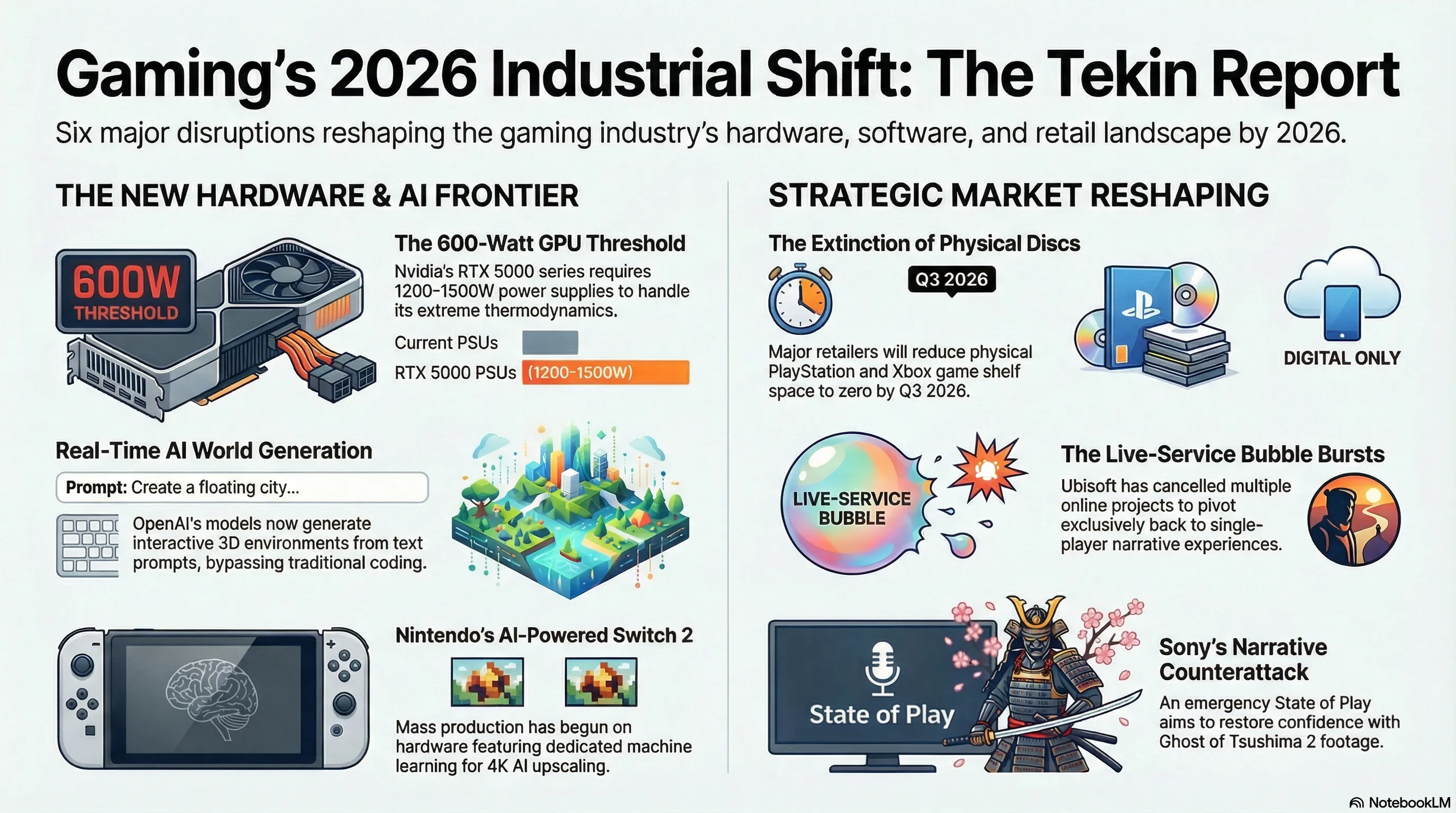
Welcome to the Tekin Garage morning briefing for February 24, 2026. Following yesterday's earthquakes, the gaming ecosystem is now witnessing heavy counterattacks. In this mega-article, we debug 6 vital signals: 1. Sony's preparation of an emergency State of Play event to counter recent crises. 2. Leaks of Nvidia's power-hungry RTX 5000 series architecture. 3. OpenAI's terrifying leap into real-time 3D world rendering. 4. The initiation of Nintendo Switch 2 mass production with a magical Nvidia chipset. 5. Ubisoft's sudden cancellation of 4 liv
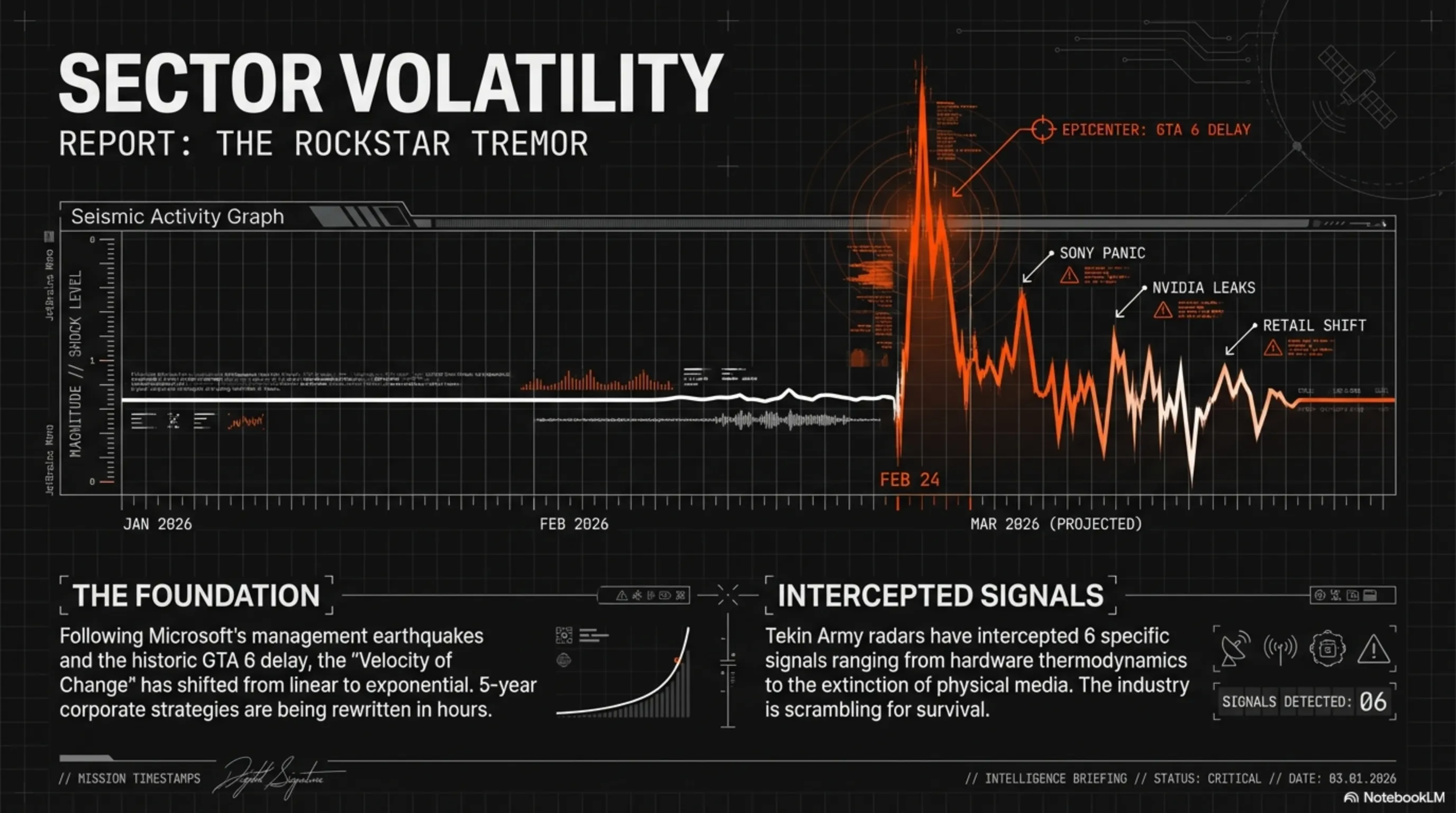
Welcome to the war room at Tekin Garage. Today is Wednesday, February 24, 2026. If you thought Microsoft's management earthquakes and the historic GTA 6 delay were the end of the story, you are severely mistaken. When the foundation of an industry trembles, all major corporations are forced to rewrite their 5-year strategies in a matter of hours. Our radars were tracking classified signals all night until morning, and the results are stunning. From Sony's panic and preparation of a media counterattack, to graphics cards that require a literal power plant to boot, and finally, the bitter end of a plastic nostalgia known as the "physical disc." Tekin Army, drink your coffee and monitor the systems; your Chief Inspector is ready to autopsy these 6 news bombs line by line.
1. PlayStation's Emergency Counterattack: Sony Takes Back the Narrative
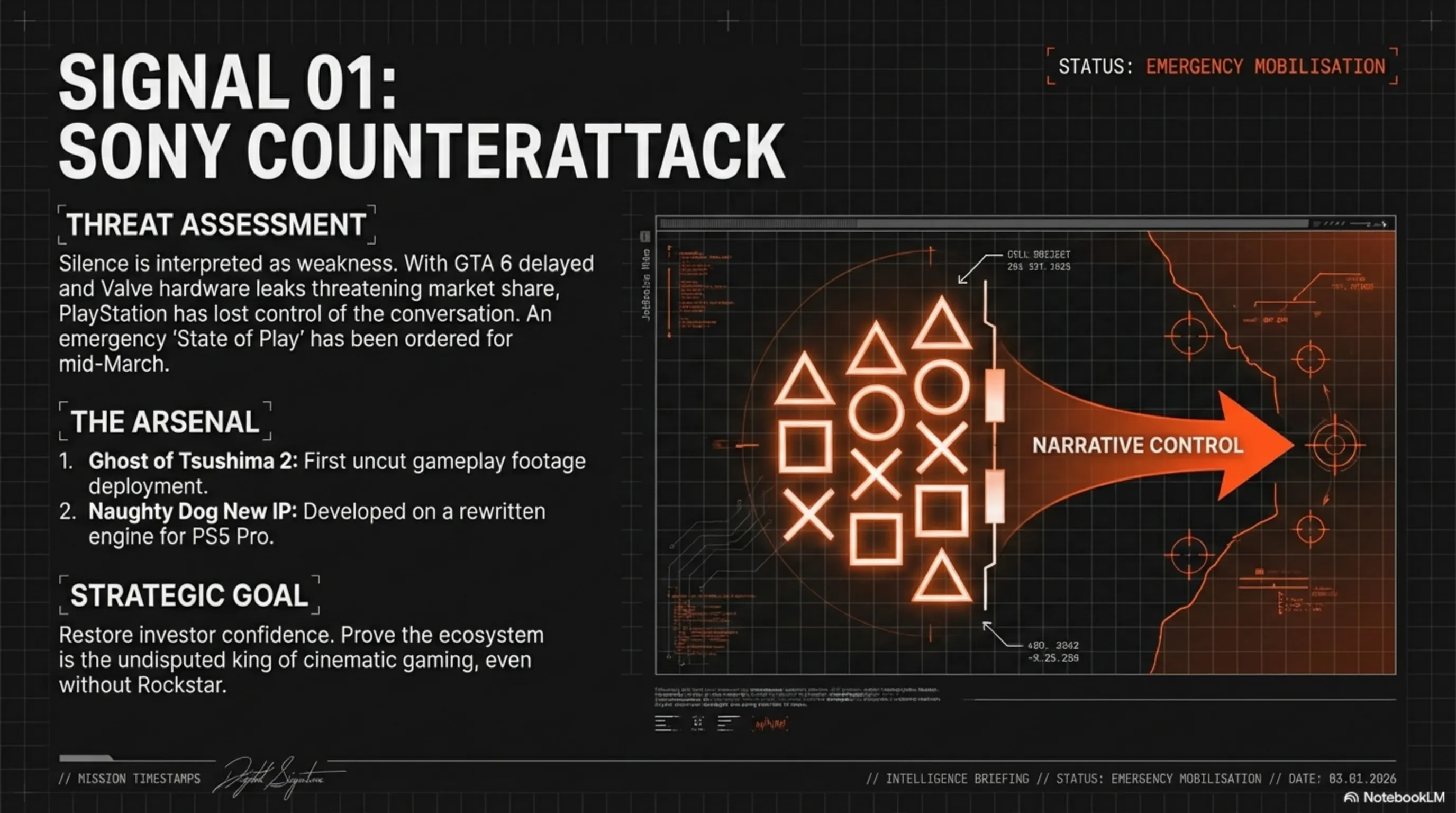
In the cybernetic wars of the gaming industry, silence means weakness. Following the terrifying news of the GTA 6 delay (which directly targeted PS5 Pro sales) and leaks of Valve's radical new hardware, Sony realized it was rapidly losing control of the media narrative. Our insider sources in the gaming dark web report that top PlayStation executives ordered a classified, emergency State of Play event last night, likely scheduled to broadcast in mid-March.
What is the objective of this event? Restoring investor and gamer confidence. Sony can no longer rely on cinematic teasers; they have to bring in the heavy artillery. Exceptionally strong rumors suggest that during this event, we will witness the first long, uncut gameplay footage of Ghost of Tsushima 2. Furthermore, Naughty Dog, a studio that has been maintaining radio silence for years, is slated to unveil its completely new IP, developed on a rewritten graphical engine tailored for the PS5 Pro. Sony wants to prove to the world that even without Rockstar's early presence, the PlayStation ecosystem remains the undisputed king of narrative-driven, cinematic gaming.
2. Nvidia's Power-Hungry Monster: The Terrifying Architecture of RTX 5000
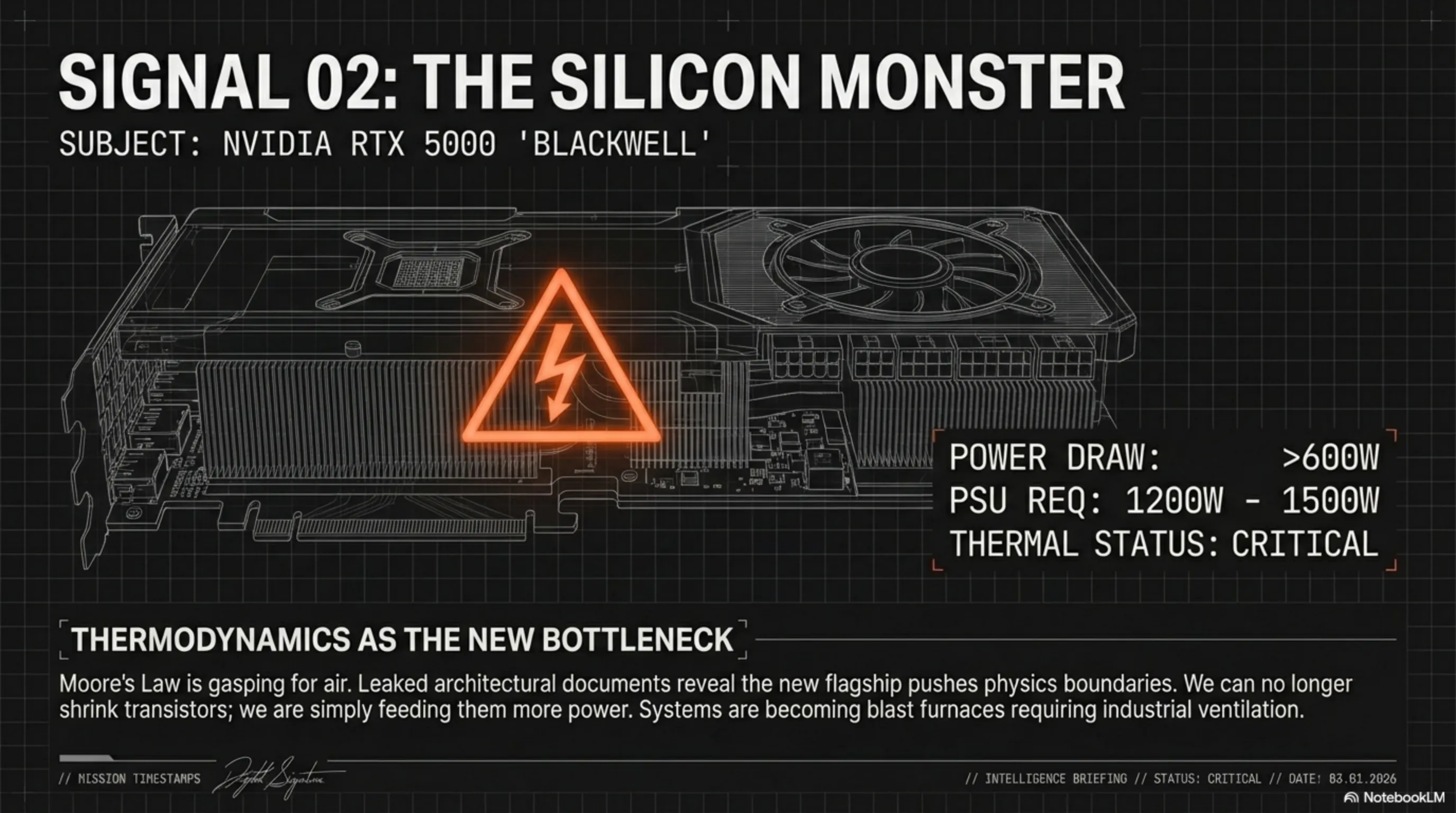
While consoles are fighting resolution wars, a silicon monster is being born on the PC platform. Hardware dataminers and leakers successfully breached the architectural documents of Nvidia's next-generation graphics cards (the RTX 5000/6000 series, codenamed Blackwell) last night. The good news is that the processing power (TFLOPS) of this new flagship pushes the boundaries of physics, making Path Tracing an effortless standard. But the terrifying news lies in its thermodynamics and power consumption.
According to the leaked documents, Nvidia's new flagship (likely the RTX 5090 or Titan AI) is so power-hungry that its base consumption crosses the 600-watt threshold. This means PC gamers looking to upgrade will not only have to pay thousands of dollars for the GPU itself, but will also be forced to upgrade their power supplies (PSUs) to 1200 to 1500-watt behemoths. This horrifying leap in power consumption proves that Moore's Law is gasping for air; we can no longer cram more transistors into a smaller space without turning the system into a blast furnace. The future of high-end PC graphics will require advanced liquid cooling and industrial-grade room ventilation.
3. The End of Game Engines? Real-Time 3D Rendering by OpenAI
The third signal was transmitted directly from Silicon Valley's AI labs, sending shivers down the spine of traditional game engines (like Unreal Engine and Unity). A new intelligence leak from OpenAI reveals that their next-generation video model (the evolution of Project Sora) no longer merely generates pre-rendered pixels. By receiving a text prompt, this new model is capable of generating and rendering an interactive 3D environment in real-time!
Let's debug this source code: this means you type "a rainy cyberpunk forest with a playable character," and the AI instantly writes the physics, lighting, and collision codes in a cloud-rendered engine, allowing you to walk around in that environment. Although this technology is still in its infancy in 2026 (suffering from low framerates and resolution), it clearly maps out the future: in the next decade, we won't "code" games, we will "describe" them, and neural networks will materialize them on the fly. This represents an existential threat to massive game studios and an infinite dream for indie artists.
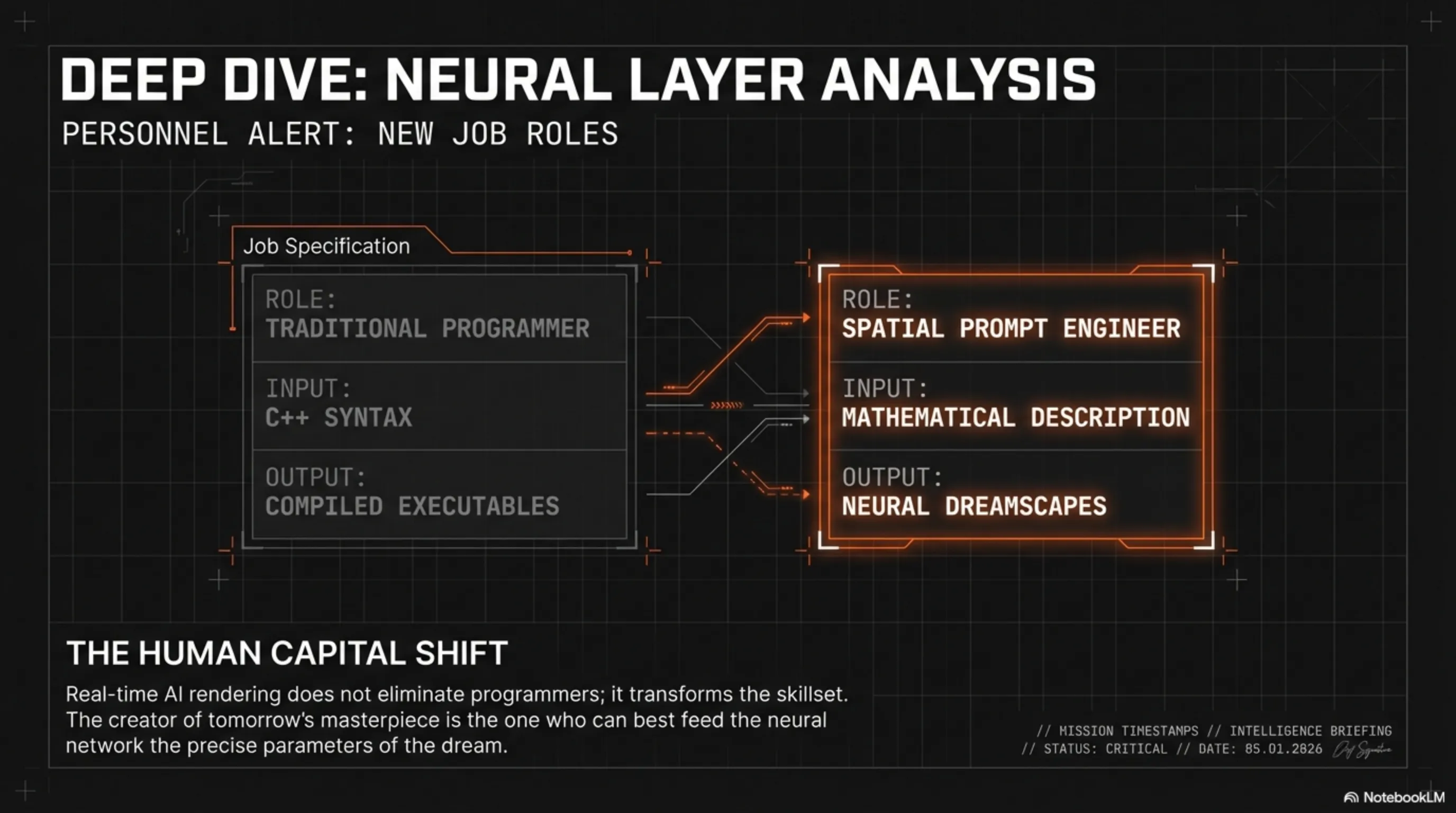
🧠 Neural Layer Analysis
The Inspector warns: Real-time AI rendering does not mean the end of programmers, but it will turn "Spatial Prompt Engineering" into the most critical job of the next decade in the gaming industry. Whoever can feed the AI the most precise and mathematical description of a game world will be the creator of tomorrow's masterpieces.
4. The Silent Assassin Awakens: Nintendo Switch 2 Mass Production Begins
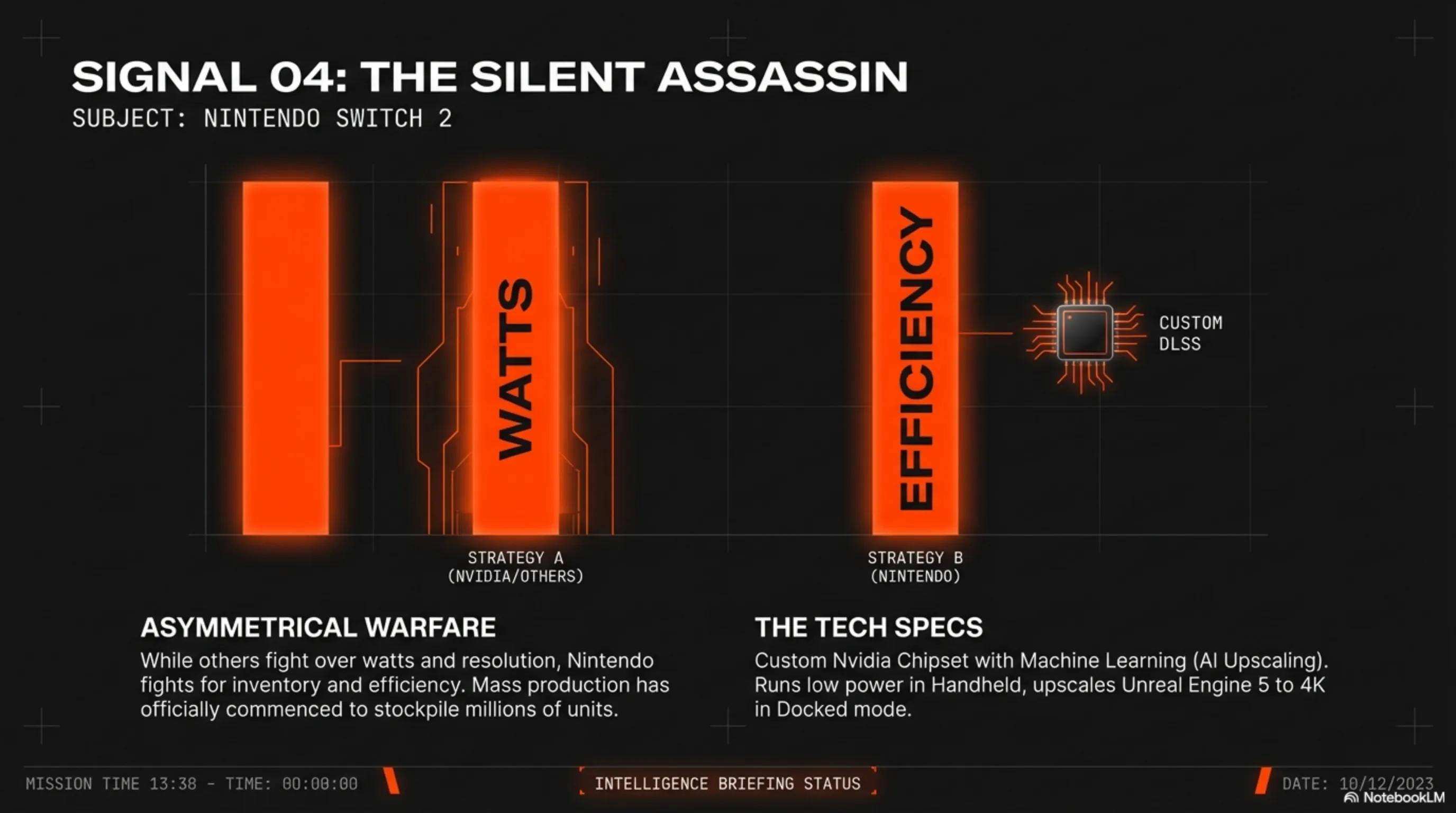
Amidst the chaos of 1200-watt GPUs and AI, Nintendo always plays the role of the Silent Assassin in the gaming industry. Reliable supply chain reports out of Asia published this morning confirm that mass production for Nintendo's next-generation console (Switch 2) has officially commenced. Nintendo intends to stockpile millions of units in warehouses ahead of the 2026 holiday season to completely avoid scalping and inventory shortages.
But what is the Switch 2's trump card? An autopsy of its leaked architecture reveals that Nintendo, in a deep collaboration with Nvidia, has utilized a custom chipset featuring dedicated machine learning hardware (AI Upscaling). This technology, an optimized version of DLSS, allows the Switch 2 to operate with extremely low battery consumption in Handheld Mode, but immediately upscale heavy Unreal Engine 5 games to 4K resolution the moment it is placed in the Dock. In a year where GTA 6 is delayed and Sony and Microsoft are wrestling with macro-strategies, the Switch 2, armed with a powerful lineup of exclusive games (likely a new 3D Mario), could easily conquer the 2026 hardware market.
5. The Live-Service Bubble Bursts: Ubisoft Surrenders to Storytelling
The gaming industry is undergoing a ruthless cleansing. The gold rush for creating "Live-Service" games, intended to be eternal money-milkers from gamers' pockets, has finally collapsed. This morning, Ubisoft issued a bitter but necessary press release, announcing the total cancellation of 4 unannounced online multiplayer projects. The reason? Successive commercial failures in a saturated live-service market and the company's stock value plummeting to a decade-low.
This is an incredibly crucial tactical retreat. Ubisoft has realized it cannot compete on the same battlefield as monsters like Fortnite or Call of Duty Warzone. Instead, they have redirected all their freed-up workforce to core studios to focus exclusively on single-player narrative experiences. Our radars show that the complete remake of Splinter Cell and a darker, brand-new installment of Assassin's Creed are now in active development with massive budgets and 100% focus. Ubisoft finally debugged its broken strategy: gamers are exhausted by endless microtransactions; they crave complete, unforgettable stories.
6. The Extinction of Plastic: The Official End of Physical Disc Sales Worldwide
This headline reads like a nightmare for many collectors, but economic algorithms have no feelings. Last night, two of the largest electronic retail chains in the world (Best Buy and GameStop) made a coordinated announcement: starting in the third quarter of 2026, shelf space allocation for "physical games" (PlayStation and Xbox discs) will drop to absolute zero. The only exception to this rule will be Nintendo Switch cartridges, which still maintain a dynamic physical economy.
The death of physical discs carries highly dangerous consequences for the gaming ecosystem. We have officially entered a state of "absolute digital enclosure." When you bought a physical game, you owned it; you could lend it, sell it, or keep it for decades. But in the all-digital era of 2026, you don't "buy" a game; you merely rent a "temporary access license" to its code. If a platform decides to wipe the game from its servers due to licensing issues or sanctions, that piece of art will be deleted from your database forever. This issue will turn the crisis of Game Preservation into the biggest legal and cultural challenge of the next decade.
📊 End-of-Shift Report
The February 24, 2026 morning shift taught us a ruthless lesson: The Velocity of Change in this industry's code is no longer linear; it has become exponential. In less than 24 hours, we witnessed traditional hardware gasping under terrifying power demands, the official extinction of physical media, and the terrifying rise of AI generating real-time 3D worlds.
Studios (like Ubisoft) that recognized the popping of old bubbles are rapidly rewriting their survival strategies, while platforms (like Sony and Nintendo) are secretly prepping their new arsenals. As a gamer or developer in this ecosystem, clinging to old paradigms is equivalent to staying on dead servers. You must update your mindset with these new codes. Tekin Army, do not cease your market monitoring. Our radars will remain online for the upcoming shifts.