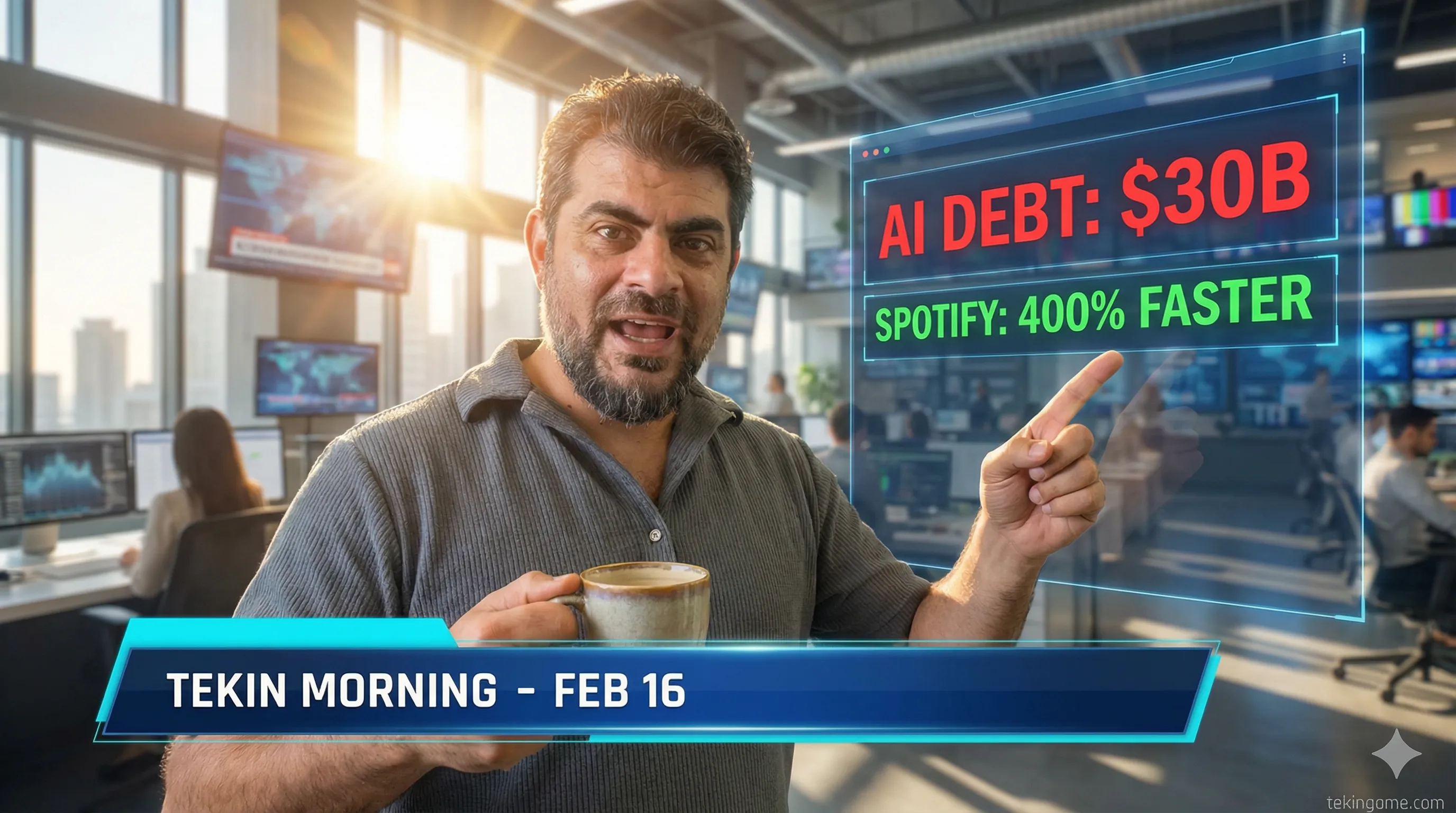
Today's briefing highlights a stark contrast in the tech world: while Google and Meta face $30B debt walls to fund their AI infrastructure, Spotify reports that its elite engineers have officially stopped "writing" code, shifting entirely to AI orchestration. Meanwhile, the Delhi AI Summit gathers the world's tech titans, and Sony clarifies its 2026 vision with the reveal of Resident Evil Requiem and Saros.
1. The AI Debt Crisis: Wall Street's $30 Billion Alarm and the Shadow of Tech Recession
While mainstream media and public discourse remain captivated by the visual prowess and video generation capabilities of new AI models, a **massive and systematic liquidity crisis** is brewing in the deeper economic layers of the technology sector. Financial reports released this morning, February 16, 2026, reveal that giants like **Google, Meta, and Amazon (AWS)** are grappling with unprecedented infrastructure debt. The operational costs of maintaining and expanding data centers for training and inference processing of heavyweight models like Gemini 3.1 Ultra and Llama 5 have crossed the **$30 billion per fiscal quarter** threshold.
According to Bloomberg data, derivatives contracts—specifically **Credit Default Swaps (CDS)**—on these companies' debt have reached their highest levels in a decade. This means institutional investors are paying exorbitant premiums to insure their capital against the possibility of bankruptcy or severe stock value depreciation among these tech behemoths.

Market Economic Analysis: The Compute Trough of Disillusionment

We are now in a phase economists call the **"Compute Trough of Disillusionment."** Companies are frantically purchasing server clusters equipped with Nvidia's B200 processors, with each cluster costing tens of millions of dollars. But where's the problem? Revenue from monthly user subscriptions (like ChatGPT Plus) or AI integration in cloud services (B2B) still doesn't cover even half of these capital expenditures (CapEx). The AI economy currently runs on "investor subsidies," not actual profitability.
Strategic Analysis Layer 1: System Architect's Note
In strategic layer 1, we face the **"Cost-Scale Paradox."** Tech companies are trapped in a lethal strategic bind: halting investment means immediate exit from competition and market surrender to rivals, while continuing means catastrophic cash burn. **Deep architectural analysis** shows the escape route lies in abandoning monolithic Large Language Models (LLMs) and moving toward **Small Language Models (SLMs)**—specialized, efficient models. System architects at TekinGame predict that by the end of 2026, market focus will shift from "who has the smartest model" to **"who delivers the most optimized model with minimal compute cost."** Utilizing RAG (Retrieval-Augmented Generation) architecture instead of retraining models is the only way out of this financial vortex.
2. Delhi Summit 2026: The Geopolitical Power Shift from Silicon Valley to Asia

Today, New Delhi hosts the most historic and strategic gathering of 2026: the **India AI Impact Summit**. The simultaneous presence of **Sam Altman (OpenAI)**, **Sundar Pichai (Google)**, and **Jensen Huang (Nvidia)** in a shared frame in India's capital sends a clear, decisive, and undeniable message to Silicon Valley: the AI power center has shifted east. The Indian government today unveiled phase two of its **"Sovereign AI"** roadmap—a project with an initial budget of $10 billion aimed at complete localization of model training processes based on India's languages, culture, and local data.
Jensen Huang announced in his keynote that new compute clusters installed in collaboration with Tata Group in Bangalore and Pune match the computational power of Texas's largest data centers. But Sam Altman dropped the bombshell by introducing the concept of **"Universal Basic Compute (UBC)"** for India's economy—giving every Indian citizen a free quota of AI processing power to develop their businesses.
Data Geopolitics Analysis
India is no longer merely a cheap consumer market or call center outsourcing hub; India is now the world's largest **reservoir of raw data and human behavior**. Given strict copyright laws in Europe and America, AI companies are heavily dependent on unrestricted data from developing nations to train their future models.
Strategic Analysis Layer 2: System Architect's Note

In this layer, we witness the emergence of **Algorithmic Diplomacy**. Strategic architects at this summit seek a formula for **"Data Sovereignty"** to prevent digital colonialism. India's move challenges the centralized business models of Western corporations. For TekinGame, this means closely monitoring Indian startups that, leveraging skilled workforce and indigenous data centers, will soon offer AI-as-a-Service (SaaS) at **one-tenth the cost of American competitors** to the global market. This is a platform shift that rewrites all digital business equations.
3. Native YouTube for Vision Pro: The End of Google's Platform Siege and Victory Over Apple's Monopoly
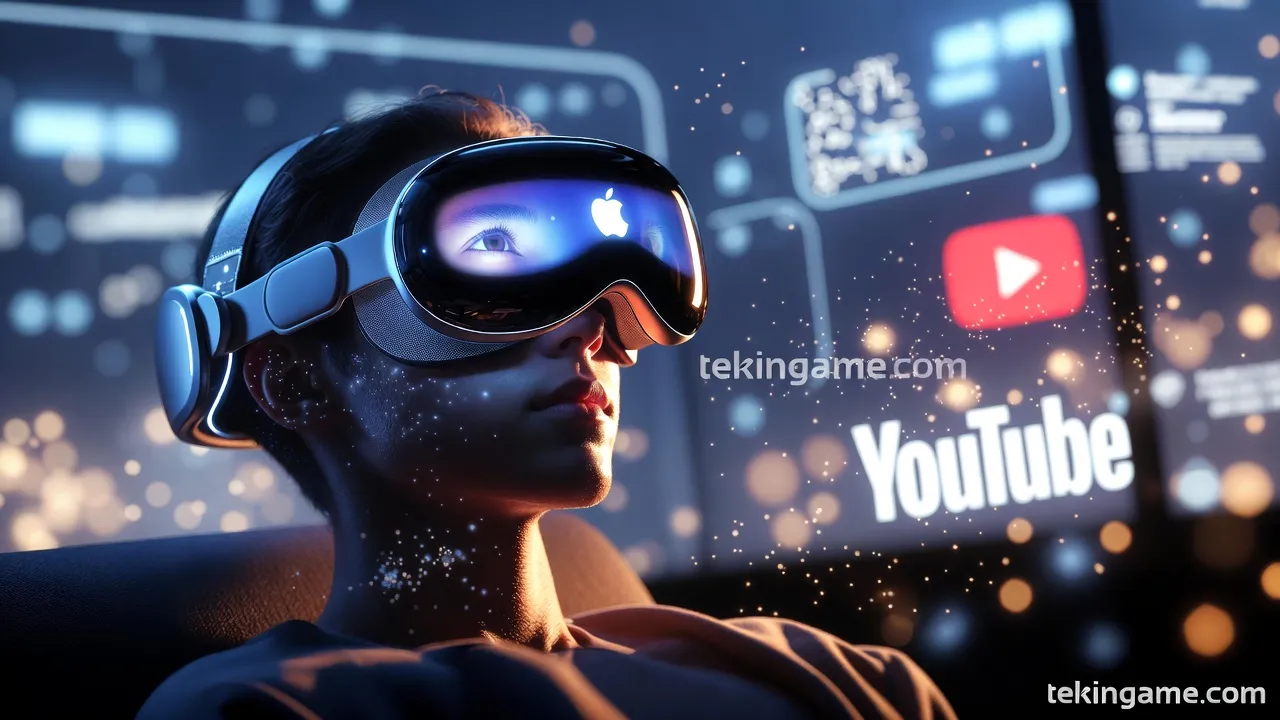
After two years of stubborn strategic resistance—what analysts dubbed the "Headset Cold War"—Google finally raised the white flag and released a native, dedicated **YouTube** app for **Apple Vision Pro**. Until now, users of this $3,500 headset were forced to watch YouTube through Safari browser—an experience riddled with bugs, lacking 3D environment support, and draining battery life catastrophically. But the 2026 version has changed the game.
This dedicated version, utilizing Apple's native render engine (visionOS), enables playback of **8K Spatial Videos** using advanced MV-HEVC codecs. Users can now experience sports matches, concerts, and gaming content in fully immersive environments with depth of field that the human brain cannot distinguish from reality.
Ecosystem Analysis: Why Did Google Surrender?
Google knew well that boycotting Vision Pro meant clearing the field for competitors. TikTok, Disney+, and Amazon Prime had native apps on Vision Pro from day one. Continuing this boycott meant losing **high-net-worth individuals (HNWIs)**—the opinion leaders in adopting new technologies.
Strategic Analysis Layer 3: System Architect's Note
Layer 3 analysis demonstrates **hardware power's victory over software monopoly**. From a system architecture perspective, YouTube's new app is an engineering masterpiece, utilizing **Eye Tracking** technology for complete UI navigation. UX designers at TekinGame emphasize this event has defined a new standard for **"Gaze-based UI."** We're transitioning from the "click and touch" era to the "look and confirm" era. Content platforms unable to adapt to this three-dimensional Volumetric UI architecture will soon meet the fate of print media.
4. The Spotify Paradigm: When Manual Coding Officially Becomes History
One of today's bombshells that sent shockwaves through the global programming community was the leak of **Spotify's** confidential internal report. This music and podcast streaming giant officially confirmed that its senior backend system engineers haven't typed **a single line of code manually** on keyboards since December 2025. All critical software development processes—from microservices architecture design to complex debugging—are handled by Spotify's internal AI system called **Honk** and the reasoning engine **Claude Code** (Anthropic's product).
According to this report, a senior Spotify engineer today only describes system requirements using natural language. The Honk system immediately generates optimized code, runs CI/CD pipeline tests, checks code security against intrusions, and deploys them directly to Kubernetes clusters. The result? **400% increase in feature release velocity** and reduction of human errors (bugs) to near zero.
Analysis of Job Market Shifts in Silicon Valley
This event doesn't mean programmer layoffs; it means fundamental transformation of the job's nature. Major companies no longer need "code monkeys"; they need people with deep understanding of business logic, cloud network security, and data flow management.
Strategic Analysis Layer 4: System Architect's Note
In this section, we face **"The Death of Syntax and Birth of Orchestration Engineering."** The software architect in 2026 no longer wrestles with traditional text editors (like conventional VS Code); they debate with **reasoning models**. Spotify proved that an engineer's value in coming years lies not in memorizing Python or Rust syntax rules, but in their ability for **"macro-level architecture design"** and guiding autonomous agents. In TekinGame labs, we believe universities must immediately stop teaching "syntax" and instead teach **"systems thinking" and "agentic security"** to students. Otherwise, new graduates will have no place in the 2027 job market.
5. The OpenClaw Revolution: Autonomous Agents on the Verge of Desktop Takeover
The **OpenClaw** project, born months ago as a simple open-source tool on GitHub, now holds the fastest growth record in software repository history and has entered a terrifyingly operational phase. Unlike traditional chatbots (like early ChatGPT versions) that only generated text in isolated environments, OpenClaw is a **"Large Action Model (LAM)."** This means OpenClaw connects directly to your operating system.
This agent can open your browser, read DOM elements on web pages, log into complex systems, extract financial data from Excel, book flight tickets, and even debate logically with your colleagues on Slack on your behalf. Today's rumors suggest **Mark Zuckerberg (Meta)** and **Sam Altman (OpenAI)** have entered a confidential, multi-billion-dollar bidding war to acquire the team behind this open-source project. Why? Because whoever owns OpenClaw's infrastructure will effectively control **the invisible operating system of the future**.
Agent Market Competitive Analysis
The main tech battle in 2026 is no longer about "generating text or images"; it's about **Actionability**. Companies are willing to pay billions so their AI can transact and make decisions in the real world on behalf of users.
Strategic Analysis Layer 5: System Architect's Note
In layer 5, we face the extremely dangerous yet simultaneously thrilling concept of **"Zero UI."** OpenClaw shows us that in the near future, we won't need to learn different software. **But here's the key strategic point: Security Nightmare!** If an autonomous agent with access to your file system, passwords, and bank accounts experiences **hallucination** or gets poisoned by hackers (Prompt Injection), it can destroy an organization's entire digital identity and assets in fractions of a second. Cybersecurity architects must now design the **Zero-Trust for AI** paradigm—where agents require real-time human biometric signatures (Human-in-the-loop) for every critical action.
6. State of Play 2026: Sony's Roadmap to Solidify PS5 Pro Power and Gaming Market Dominance
Sony's new State of Play event on February 16 was a crushing response to all critics who believed the home console market was declining. Sony, with a stunning showcase, clarified 2026's agenda and demonstrated what terrifying output the combination of powerful **PlayStation 5 Pro** hardware with AI-based technologies will produce.
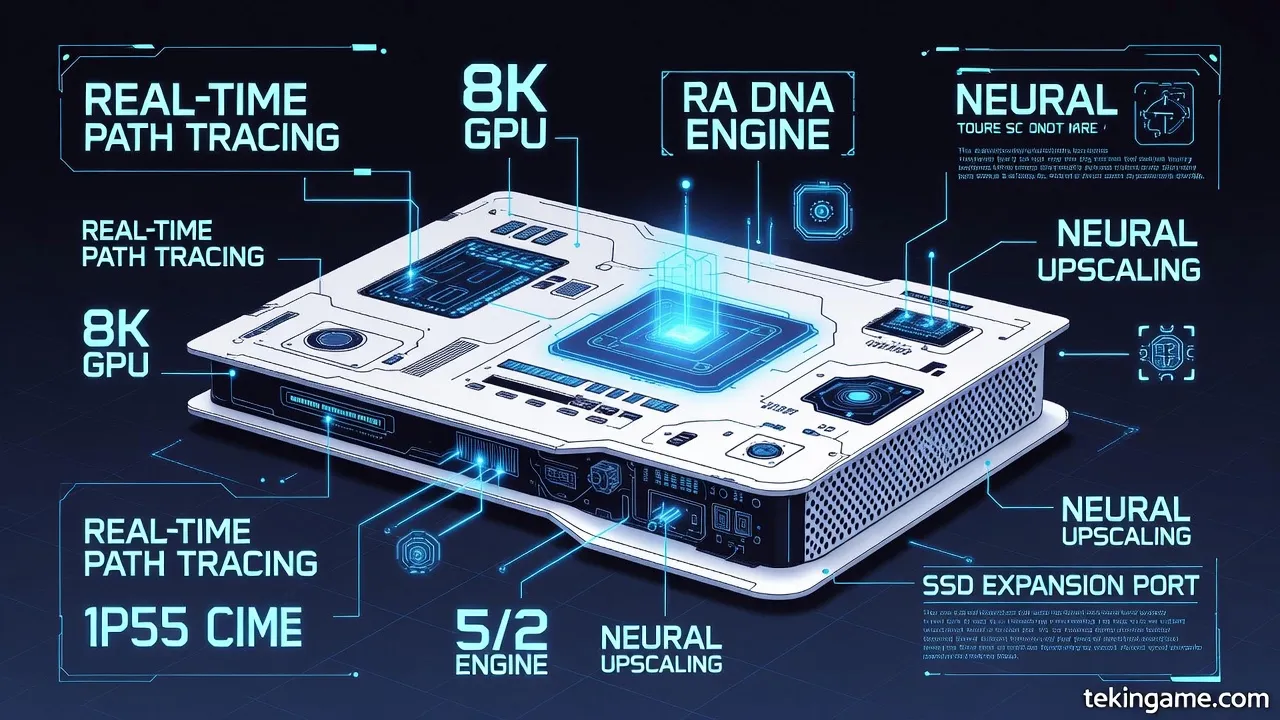
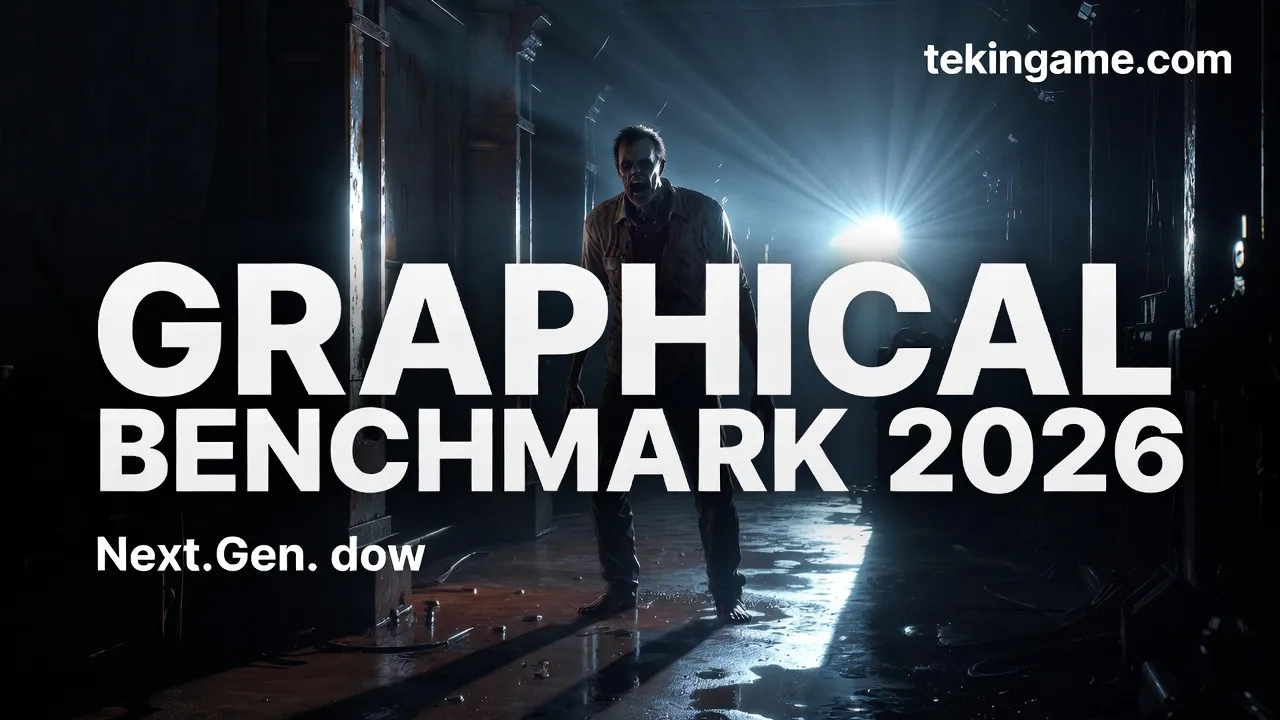
The event's climax was the real gameplay reveal of **Resident Evil Requiem**. Capcom, leveraging Sony's second-generation image upscaling technology **(PSSR 2.0 - PlayStation Spectral Super Resolution)** and the upgraded RE Engine, displayed graphics featuring **full Path Tracing** in dark, dynamic environments—processing previously only possible on $4,000 PCs. Additionally, the unveiling of the completely new sci-fi IP **Saros** and the powerful showcase of the spy game **007: First Light** (by IO Interactive studio) showed Sony intends to strengthen its ecosystem with premium story-driven games.
Gaming Market Analysis and Content Strategy
While Microsoft remains entangled in establishing the Game Pass subscription model and releasing its games on other platforms, Sony has adopted the **"Quality Exclusivity"** strategy. Sony doesn't just want to sell games; it wants to sell "visual standards."
Strategic Analysis Layer 6: System Architect's Note
In the final analysis layer, we observe Sony's **"Cross-Generation Bridge Strategy"** architecture. By introducing ultra-heavy titles that maximize AI utilization for frame rate optimization, Sony is preparing audiences' minds and wallets for accepting the next console. Senior TekinGame analysts believe Sony is using 2026 as a **strategic launchpad for PS6**. By delivering impossible visual experiences on base consoles (Base PS5), Sony forces hardcore gamers to upgrade to the Pro version to keep its ecosystem unified. This is a flawless game of combining hardware, software, and AI architecture to extend the lifecycle of eighth and ninth console generations.