
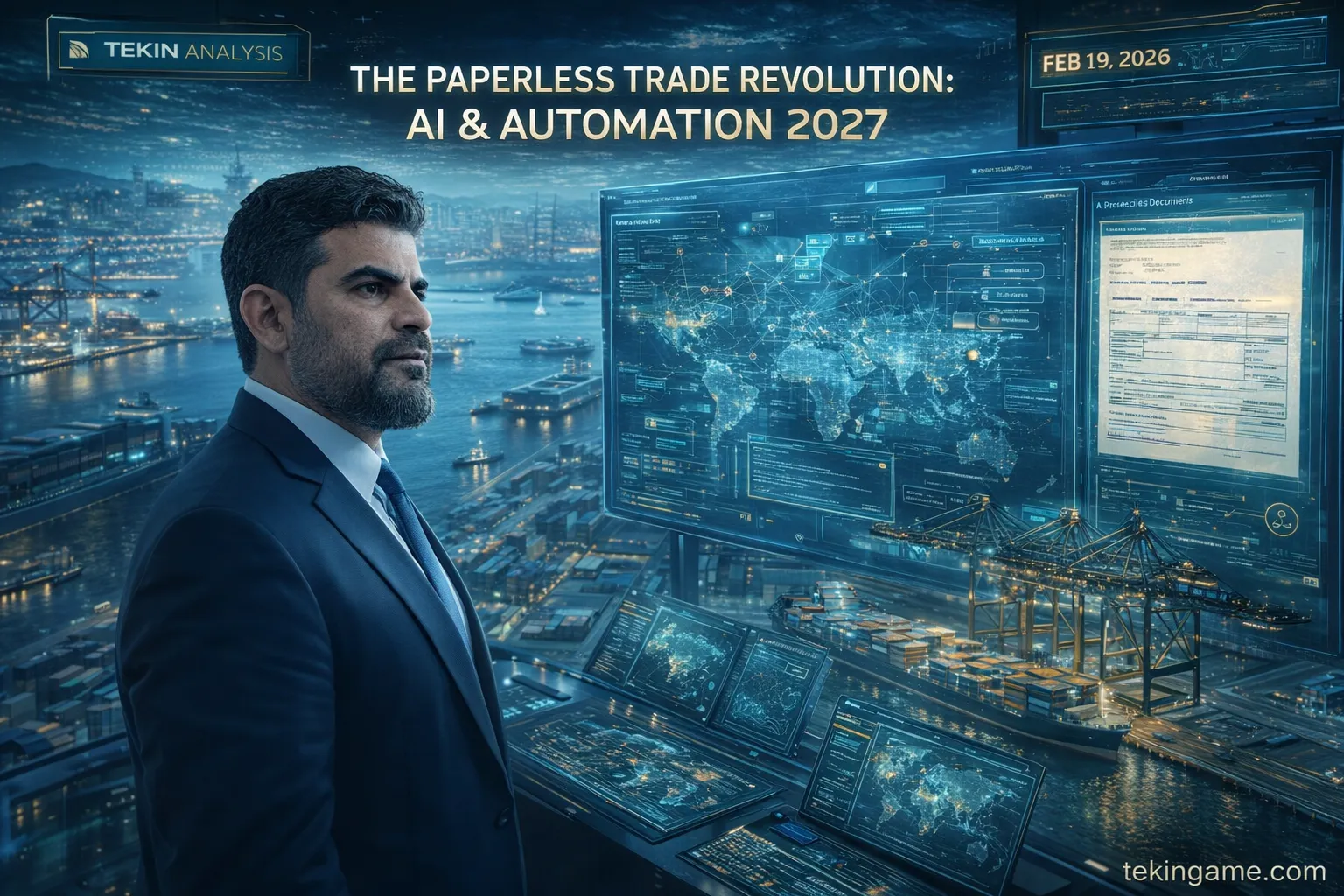
As of February 19, 2026, global commerce is undergoing its most significant structural overhaul since the 1980s. This strategic report autopsies the inevitable collapse of paper-based bureaucracy, as Autonomous AI and Predictive Automation prepare to annihilate traditional customs bottlenecks by 2027. **Key Strategic Pillars:** * **The Death of Manual Compliance:** Advanced NLP and Machine Vision agents now process non-standardized trade documents in under 45 seconds with 99.9% accuracy, rendering traditional clerical teams obsolete. * **P
1. Bureaucracy Paralysis: Why the Traditional Supply Chain is Collapsing
To fully comprehend the absolute necessity of AI in international commerce, we must first autopsy the catastrophic failures of the current supply chain. Global trade is operating on an information architecture built in the 1980s. Statistical models reveal that document processing and border compliance alone account for approximately 20% of total global transportation costs. This is a terrifying, hidden tax on the global economy.
When a container is stalled at a port, a financial bleed known as Demurrage and Detention begins. Shipping lines penalize cargo owners thousands of dollars for every day of delay. The primary culprit? Human error. A clerk at the origin mistakenly inputs an incorrect HS (Harmonized System) Code, or a company name on the Certificate of Origin has a one-letter discrepancy with the Bill of Lading. In the legacy system, discovering this error at the destination customs means a complete operational halt, endless back-and-forth correspondence, re-issuing physical documents, and paralyzing the trading company’s working capital. Human systems simply no longer possess the bandwidth to process the sheer volume and complexity of shifting global trade regulations and international sanctions.
2. The NLP & Machine Vision Revolution: Extracting Data in Milliseconds
The first frontline assault by AI against this bureaucratic nightmare has occurred in the document processing layer. Previously, traditional OCR (Optical Character Recognition) technologies could only extract text from rigidly standardized forms. However, global trade documents possess zero standardization; a Commercial Invoice from China looks entirely different from one originating in Germany.
As we navigate through 2026, we are witnessing the deployment of Autonomous AI Agents armed with state-of-the-art Natural Language Processing (NLP) and Machine Vision into corporate back-offices. These agents do not require predefined templates. They can "comprehend" a low-resolution, scanned PDF riddled with overlapping stamps and signatures in milliseconds. These AI models extract buyer and seller identities, tariff codes, net/gross weights, and Incoterms with 99.9% accuracy, instantly converting them into structured JSON payloads for seamless ERP injection. More critically, these systems autonomously flag hidden discrepancies across different documents (e.g., a weight mismatch between the B/L and the Packing List) before they are ever submitted to customs.
3. The Geopolitical Layer: Hunting Shell Companies & Real-Time Sanctions Compliance
International trade is not merely the exchange of goods; it is a geopolitical minefield. Evading sanctions and Trade-Based Money Laundering (TBML) have become the ultimate nightmares for regulatory bodies. In the legacy framework, Compliance Officers manually screened OFAC or FATF blacklists using rudimentary keyword-matching software—a highly flawed and porous defense.
The trade agents of 2027, however, are powered by Knowledge Graphs. When a Proforma Invoice is logged into the system, the AI instantly renders a multidimensional web of hidden connections. It calculates that the purchasing entity in Dubai is, in reality, a Shell Company registered just three days prior, whose board members possess hidden financial ties to a sanctioned entity in another jurisdiction. By continuously monitoring global databases in real-time, the AI calculates the transaction risk and halts a disastrous shipment before the cargo even leaves the origin port, saving the parent company from frozen bank accounts and catastrophic legal penalties.

4. Predictive Clearance: Crossing Borders with Algorithmic Green Lights
The primary objective for customs authorities in developed nations for 2027 is abandoning the archaic concept of "Destination Inspection" in favor of Predictive Customs Clearance. This represents an engineering paradigm shift in the very nature of trade.
In this architecture, rather than waiting for a container to dock before reviewing its paperwork, customs agencies utilize Machine Learning risk assessment engines. While the container is still navigating the ocean, the customs AI ingests millions of data points: the importer’s historical footprint, the exporter’s error rate, the container's weight transmitted via the ship’s IIoT sensors, and even anomalous geographic routing patterns.
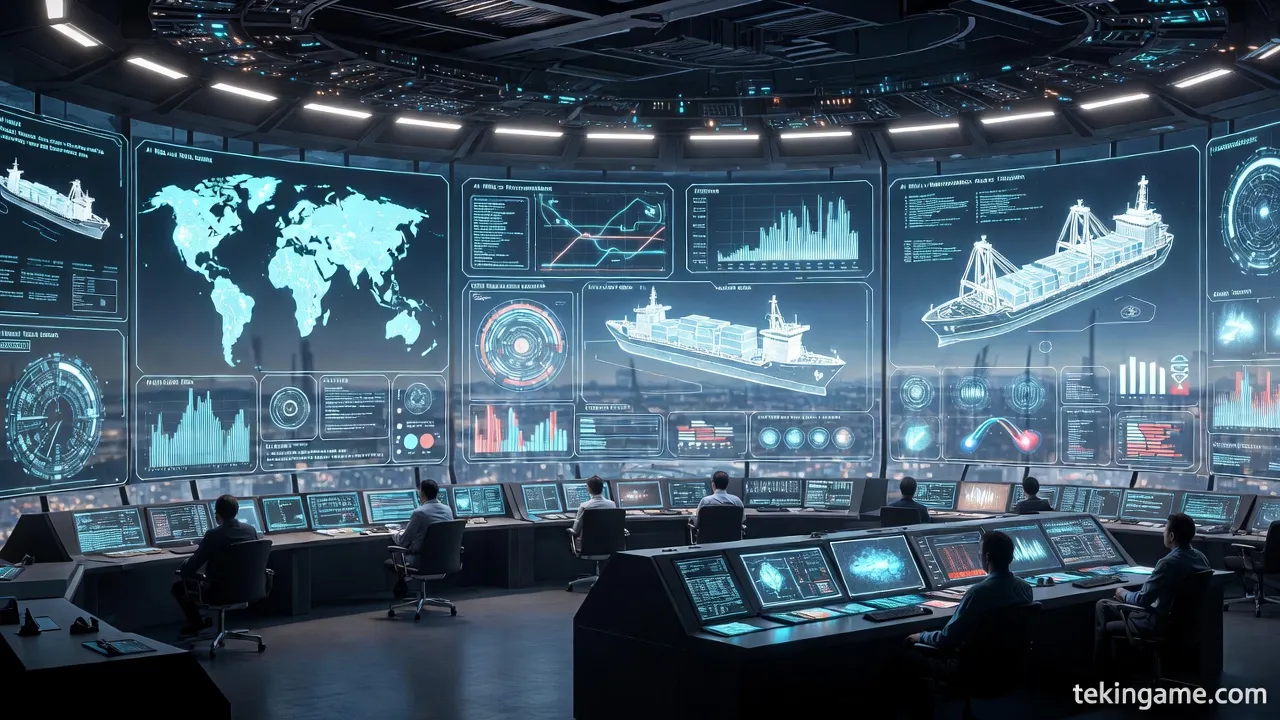
If the algorithm calculates a low-risk profile (Green Channel), the container is digitally cleared prior to the vessel's arrival. Transport trucks receive the container directly from the terminal and exit through the port's Smart Gates without a single physical stop. This system not only slashes cargo dwell time from weeks to mere hours but also allows customs officers to concentrate their human resources exclusively on high-risk shipments (Red Channel) flagged by the AI.

5. The Protocol Wars: The Death of Ancient EDI and the Dawn of Smart APIs
One of the darkest and most technical bottlenecks in global trade lies in communication protocols. For decades, ports, shipping lines, and customs authorities have relied on an ancient standard called EDI (Electronic Data Interchange) and formats like EDIFACT. These systems are incredibly rigid, unforgiving, and fundamentally indigestible for modern Artificial Intelligence.
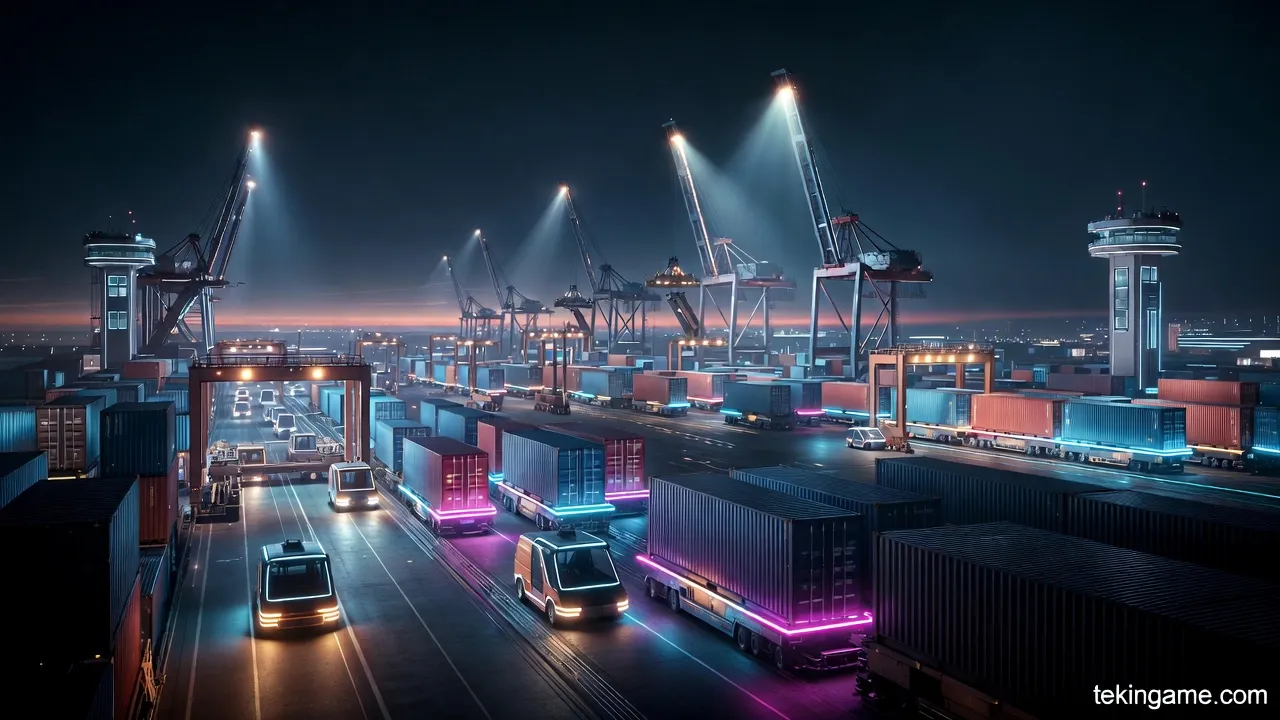
On the road to 2027, an all-out protocol war is raging. AI agents require Smart APIs and Microservices architectures to communicate natively via modern languages (RESTful APIs and JSON payloads). Because governments cannot overhaul their multi-billion-dollar legacy customs systems overnight, elite tech startups have developed AI-driven Middleware layers. These layers intercept the modern JSON data generated by AI, instantly translate it into ancient EDI codes in milliseconds, and inject it flawlessly into legacy customs mainframes. We are witnessing the silent execution of 1980s protocols.
6. Hardware & Digital Twins: Connecting Smart Contracts to IIoT Sensors
AI operating strictly in the Cloud is effectively blind without eyes and ears in the physical world. The Paperless Trade revolution of 2027 achieves its ultimate form by fusing AI with the Industrial Internet of Things (IIoT). Let’s examine this through the lens of Digital Twin technology and the Cold Chain.
A shipment of vaccines or frozen meat is in transit from Brazil to the UAE. The reefer container is rigged with IIoT sensors transmitting temperature, humidity, and vibration metrics every second. The AI constructs a "Digital Twin" of this container on its servers. The financial settlement for this cargo is locked into a blockchain Smart Contract, with the AI acting as the "Oracle" (the trusted entity verifying off-chain data).
If, in the middle of the Indian Ocean, the container's temperature drops by just 2 degrees—breaching the standard protocol—the AI detects it instantly. The Smart Contract autonomously executes a predefined financial penalty, deducts the cargo's value, and transmits a Red Flag warning to destination customs that the shipment requires sanitary inspection. All of this occurs without a single human intervention, in a fraction of a second.

7. The Cybersecurity Nightmare: Data Poisoning in Smart Ports
Wherever absolute automation reigns, malicious actors seek to hijack the algorithms. When cargo clearance is surrendered to the green-lighting algorithms of customs AI (Predictive Clearance), the greatest security threat is no longer a stolen password; it is Data Poisoning.
By 2027, smuggling cartels and organized crime syndicates will no longer bribe border guards; they will fund black-hat hackers. Their objective is to manipulate Training Datasets or spoof in-transit container sensors. If a hacker can successfully compromise a weight sensor or GPS payload to deceive the customs AI into classifying a shipment of contraband as "harmless agricultural machinery," the algorithm will autonomously grant it a Green Channel clearance. This complex vulnerability, known in AI security circles as an Adversarial Attack, is the ultimate nightmare for smart port security engineers. Defending Data Integrity is now as critical as defending physical borders.
8. Datacenter Economics (TCO): Human Logistics Teams vs. Automation Engines
Why are massive trading conglomerates ruthlessly liquidating their clerical compliance teams and deploying AI-driven trade agents? The answer lies in the unforgiving mathematics of Wall Street and the metric of Total Cost of Ownership (TCO).
Let us examine a standard Tekin Analytical Table comparing the annual cost and operational yield of a traditional document compliance and clearance department (5 human experts) versus an Autonomous AI Agent Trade Engine over a standard fiscal year (Assumption: Processing 10,000 import/export files annually):
| Strategic Metric (Volume: 10,000 Files/Year) | Traditional Logistics Dept. (5 Human Experts) | Autonomous AI Trade Automation Engine |
|---|---|---|
| Base Operational Cost (Payroll / API Licenses) | ~$250,000 (Combined salaries, insurance, overhead) | ~$35,000 (Dedicated servers, RAG, and Token usage) |
| Processing Velocity per File (15 Different Documents) | 2 to 4 Business Days | Under 45 Seconds (Extraction, OFAC screening, and submission) |
| Human Error Rate & Demurrage Penalties (Annual) | ~8% Error Rate (Resulting in ~$90,000 in customs fines/demurrage) | <0.01% (Autonomous discrepancy detection prior to upload) |
| Strategic Total Cost of Ownership (TCO + Risk) | Exceeds $340,000 | Approx. $38,000 |
As the numbers brutally demonstrate, intelligent automation slashes compliance and documentation costs by nearly 90%, while effectively reducing hidden penalties like demurrage to zero. In the 2027 horizon, a company that still utilizes humans to read Bills of Lading, manually check sanction lists, and type data into customs portals will be rapidly eradicated by AI-equipped competitors.

9. Strategic Conclusion: The Survival Guide for the 2027 Algorithmic Borders
The nightmare of border regulations and customs paperwork, accepted for decades as an unwritten tax on international commerce, is finally collapsing. Artificial Intelligence, Autonomous Agents, Smart Contracts, and IIoT sensors are surgically clearing the clogged arteries of the global economy. By 2027, "Paperless Trade" will no longer be a futuristic buzzword or a mere competitive advantage; it will be the absolute Baseline Requirement for participation in global markets.
The strategic directive from the Tekin Army to supply chain executives, trading firms, and customs brokers is crystal clear: Your manual processes are your organization's greatest economic and security vulnerability. If your employees are still populating Excel sheets, scanning Certificates of Origin, manually cross-referencing sanction blacklists, and waiting in physical customs queues, you are bleeding your organization's lifeblood (working capital). The future belongs to corporations that treat their trade compliance department not as a clerical back-office, but as a Data-Driven Command Center. A place where executives no longer drown in paper documents, but simply orchestrate a network of AI algorithms that transcend borders. Physical borders are fading; the borders of 2027 will be entirely algorithmic.