1. 🧠 Ideology Clash: NoSQL vs. SQL in 2026
Before we fight over pricing, we must address data architecture. This is the fundamental divide that will dictate your code structure.
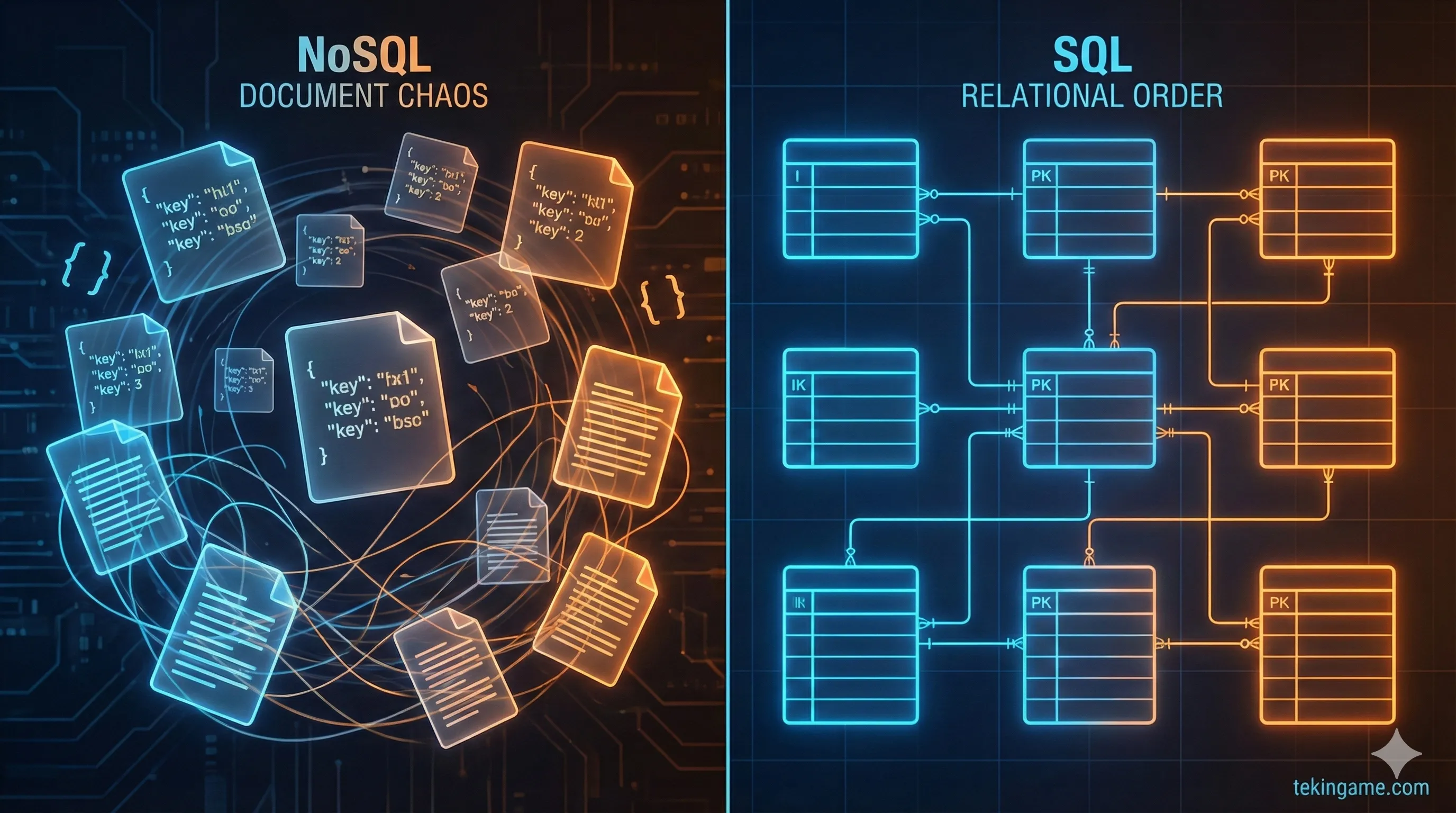
Firebase (Firestore): The Document Store
Firebase relies on NoSQL (Firestore). Data is stored in Collections and Documents.
The Pro: It is incredibly fast to start. You dump a JSON object, and it exists. No schema migrations, no strict tables.
The 2026 Problem: Complexity kills it. If you need to query "Users who bought X AND live in Y OR are aged Z," you are entering "Index Hell." Firebase requires you to create composite indexes for every complex query permutation. Furthermore, there are no "Joins." You often have to denormalize data (duplicate it) to make it readable, which becomes a maintenance nightmare at scale.
Supabase: The Power of Postgres
Supabase is essentially a modern wrapper around PostgreSQL. You have the full power of a Relational Database.
The Pro: Relational data is how the world works. In 2026, you can perform `JOINS`, use Foreign Keys to ensure data integrity, and run complex aggregation queries without duplicating data.
Technical Note: Supabase exposes your database via an auto-generated REST API (using PostgREST), meaning you can query your DB from the frontend as if it were a simple API, but with the power of SQL under the hood.
2. 🚀 Developer Experience (DX): TypeScript & Server Actions
As a Next.js developer, you crave Type Safety. This is where the battle gets interesting.
Supabase: The TypeScript Heaven
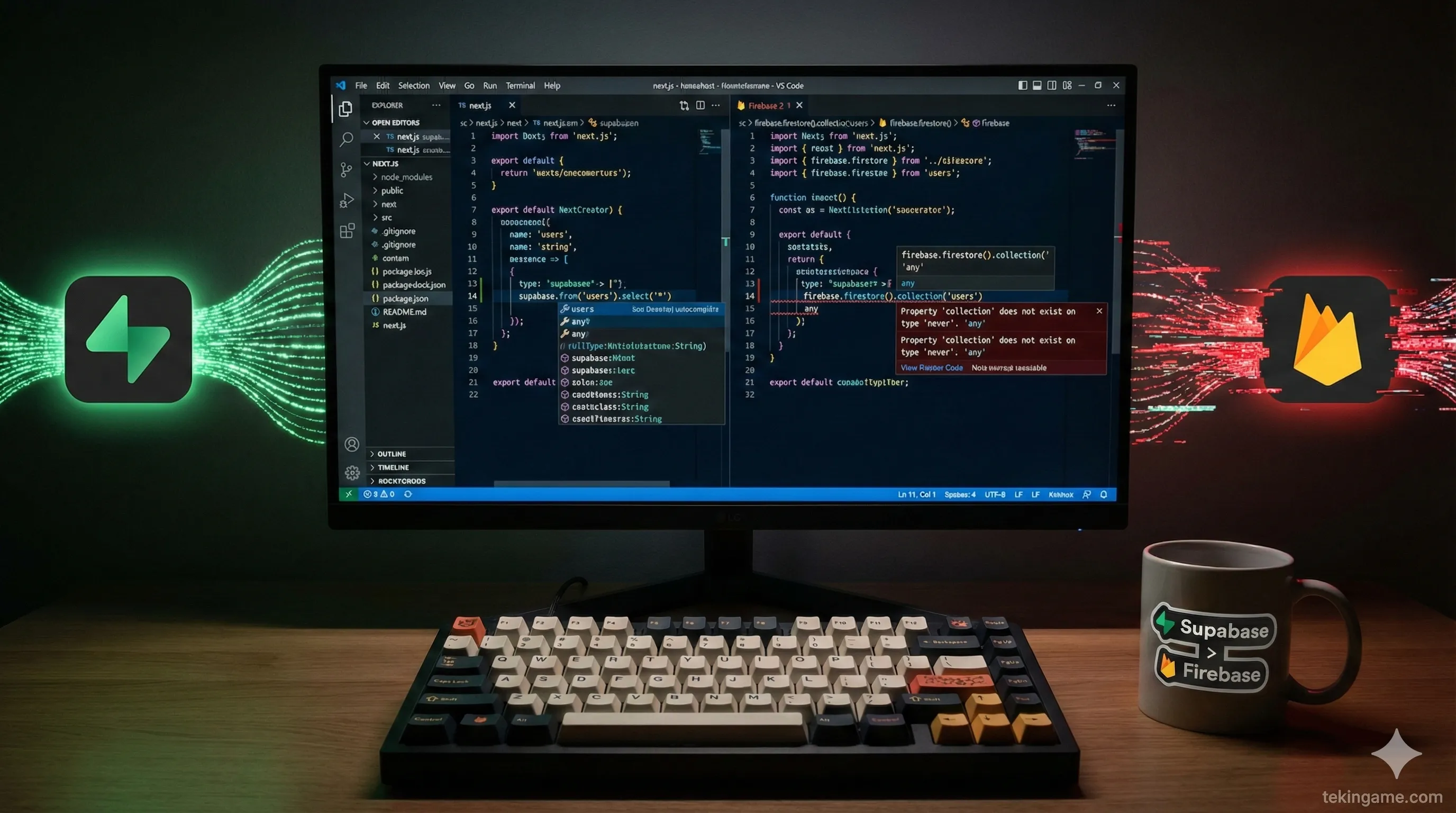
Supabase wins this category hands down. via the Supabase CLI, you can introspect your live database schema and generate a types.ts file automatically.
When you write:
await supabase.from('users').select('*')
TypeScript immediately knows exactly what fields exist on the 'users' table. If you rename a column in the DB and regenerate types, your VS Code will scream at you before you even deploy. This is "End-to-End Type Safety."
Firebase: Still Catching Up
Firebase has improved with its Gen 2 SDKs, but it still relies heavily on manual work. You often have to write custom "Data Converters" to tell TypeScript what your Firestore documents look like. Integrating Firebase Admin SDK into Next.js Edge Runtimes (like Vercel Edge) can still be tricky due to cold starts and package size, whereas Supabase's client is lightweight and HTTP-based.
3. 🤖 The AI War: Genkit vs. pgvector
In 2026, if your app doesn't have AI, it's obsolete. How do these platforms handle Vector Embeddings?
Supabase: Native & Integrated (pgvector)
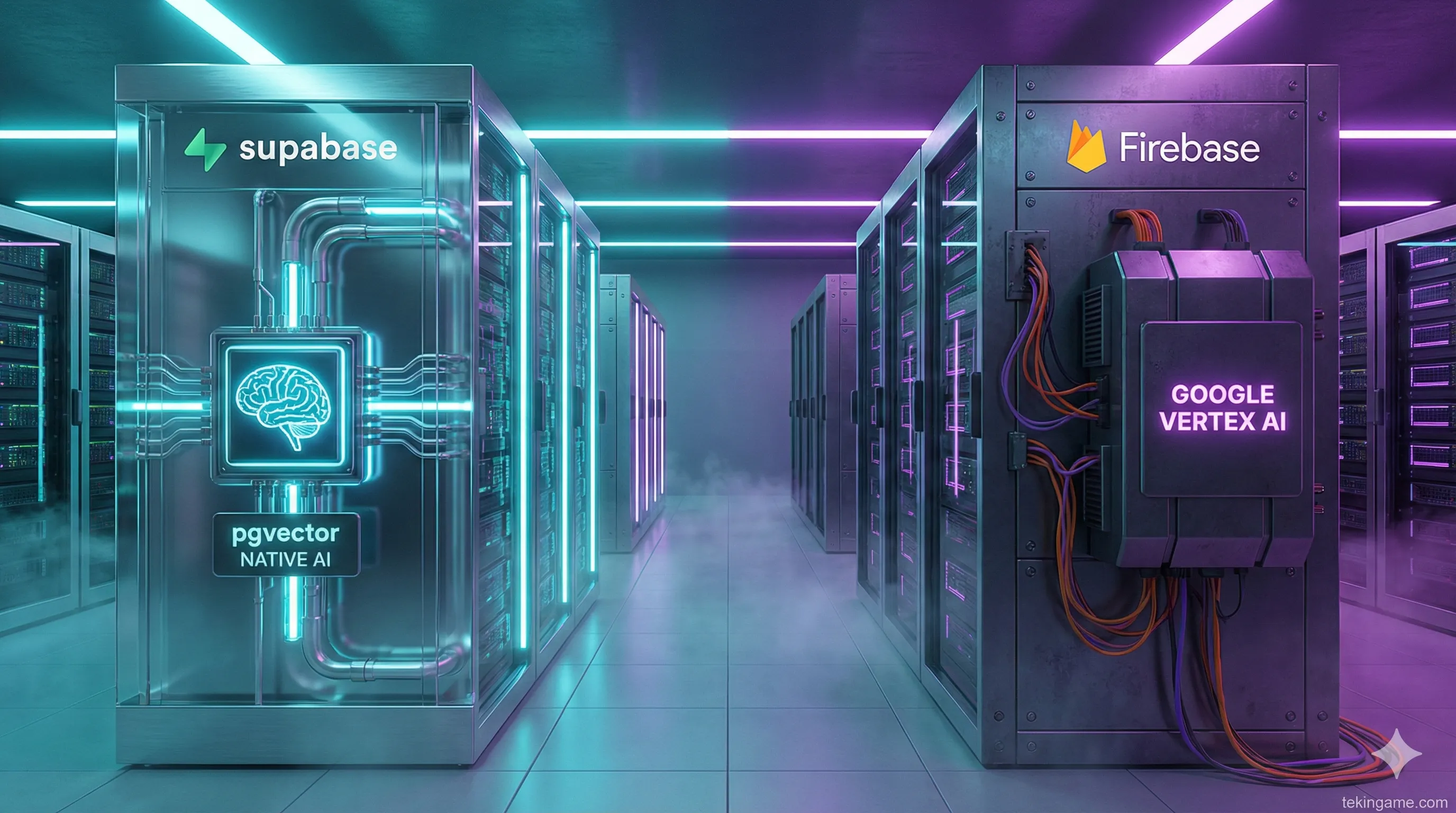
Because Supabase is Postgres, it supports the legendary pgvector extension.
This means you store your user data, your chat logs, AND your AI embeddings in the same database.
Scenario: You want to find "Relevant Products" based on a user's prompt. You run a single SQL query that performs a similarity search. No external services (like Pinecone) needed. It simplifies the stack immensely.
Firebase: The Google Ecosystem (Vertex AI)
Firebase leans on Google Cloud's Vertex AI and the new "Vector Search" extension.
It is powerful, yes. You get direct access to Gemini Ultra models. However, it feels "bolted on." You often have to sync your Firestore data to a separate vector store. It works, but it adds latency and architectural complexity compared to the monolithic beauty of Postgres.
4. 🔐 Security Architecture: RLS vs. Custom Rules
This is where Juniors get stuck, and Seniors make their decision.
Supabase: Row Level Security (RLS)
This uses standard SQL policies. You define rules directly on the database tables.
Example: `create policy "User can see own data" on users for select using (auth.uid() = id);`
It is robust, portable, and battle-tested. However, writing complex SQL logic for permissions can be daunting for frontend-focused devs.
Firebase: Security Rules
Firebase uses a proprietary JSON/JavaScript-like syntax (`.rules`). It is very readable and easy to learn. However, there is a hidden cost: If your security rule needs to check another document (e.g., "Is this user an admin of this group?"), that check counts as a Database Read. A complex app can burn through its free tier just by checking security rules!
5. ⚡️ Realtime & Performance
Firebase Realtime Database (and Firestore) is built on proprietary Google WebSockets. It is famously fast. For simple things like "Online Presence" or a "Chat App," Firebase still feels slightly smoother, specifically regarding its Offline Mode capabilities on mobile, which are best-in-class.
Supabase Realtime is built on Elixir and Phoenix Channels. It listens to the Postgres Write-Ahead Log (WAL). It creates a "Change Data Capture" (CDC) stream. It handles millions of connections easily, but its offline persistence for mobile SDKs is still playing catch-up to Firebase's decade of optimization.
6. 💸 The Cost Analysis: The "Bill Shock" Nightmare
This is the most critical section for startups.
Firebase: The "Pay As You Go" Trap
Firebase is generous when you are small. But the pricing model is based on Operations (Reads/Writes).
Imagine a bug in your frontend code causes a loop that reads the database 100,000 times in an hour. Google will happily execute that and send you a bill. There are no "Hard Caps" to stop the service before your credit card melts.
Supabase: The Predictable Model
Supabase charges based on Storage and Compute (like a traditional server), not just Reads/Writes. You pay a flat fee (e.g., $25/month) for a Pro tier. If you exceed limits, the performance might throttle, or you get a bill, but it is much harder to accidentally incur a $5,000 bill overnight compared to Firestore.

7. 🔒 The Vendor Lock-in Dilemma
Firebase: You are in Google's Walled Garden. Migrating away from Firestore requires rewriting your entire backend logic and converting NoSQL data to SQL. It is a massive technical debt.
Supabase: It is Open Source. You can self-host Supabase using Docker on your own DigitalOcean droplet if you want. Even if you don't self-host, your data is just standard Postgres. You can run `pg_dump`, take your data, and move to AWS RDS or Azure instantly. Total Freedom.
8. Verdict: The Decision Matrix
Based on extensive architectural reviews in 2026, Inspector Gemini advises:
Choose Firebase if:
✅ Your app is Mobile-First (Flutter/React Native) and needs robust Offline Sync.
✅ Your data is highly unstructured and changes constantly.
✅ You have a very small team with zero SQL knowledge.
✅ You rely heavily on Google Analytics and Crashlytics.
Choose Supabase if:
✅ You are building a SaaS or Web App with Next.js (B2B/B2C).
✅ Your data is Relational (Users, Orders, Inventory).
✅ You need native Vector Search for AI features.
✅ You fear Vendor Lock-in and want standard SQL.
✅ You love TypeScript and automated type generation.
👨💻 Inspector's Personal Take
For me, in 2026, Supabase is the winner for 90% of web projects.
The combination of Postgres + AI Vectors + Type Safety offers a developer experience that Firebase's document model simply cannot match anymore. The freedom of SQL is too valuable to give up.
What is your stack? Are you Team Google or Team SQL? Let me know in the comments! 👇