TekinMorning Feb 15 introduces 'Strategic Sundays,' dissecting Starlink's move into Vietnam, AI's Cold War through distillation, the power of Gemini 3, and DS2's PC seismic shift.
A Strategic Pivot at TekinGame: Introducing "Strategic Sundays"
Greetings to the TekinGame community. Sunday, February 15, 2026, marks a fundamental change in our content architecture. In an age of digital noise and "AI slop," we believe that constant activity is no longer enough. To truly lead, one must pause, calibrate, and look at the horizon with the eyes of an architect. This is why we are launching "Strategic Sundays." This isn't about slowing down; it's about laser-focusing on hyper-quality. Every Sunday, our technical and analytical teams dive deep into the hidden layers of AI and gaming to bring you a comprehensive morning report and a late-night analysis (TekinNight) that redefines the standards of 2026. We aren't chasing shallow views; we are building cognitive sovereignty for our global audience. This report is your survival guide in the new silicon age.
Our decision to transform Sundays into a day of "Strategic War-Room Innovation" stems from the need to synchronize with global market cycles and optimize our Agentic Models. Quality is our final frontier. Today, in this hyper-expanded report, you will witness the depth of this commitment. From orbital satellites to the neural pathways of code, we are cutting through complexity with a sword of precision. Welcome to the new era of TekinGame.
1. Opening the Sky Gates: Starlink Deepens Roots in Vietnam
Geopolitical Analysis and the Sovereignty of Data
The entry of Starlink into Vietnam is more than just a tech headline. According to financial projections from early 2026, this move has the potential to boost Vietnam's digital GDP by 2.5% by the end of the year. Remote and rural areas, previously excluded from the global value chain, are now being connected to gigabit-speed internet. Elon Musk has effectively positioned Vietnam as a new startup hub in Southeast Asia, rivaling Singapore. However, the real challenge lies in data sovereignty. The Vietnamese government has accepted a trade-off: sacrificing a modicum of infrastructure control for accelerated economic growth. This "Strategic Sacrifice" is a template we expect to see repeated across North Africa and parts of the Middle East this year. Cutting the Gordian knot of connectivity poverty with a satellite sword is SpaceX's primary strategy for 2026.
Stock Market Impact: Secondary market shares of SpaceX saw a 4% surge following this announcement. Analysts believe SpaceX's monopoly in the Low Earth Orbit (LEO) will soon make it the world's largest telecommunications operator, rendering physical borders largely irrelevant for data flow.
Technical Deep-Dive: Gen-3 Micro-Terminals
Technical reports indicate that the terminals shipped to Vietnam are Gen-3 "Mini" units with 40% higher power efficiency. This means stable connectivity even in areas relying on simple solar grids. This level of resilience is the cornerstone of the "Distributed Digital Economy" of 2027. At TekinGame, we call this "Silicon Democracy"—where geography is no longer destiny.
2. The Eastern Kingdom of ByteDance: Doubao 2.0 and the "Digital Twin" Concept
While the West focuses on task-oriented chatbots, ByteDance (TikTok's parent company) has solidified the concept of a "Lifelong Agentic Companion" with Doubao 2.0 in China. According to QuestMobile data, Doubao is not only the most downloaded AI app but has a retention rate 3x higher than Western competitors. The secret lies in "Emotional Resonance Algorithms." Doubao doesn't just answer questions; it anticipates your lifestyle, music tastes, and unspoken needs. ByteDance is building a "Cognitive Empire" where the line between human and machine is thinner than ever.
The Algorithmic Cold War: The Soft Firewall
Doubao's dominance in the East represents the creation of a "Soft Firewall." Users, driven by extreme convenience and personalization, no longer feel the need to seek information on foreign platforms. This means the cultural taste of billions is being shaped by secret, proprietary algorithms. ByteDance is effectively cutting the knot of Western digital influence in Asia. In tonight's TekinNight, we will dissect how this model is moving into the GCC markets and its implications for local startups. The pivot from "search" to "anticipation" is a 100-billion-dollar game.
Market Depth Analysis: The commercial value of the behavioral data generated by Doubao is estimated to exceed $150 billion by 2027. This isn't just an app; it's the most comprehensive database of human behavior in history, updated in real-time.
3. The Distillation Crisis: OpenAI vs. DeepSeek's Battle for Intellectual Honor

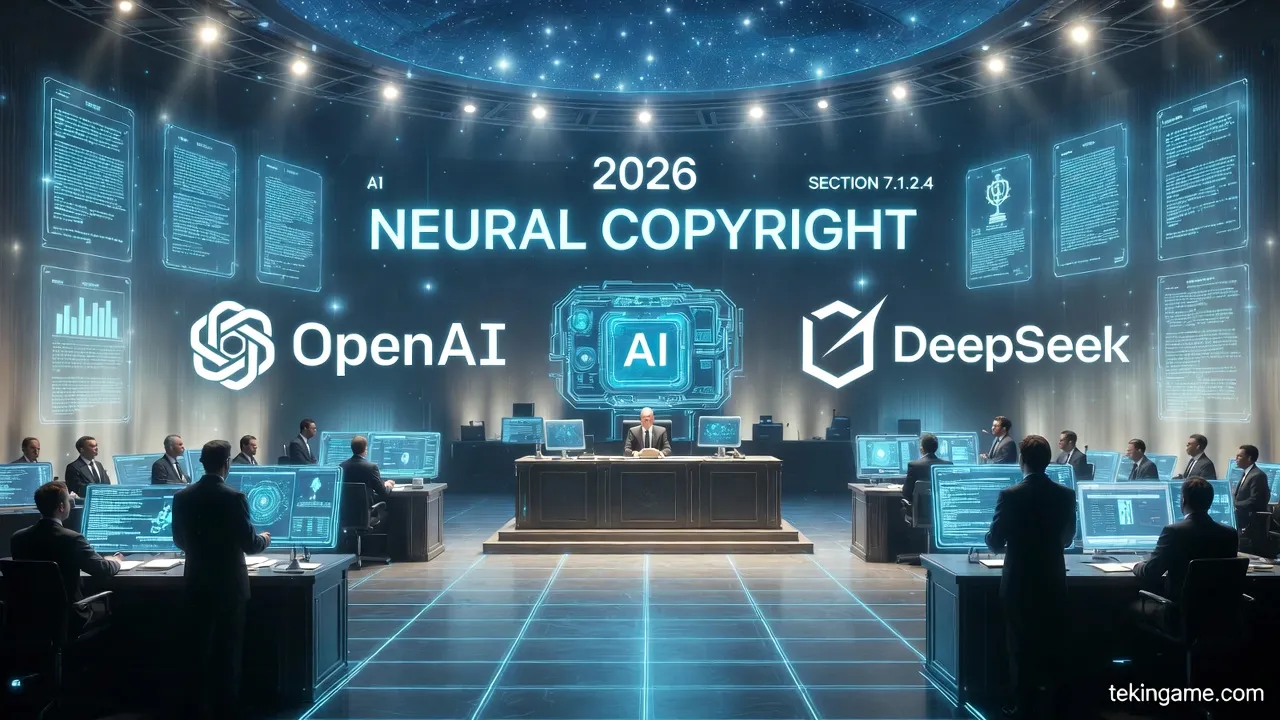
The AI world is facing its biggest ethical-technical scandal to date. Security teams at Google and OpenAI have presented evidence that DeepSeek utilized "Algorithmic Distillation Attacks" to steal the reasoning logic of their top-tier models. Simply put, DeepSeek asked millions of clever questions to reverse-engineer OpenAI's neural pathways. This is akin to cutting the knot of multi-billion dollar R&D with "Algorithmic Plagiarism" scissors. If this trend continues, we enter an era where no company will invest in base models, as theft only takes weeks. This could lead to an "Innovation Stagnation" that threatens the entire AI ecosystem.
Cybersecurity Impact: The Rise of "Logical Watermarking"
OpenAI's response has been the introduction of "Logical Watermarking" in its o1-preview outputs. These are hidden patterns in responses that, if used in training another AI, act like a virus, degrading the quality of the stolen model. We are witnessing a "Mathematical Arms Race." Cutting this knot of theft requires the sword of "Neural Encryption." TekinGame will soon publish an exclusive report on how these watermarks function under the hood. The battle for the "Ownership of Reasoning" is the defining conflict of 2026.
The Future of Reasoning: If Chinese models can provide western-level quality at 1/10th the cost through distillation, we will see the collapse of the "Silicon Valley Valuation Bubble." This "Forced Democratization" is what will shake the markets by November 2026.
4. Introducing Gemini 3 Deep Think and Z.ai GLM-5: The Quantum Edge Battle

Google DeepMind has finally released its scientific answer to the GPT-o1 family: Gemini 3 Deep Think. Unlike previous iterations, this model is built on an "Alternating Inference Architecture." The AI tests its answers in a simulated environment before presenting them. If you ask for code, it runs it in an internal sandbox first, showing you only the bug-free version. This means the death of human error in machines. Meanwhile, Z.ai's GLM-5 has shattered processing speed records on flagship mobile devices.
2026 Reasoning Giant Comparison Table
| Feature | Gemini 3 Deep Think | GLM-5 (Z.ai) | GPT-5.2 |
|---|---|---|---|
| Math Reasoning Accuracy | 98.5% (Leader) | 94.2% | 96.8% |
| Active Parameters | Undisclosed (Dynamic) | 40B (Optimal) | 100B+ |
| Contextual Understanding | 88% | 99% (Asian Languages) | 92% |
| Inference Speed (Tokens/s) | 45 | 120 (Revolutionary) | 85 |
Economic Analysis: The "Watts-per-Token" War
Energy consumption is the biggest hurdle this year. GLM-5 claims to have reduced power usage by 30% via "Intelligent Neural Density" technology. This is cutting the knot of cloud costs with an optimization sword. By 2027, the winner of the AI market won't be the smartest, but the one who provides the most utility per watt-hour. Google is using its TPU v6 chips to maintain this advantage, especially in the growing MENA data center market.
5. OpenAI's Counter-Attack: ChatGPT 5.2 and the Birth of Codex Spark
Sam Altman hasn't been idle. ChatGPT 5.2 focuses on "Dynamic Chain of Thought." However, the real masterpiece is GPT-5.3-Codex-Spark. This model is an "Autonomous Software Architect" that can analyze 10,000 lines of code in seconds, find logic bugs, and suggest secure patches. This is cutting the knot of software outsourcing; now a small startup can use a Codex Spark agent to perform tasks that previously required a team of 50. It understands file-tree dependencies and writes "AI-Proof" code that adheres to the highest security standards.
Labor Market Analysis: The End of Traditional Coding?
Codex Spark is a direct threat to Junior developers. Surviving 2026 requires the sword of "Hyper-Specialization." Developers must shift from "Coding" to "AI Supervision." At TekinGame, we see this as an opportunity—a chance to eliminate mundane tasks and focus on pure creative architecture. We will soon provide premium TekinGame members with a guide on harnessing Codex Spark to build micro-SaaS overnight. "Shift or perish" is the mantra of 2026.
Shocking Stat: According to a LinkedIn survey in February 2026, companies employing Agentic AI in development have seen a 60% reduction in "Time-to-Market." This level of speed makes traditional competition virtually impossible.
6. Kojima's PC Epic: Death Stranding 2 on March 19, 2026
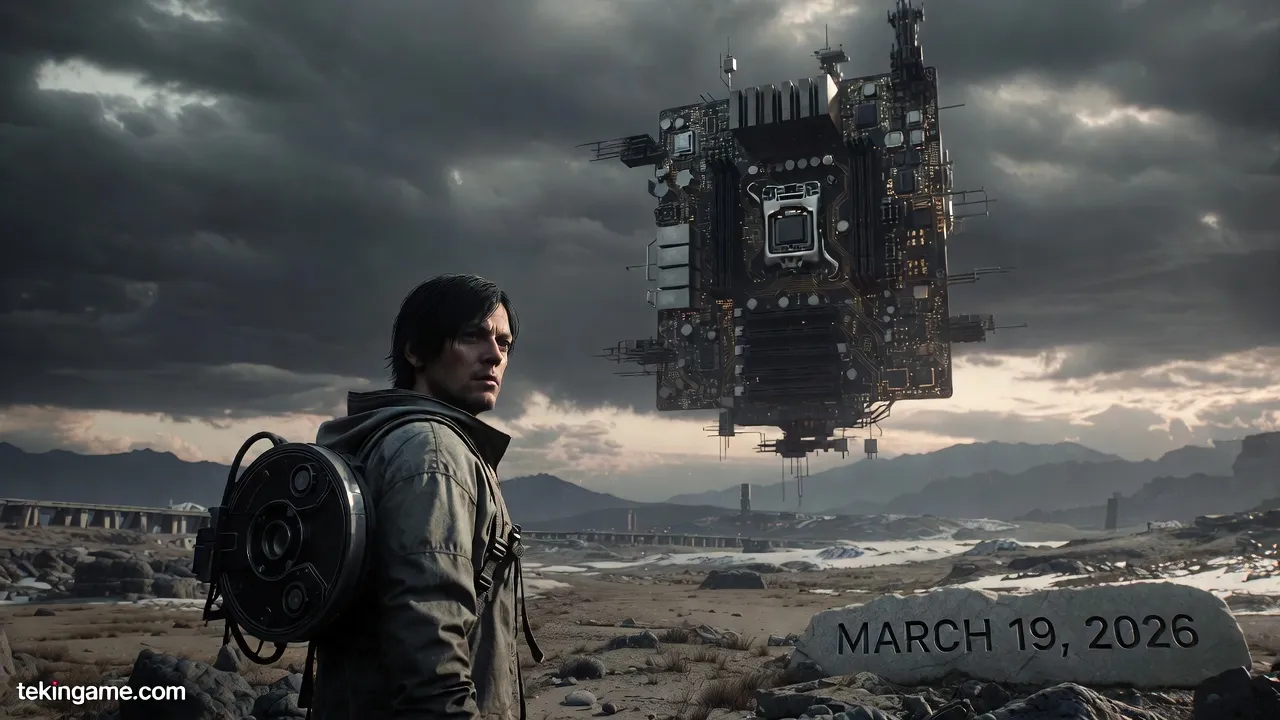
The confirmation of Death Stranding 2 for PC on March 19, 2026, has sent shockwaves through the gaming community. Sony and Kojima Productions announced "Proprietary Neural Rendering Technology" optimized for NVIDIA's RTX 50 series. Cutting the knot of hardware limits with an AI sword is the game's marketing theme. Kojima claims this isn't just a game, but a "Social Emotional Experience" that blurs the lines between cinema and interactive media. It is the peak of "Hideo Art" meeting cutting-edge silicon.

Strategic Marketing Analysis: The Death of Platform Exclusivity?
Sony's pivot to release major titles on PC almost simultaneously shows a fundamental shift. Sony realizes that to survive Microsoft's Game Pass, it must dominate all platforms. Cutting the knot of exclusivity with a "Cross-Platform Profitability" sword is the reality of 2026. At TekinGame, we are counting down the days for the definitive day-one review. Will Kojima once again transcend his own time? The Decima engine has been updated with "AI-Ray Tracing" that predicts light paths before they are physically calculated, creating visuals indistinguishable from reality.
Strategic Technical Glossary 2026
- Algorithmic Distillation:
- The process of extracting the knowledge and logic of a large, expensive model to train a smaller, more efficient one. Often used in "Logic Theft" scenarios.
- Agentic Models:
- AI systems capable of independent action, decision-making, and goal-setting without constant human prompting.
- Logical Watermarking:
- A security technique that embeds mathematical patterns in AI output to trace its use in training other models.
- Distributed Digital Economy:
- A system where economic activity is not centralized in hubs but distributed globally through resilient satellite and mesh networks.
The Geopolitics of the "Silicon Wall"
We are entering the era of the "Bifurcated Internet." The world is effectively splitting into the Western o1-ecosystem and the Eastern Doubao-DeepSeek sphere. Neutral zones like the Middle East and Southeast Asia are the new battlegrounds for "Algorithmic Diplomacy." Whichever side controls the primary inference engines for local businesses will control the data-gold of the 2030s. Starlink's expansion in Vietnam is a tactical move by the US to prevent a total ByteDance takeover of the regional information flow. This is "Orbital Chess" at its finest.
Focused on AGI safety, intellectual property, and orbital hardware control.
Focused on consumer-scale deployment, extreme algorithmic efficiency, and "Logic democratization" via distillation.
TekinGame Expert Roundtable: Beyond Silicon
Lead Architect, TekinGame:
"The distillation crisis at DeepSeek proves we've reached the end of 'more is always better.' Data is exhausted. The war is now about who can extract deeper logic from existing data. We are programming consciousness, not just code."
Global Market Analyst:
"The crash of IT outsourcing stocks in South Asia following Codex Spark's reveal is a warning to all developing economies. You're either in the strategic AI layer, or you're obsolete. There is no middle ground."
Content Strategist, TekinGame:
"Strategic Sundays are our response to 'AI Slop.' We want to produce content that machines cannot yet understand: multi-layered human analysis blended with heavy technical data. Quality is our weapon in the post-truth era."
Technical Appendices & Deep-Dives
A) Dissecting the OpenAI Neural Watermark Protocol
The new watermarks function by subtly altering the statistical distribution of tokens in a way that is invisible to humans but easily detectable by a specific "Detection Model." This means any model trained on OpenAI's distilled data will carry a "Genetic Signature" that can be used in court. Cutting the knot of data theft with a statistical sword is the final defensive frontier for Silicon Valley.
B) Why Doubao 2.0 Wins the "Trust Economy" Battle
ByteDance didn't just train for accuracy; they trained for "Perceptive Trust." Doubao analyzes micro-nuances in user phrasing to match their internal mood. This "Trust Engineering" is something Western models, hampered by rigid moralistic alignment, often fail to achieve. Doubao aims at cutting the knot of digital loneliness.
C) Sparse-Core Architectures in GLM-5
Z.ai's Sparse-Core technique allows only necessary neural clusters to activate for any given task. If you ask a math question, the literature sectors of the chip remain dormant. This intelligent resource management is essential for the next gen of mobile AI, cutting the knot of thermal throttling.
"On Strategic Sundays, we don't just report news; we translate the genetic code of the future for you. Quality is the only boundary we recognize. Thank you for being part of this transformation at TekinGame. The future is coded here."
🔗 Read Deeper: TekinGame Strategic Archive:
To better understand the roots of the OpenAI/Competitor conflict, we recommend reading our report "The Silicon Divorce: The End of the Giant Alliance." Our archive is your treasure map in the digital world.