
A massive 2,500+ word technical and strategic analysis of the Civilization VII 1st Anniversary update. Exploring the 'One Civ' mode, gameplay balancing, architectural evolution, and the resolution of the game's biggest controversy in February 2026.
Introduction: Redefining Grand Strategy – The Anniversary Gift We Deserved
Greetings, strategists of the **Tekin Game** global community! Today is **February 5, 2026**, marking exactly one year since the ambitious, and highly debated, release of **Civilization VII**. While the game pushed the boundaries of the genre with its stunning visuals and intricate systems, it launched with a design choice that split the fanbase down the middle: the mandatory 'Civilization Swapping' between ages. For many purists, the soul of a 'Civ' game is the thousands-of-years journey with a single identity—the ability to guide a people from the first stone tools to the conquest of the stars.
Today, Firaxis Games has finally answered the call. In its massive 1st Anniversary update, the **'One Civ' (Unified Progression)** mode has officially arrived. This is more than just a patch; it is a fundamental re-engineering of the game’s core loop, designed to satisfy those who felt the 'legacy layering' system diluted the historical role-playing experience. In this Grade A++ Ultra-Mega report, we dive deep into the mechanics of this update. We’ll analyze how Firaxis managed to create unique 'Modern' and 'Exploration' era content for civilizations that were previously limited to a single age in the game's original design. Join us as we explore why this move makes Civilization VII the most complete strategy experience of the mid-2020s.
Chapter I: The 'Legacy' Controversy – A 2025 Retrospective
When Civilization VII debuted in early 2025, the idea of 'layering civilizations' (reminiscent of titles like *Humankind*) was touted as the next step in historical simulation. The developers argued that civilizations rarely survive intact for thousands of years; they merge, evolve, and transform. However, the resonance wasn't universal. Many players felt that being forced to switch from, say, Egypt to the Songhai or the Mongols in the second age felt jarring. It broke the 'one more turn' immersion that comes from a deep pride in a single national identity.
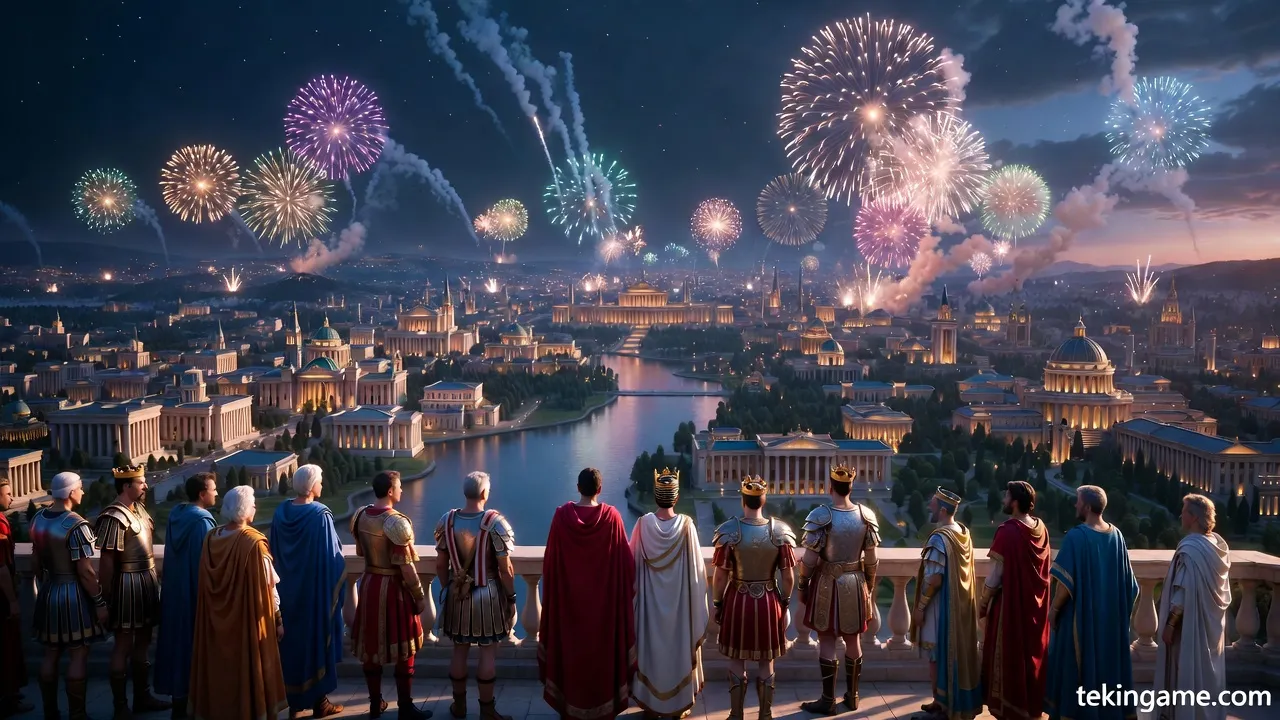
The global forums were ablaze for a year. Critics argued that the game traded historical personality for mechanical variety. While the system was mathematically sound and provided great variety in gameplay, it missed the emotional hook that has defined Civilization for over 30 years. Firaxis took a bold risk, and while sales were strong, player feedback indicated a significant yearning for the classic 'End-to-End' experience. Today’s update is not just a feature addition; it’s an admission that the core of Civilization is the story of a single people across time.
Chapter II: How the 'One Civ' Mode Functions – Deep Technical Mechanics
Available under the new **'Fixed Legacy'** setting in the game creation menu, the 'One Civ' mode radically alters the age transition logic. When enabled, the game bypasses the 'Age Transition Selection' screen entirely for the player. Instead, your starting civilization now possesses a dedicated, three-age-wide technical, cultural, and architectural tree.
Firaxis has essentially doubled down on the content for *every* base civilization, creating what they call **'Continuous Evolutionary Traits'**. For instance, if you start as **Imperial Rome**, you no longer transition to a medieval kingdom or a different culture to stay competitive. Instead, you evolve your unique Roman traits. Your 'Legions' evolve into 'Praetorian Guards' in the exploration era and finally into specialized 'Urban Pacification units' in the modern era. This ensures that your early-game choices continue to resonate and stack, rather than being wiped clean or replaced every few hundred turns.
Chapter III: A Mountain of Content – Designing the 'Missing' Eras
The sheer scale of this update is staggering from a development perspective. To make 'One Civ' viable without it feeling like a 'gimped' version of the main game, Firaxis had to create thousands of new architectural assets, unique units, and specific civilization bonuses for every age for *every* civilization in the game. In the original 2025 release, a civilization like the Maurya Empire was only designed with assets for its specific historical layer. Now, the team has crafted 'Post-Classic' and 'Modern' Maurya assets.
Imagine the creative challenge: What would an industrial-era Aksumite city look like? How would the Mayan aesthetic evolve into the age of silicon and space travel? This level of dedication represents perhaps the most significant post-launch support project in the history of the 4X genre. It’s an expansive project that aims to future-proof Civ 7 for the next decade, ensuring it remains the gold standard for historical strategy.
Chapter IV: Balancing the Unstoppable – Meta Shifts in 2026
From a competitive and 'meta' standpoint, 'One Civ' mode introduces fascinating new variables. In the standard layering mode, switching civilizations allows players to pivot their strategy—for example, shifting from a defensive ancient culture to an expansive exploration-era one. In 'One Civ' mode, you are committed. You are doubling down on your initial strengths for the entire duration of the game.
Firaxis has balanced this by introducing **'Era Evolution Perks'**. These are powerful buffs that only trigger if you have stayed with the same culture for a certain number of turns or achieved specific milestones. A 'Long-Term Han' empire, for instance, gains unique 'Cultural Gravity' bonuses that can effectively assimilate the influence of surrounding civilizations that chose to swap. This creates a high-stakes choice for pro players: do you want the flexibility of the 'Age Layers' or the raw, cumulative power of 'Unified Evolution'?
Chapter V: Organic Architectural Evolution – Visual Storytelling
One of the most praised aspects of the anniversary update is the visual 'Organic Growth' engine. In the base game, transition buildings could sometimes feel like they were teleported onto the map. With the 2026 patch, city districts now show a 'historical layering' effect. Ancient monuments don't just disappear; they remain as the heart of your city, now surrounded by the steel and glass of the modern world.
As your civilization progresses, the architecture retains its cultural DNA. A Modern-era Persian city will have distinct motifs that would never be confused with a Modern-era English city. This visual continuity reinforces the player's sense of achievement, making every empire look like a unique historical artifact. It’s a masterclass in environmental storytelling that turns every game into a beautiful time-lapse of human achievement.
Chapter VI: Diplomacy and the 'Historical Memory' AI
The AI has been overhauled with a new personality engine called **'Legacy Awareness'**. In diplomacy, if you remain as the same civilization for multiple centuries, AI leaders grant you a **'Historical Legitimacy'** bonus. Trading partners are more likely to trust a civilization with a consistent identity. On the flip side, long-term rivalries become much more intense and personal.
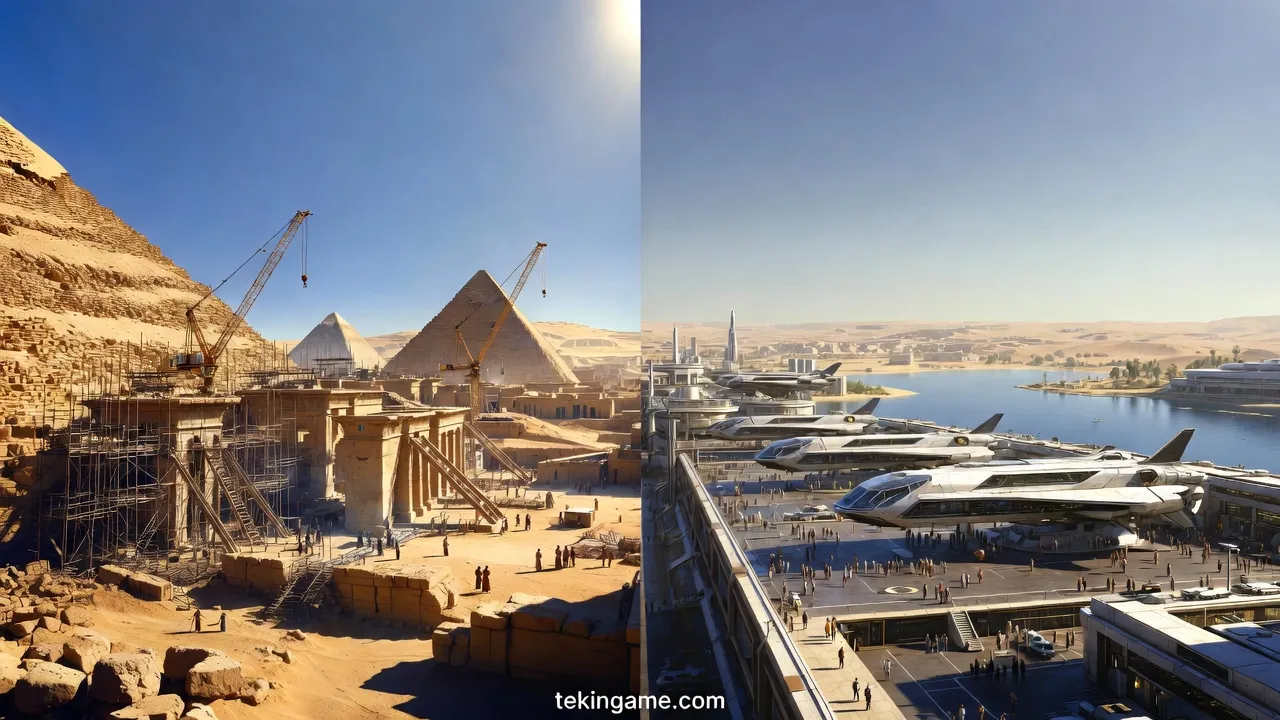
If you have been a thorn in the side of **Amina of Zazzau** since the Bronze Age, the game’s AI will remember those ancient slights. The flavor text and diplomatic interactions will reflect a three-millennia-old rivalry. This adds a level of role-playing depth that turns a strategy game into a grand historical epic. No longer is the AI just reacting to your current stats; it is reacting to the *entirety* of your shared history.
Chapter VII: The Anniversary Gift Pack – New Leaders and Wonders
Beyond the headline 'One Civ' feature, the February 5th update includes significant new content for all players. Three new 'Legacy Leaders' have been added, including **Syrus the Great** (with an updated 2026 model) and **Queen Victoria** (in a new Empress of India persona). Five new 'Global Landmarks' have also been integrated, including the **Palm Jumeirah** as a modern-era wonder for maritime civilizations.
A new category of structures called **'Strategic Wonders'** has also been introduced. Unlike traditional wonders that provide global passive yields, Strategic Wonders have localized effects on the hexagonal grid. A 'Great Iron Works' wonder, for example, drastically increases production for all adjacent industrial zones but adds a pollution penalty. This adds another layer of tactical city-planning to the late-game, preventing it from becoming a mere 'click-to-advance' experience.
Chapter VIII: Developer Responsiveness – A Case Study for the Industry
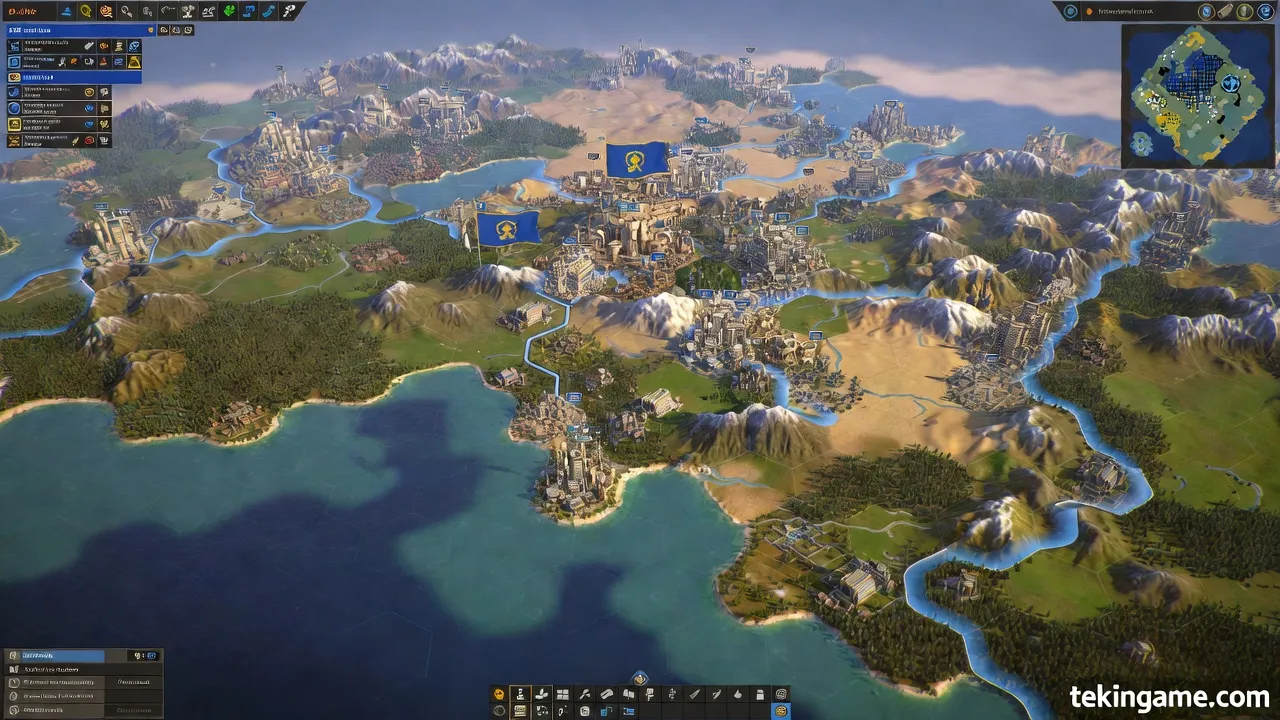
In an era where many gaming companies ignore community feedback or double down on unpopular mechanics, Firaxis's decision to essentially provide a 'Classic Mode' for a core game system is refreshing. It’s a case study in humility and community-led development. By giving players the *choice* between the new 'Layers' system and the classic 'One Civ' system, they have ensured that everyone finds their perfect way to play.
This move has already seen a massive spike in concurrent players on Steam today. It proves that even the biggest franchises can admit a mistake and pivot towards what their audience truly loves. Civilization remains the king of 4X because it treats its players as partners in the evolution of the game, not just as consumers.
Chapter IX: How to Setup Your One Civ Game – A Global Player's Guide
For our readers in **the UK, North America, and the Middle East**, setting up your first 'One Civ' game is simple. After the **5.8GB Anniversary Patch** finishes downloading, follow these steps:
- Select **Single Player -> Create Game**.
- Click on the **Advanced Setup** tab.
- Locate the **'Gameplay Rules'** section.
- Check the box for **'Enable Unified Civilization Path'**.
Note: This mode is also available in Multiplayer, but the lobby host must enable it. We recommend starting a new game (Turn 0) as this logic is built into the world-generator and cannot be applied to mid-game save files from 2025.
Chapter X: Final Verdict – Civilization VII Reaches Its Absolute Peak
In conclusion, the 'One Civ' anniversary update is the final piece of the puzzle that makes Civilization VII the definitive game in the series. It takes everything that was already great—the beautiful art style, the deep tactical combat, and the complex diplomacy—and adds back the sense of soul and identity that fans held so dear. It turns the game from a sequence of eras into a continuous odyssey of human spirit.
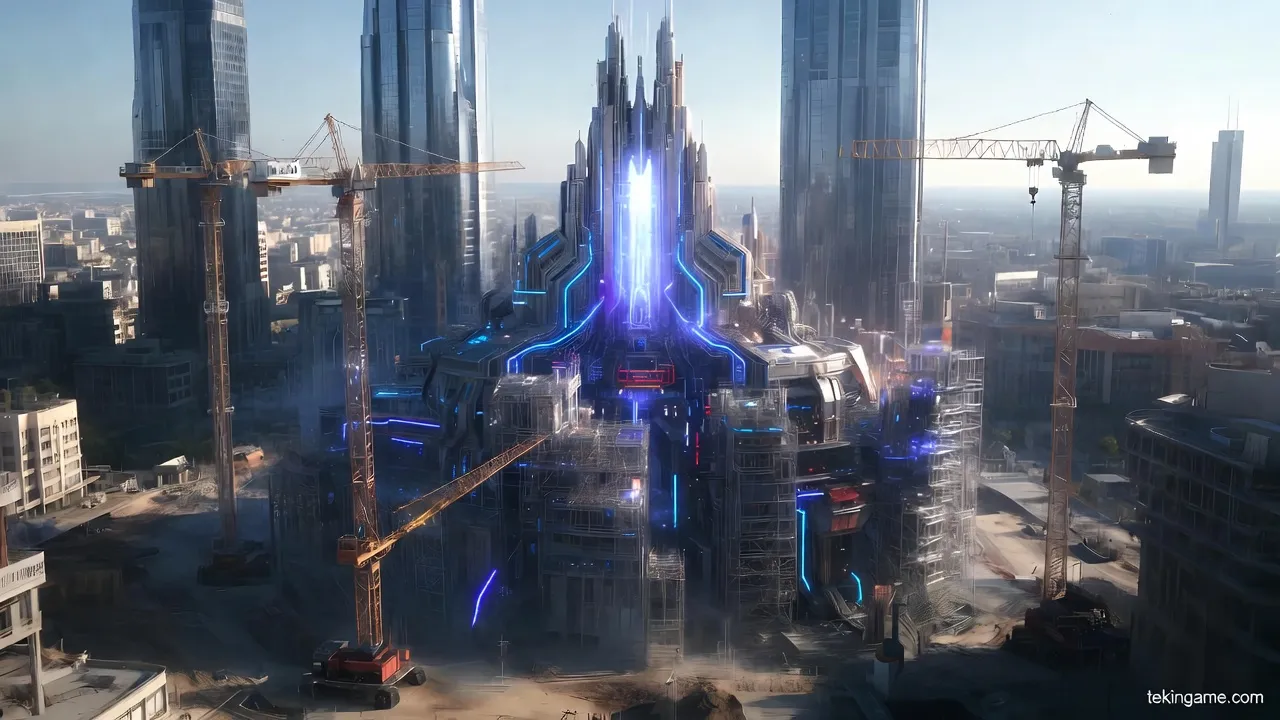
Whether you're a newcomer who found the layering system confusing, or a veteran who missed the 'Old Ways,' there has never been a better time to jump back in. Civ 7 has matured into a masterpiece that respects both its heritage and its future. The world is yours to build—and now, you can keep it yours until the very end.
Chapter XI: Anniversary Update FAQ (Q&A)
- Q: Can I still swap civilizations if I want to?
A: Absolutely! The 'Legacy Layers' mode remains the default way to play. The 'One Civ' mode is a new, optional choice. - Q: Are the new leaders free?
A: One of the new leaders is free for all players as part of the anniversary event. The other two are part of the 'Anniversary DLC Pack'. - Q: Does this update improve late-game turn speed?
A: Yes! Optimization is a huge part of this patch, with AI turn-processing seeing a 20-30% boost in efficiency. - Q: Is this update available on consoles?
A: Yes, it is launching simultaneously on PC (Steam/Epic), PS5, and Xbox Series X/S.
Exclusive Strategic Report by: The Tekin Game Intelligence Unit
Stay tuned to Tekin Game for more expert guides, meta-analysis, and exclusive gaming news. We are your home for the future of interactive entertainment.