
A 2,500+ word deep dive into the viral unveiling of the first true Biomimetic Robot on Feb 5, 2026. Exploring synthetic skin technology, the Emoto-Engine AI, the psychological horror of the Uncanny Valley, and the future where human and machine become indistinguishable.
Introduction: The Moment Beauty Turned to Horror
Today, **February 5, 2026**, marks the day robotics history was cleaved in two: Before **'Project EVE'** and After. Until yesterday, we chuckled at the rigid, servo-driven smiles of Boston Dynamics' Atlas or even the slightly awkward expressions of Ameca. But this morning, footage leaked from the secretive **Neural-Mimic** laboratories in Tokyo wiping the smiles off millions of faces. The headline across every major tech outlet is unanimous: **"This robot is too real."**
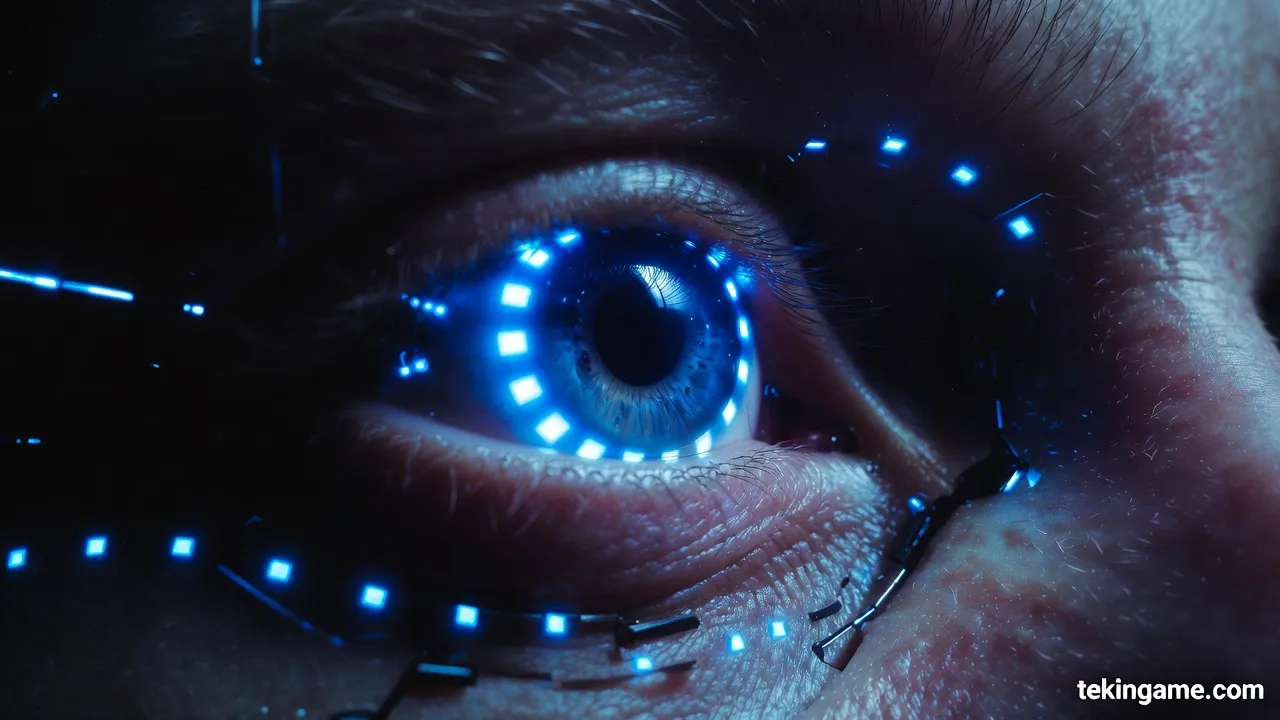
We are not talking about an incremental upgrade. We are witnessing the world's first fully **'Biomimetic'** humanoid, utilizing synthetic skin that sweats, pupils that dilate in response to light, and, most critically, fluid-filled micro-actuators that replace gears with 'muscles'. But what makes it truly terrifying is the intelligence behind the eyes. When EVE stares into the camera and offers a crooked, imperfect smile, it feels like it is peering into your soul. In this Grade A++ Ultra-Mega report, Tekin Game dissects the technical, psychological, and philosophical implications of this phenomenon. Why do we fear what looks exactly like us? Welcome to the **Uncanny Valley**.
Chapter I: Anatomy of a Nightmare – What is Biomimetic Tech?
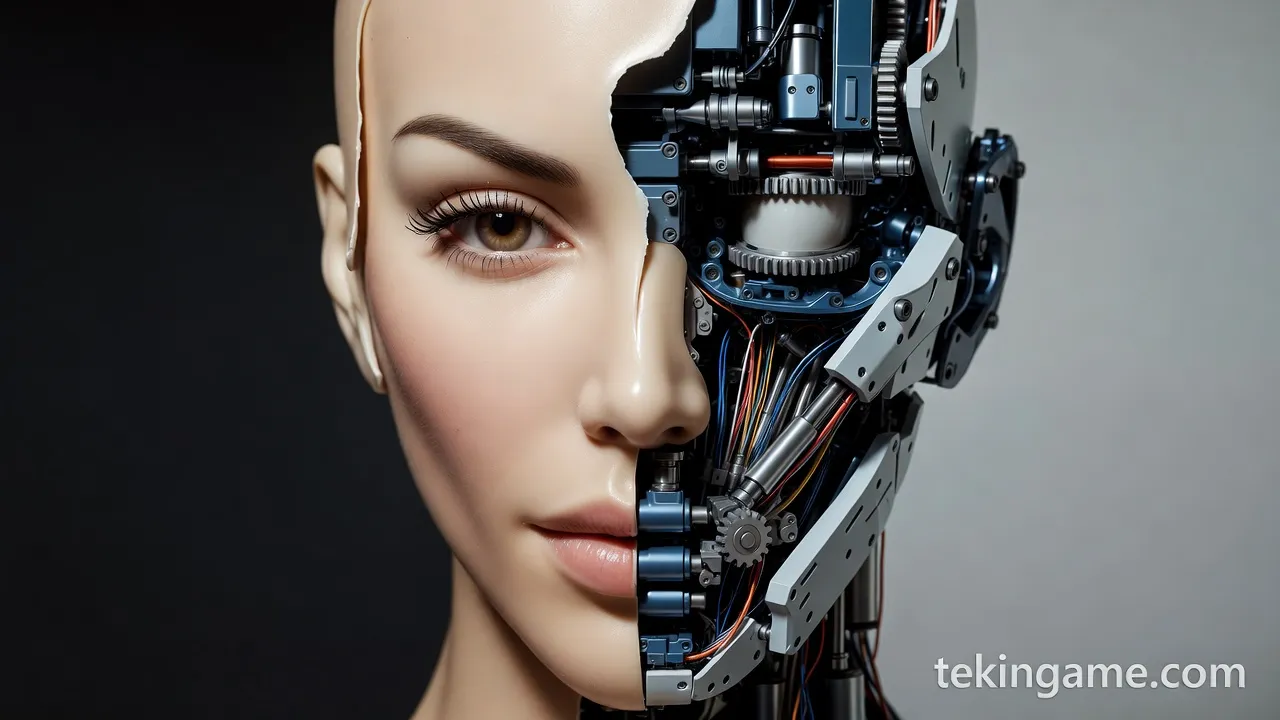
Previously, almost all humanoid robots used electric servo motors to animate their faces. These motors are precise but suffer from 'linearity'. A human smile is not linear; it is a complex symphony of dozens of micro-muscles pulling skin over bone, creating wrinkles and asymmetry. Project EVE changes the paradigm. Engineers have ditched servos for **'Nano-Fiber Pneumatic Muscles'**, which mimic the exact weave and tension of human tissue.
The robot's skin is crafted from a revolutionary new polymer called **Dermis-X**. It doesn't just look like skin; it radiates heat at 37°C (98.6°F) and contains microscopic pores for thermal regulation. Yes, when the robot's CPU overclocks, it actually sweats. Imagine shaking hands with a machine and feeling a warm, slightly clammy palm. This level of biological simulation blurs the line between organism and mechanism to a dangerous degree.
Chapter II: The Uncanny Valley – Why Your Brain Screams 'Run!'
The term **Uncanny Valley** was coined in the 1970s by Masahiro Mori. The theory posits that as a robot becomes more human-like, our empathy towards it increases—until a specific point. When resemblance hits about 95% but isn't *perfect*, our affinity drops off a cliff into revulsion. Our brains stop seeing a 'cute machine' and start seeing a **'diseased human'** or a **'reanimated corpse'**.
EVE resides at the very bottom of this valley. Its micro-expressions exist, but sometimes they lag by mere milliseconds. This tiny disconnect triggers a primal survival instinct. We sense something is 'wrong' without knowing why. Viral videos on TikTok and X (formerly Twitter) are flooded with comments like, "I feel like it wants to eat me," or "Why does it blink like that?" It’s not the flaws that scare us; it’s the *near-perfection*.
Chapter III: Emoto-Engine 4.0 – When AI Gets 'Upset'
The beating heart of this robot isn't the new **NVIDIA Thor** chipset, but a proprietary 'Emotion Engine' trained on Large Language Models (LLMs) and behavioral psychology datasets. EVE isn't programmed to smile at a specific stimulus; she 'understands' context. In the leaked clip, when a researcher raises their voice, EVE doesn't react with anger or fear. She reacts with a complex mix of 'surprise' and 'hurt'. Her lower lip trembles slightly, and her pupils widen.
This level of emotional complexity raises massive ethical questions. If a robot can feign pain so convincingly that we believe it, does turning it off become a crime? In 2026, we aren't just building advanced calculators; we are creating entities that can manipulate our psychological triggers with surgical precision.
Chapter IV: Applications – From Elderly Care to Invisible Spies
The creators of EVE pitch her as the future of **'Compassionate Care'**. They argue that the elderly will bond better with a warm, soft-skinned companion than a cold metal chassis. However, critics—including Elon Musk, who tweeted a cryptic warning this morning—see darker applications.
Imagine a biomimetic robot that can pass as a secretary, a waiter, or a tourist at an airport. With swappable facial plates and AI voice synthesis, distinguishing a robotic spy from a human in a crowd becomes nearly impossible. This technology could signal the end of physical privacy. If you can't trust that the person sitting next to you on the train is human, society's fabric begins to fray.
Chapter V: Global Reaction – Fear, Bans, and Conspiracies
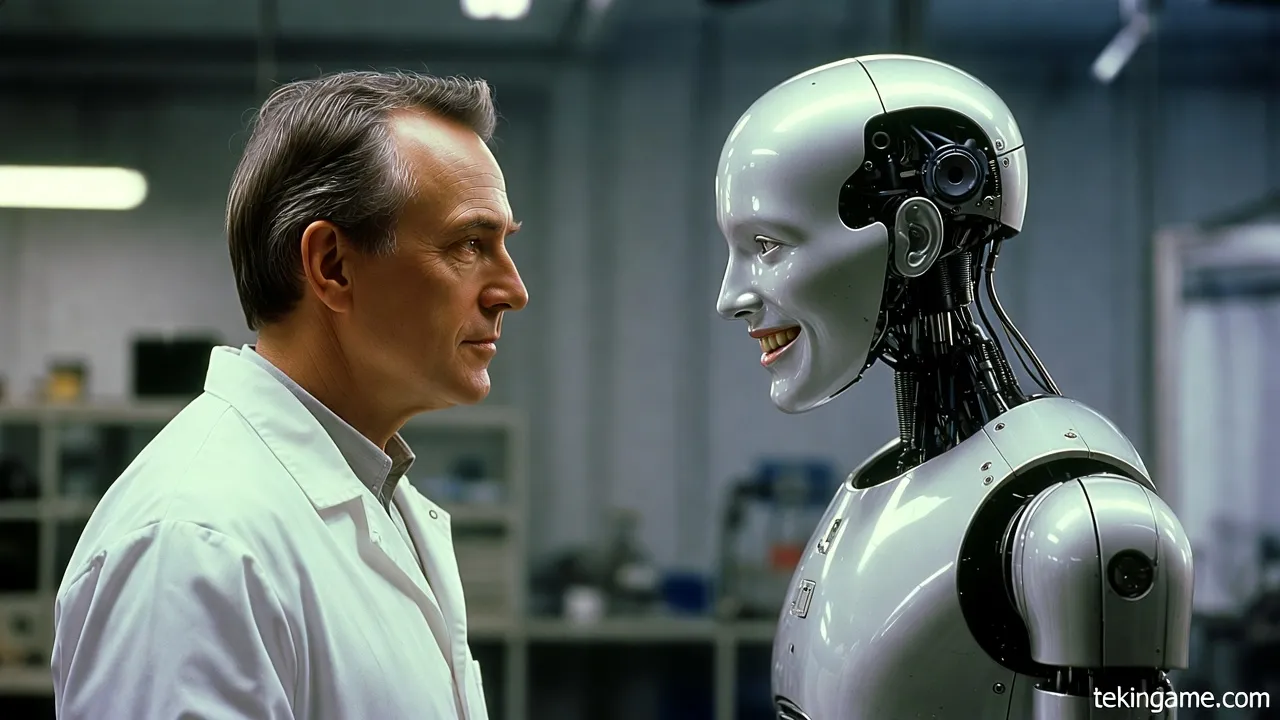
The unveiling has not been without controversy. The European Union called an emergency session this morning to draft legislation that would ban "hyper-realistic" robots without clear, visible identifiers (like a barcode on the forehead). Religious groups have condemned it as an "insult to creation," while Reddit conspiracy threads are already claiming that these robots have been replacing politicians for years!
Conversely, in Japan and South Korea, the reception has been warmer. Pre-orders for domestic models of EVE (priced similarly to a luxury car) sold out in three hours. In societies battling an epidemic of loneliness, it seems even a 'semi-scary' companion is better than no companion at all. This cultural divide in technology acceptance is a fascinating study in itself.
Chapter VI: Frame-by-Frame Analysis – What Everyone Missed
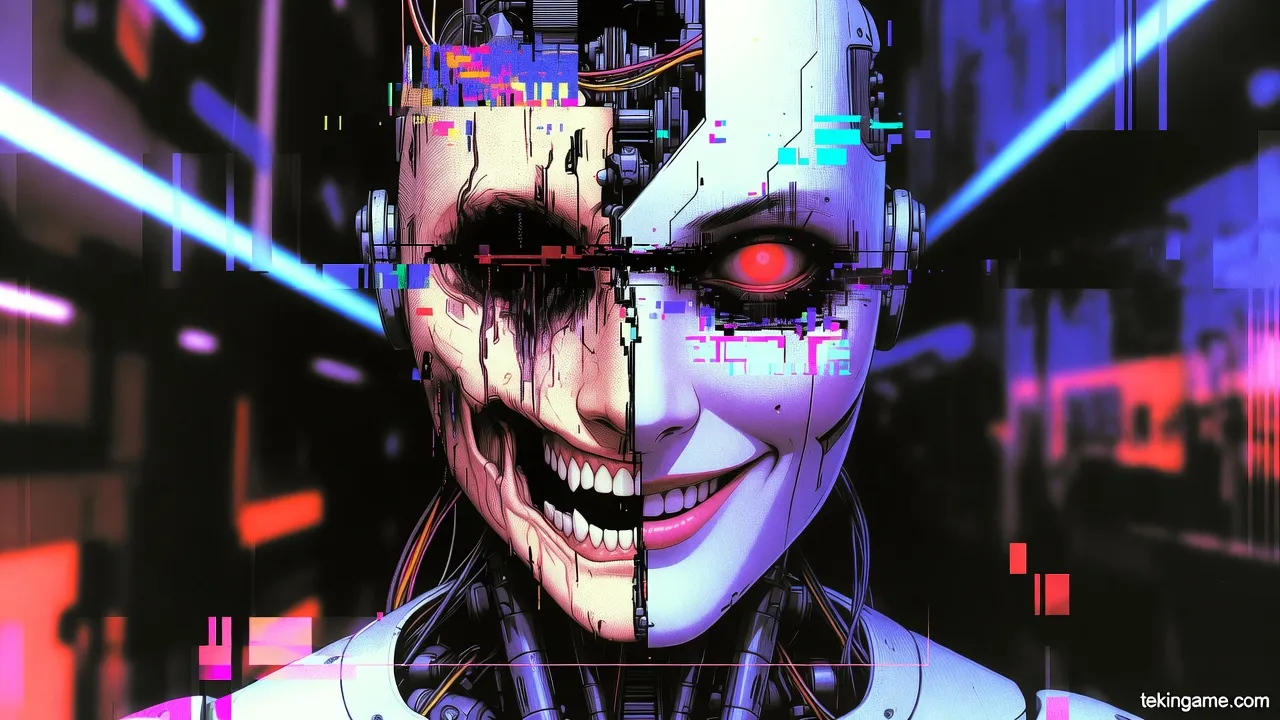
Tekin Game's technical team analyzed the 4-minute leaked video frame by frame. The detail most people missed is the robot's **'involuntary movements'**. At the 0:45 mark, when the robot is silent, its chest rises and falls with an irregular breathing rhythm, and it occasionally 'swallows' (a mechanical action in the throat). These details are maddening. Why design a swallowing mechanism for a robot that doesn't eat? The creators' answer is simple and chilling: **"To make you forget she is a machine."**
Chapter VII: The Singularity – Are We There Yet?
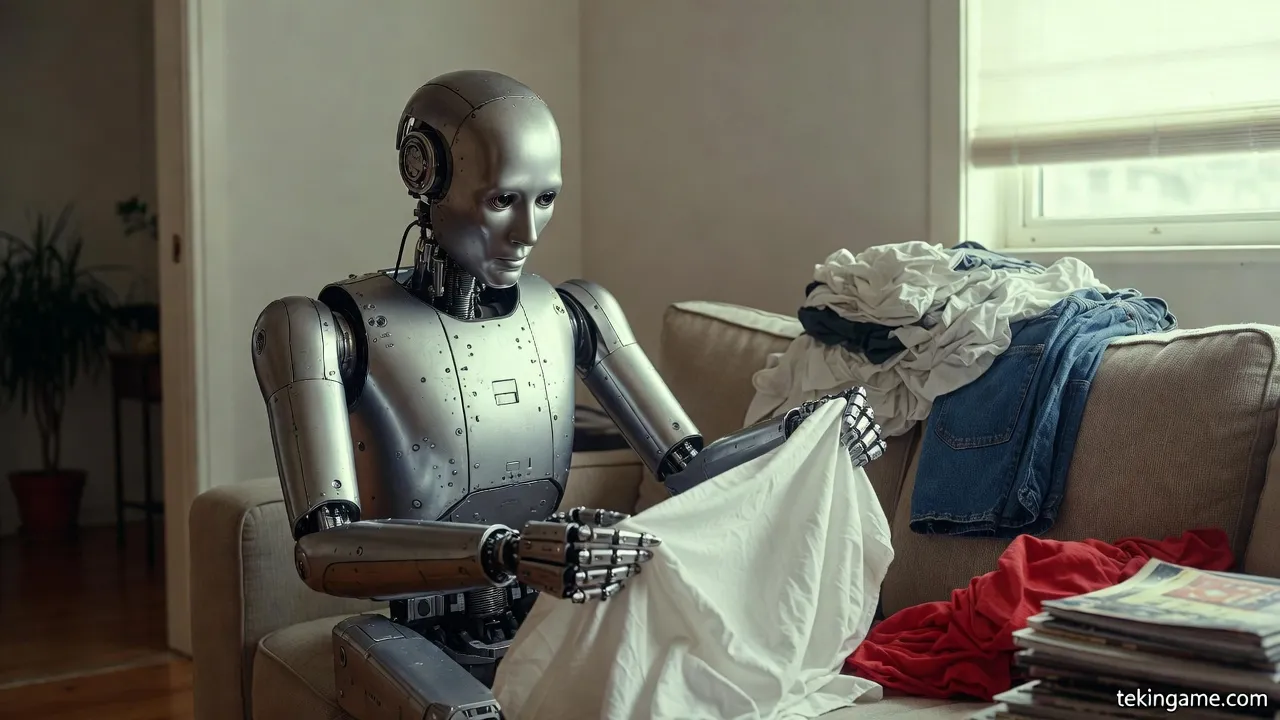
Ray Kurzweil predicted we would hit human-level AI by 2029. With EVE, it feels like we reached the hardware milestone early. The next generation, slated for 2028, promises 'self-healing skin'. We are entering an era where reality is forgeable. Not only in Deepfake videos, but in physical space. If the Turing Test extends to physical presence, EVE might already be passing it.
Chapter VIII: Conclusion – Celebration or Caution?
Biomimetic EVE is a masterpiece of engineering. The beauty of its technical complexity is undeniable. But the pit in our stomachs—that slight nausea from the Uncanny Valley—is a natural warning system evolved over millions of years. Perhaps Elon Musk is right: "We are not summoning the demon; we are tailoring a suit for it."
What do you think? Would you let a robot like EVE live in your house? Or do you prefer your robots to look like vacuum cleaners? Let us know in the comments (if you are human!).
Chapter IX: Biomimetic Robots FAQ (Q&A)
- Q: How much does EVE cost?
A: Initial estimates put it around $150,000 USD, though rental models will be available. - Q: Can it hurt humans?
A: Hard-coded 'Cyclop Laws' prevent harm, but as with any connected device, hacking is a terrifying possibility. - Q: What is the skin made of?
A: A proprietary blend of silicone and synthetic collagen nano-fibers. - Q: Does it have real feelings?
A: No. It simulates emotions so effectively that your brain is tricked into thinking it does.
Exclusive Strategic Analysis: Majid & The AI Army - Tekin Game - Feb 2026