
Caption: The new look of Spatial Computing: Sleeker, lighter, and strictly for you.
1. 📉 The $2,000 Surgery: How Apple Slashed Manufacturing Costs
The biggest barrier to entry for the Vision Pro was its astronomical price. At $3,500, it competed with used cars. The Vision Air targets a price point of $1,500 - $1,600. But how do you cut the price by nearly 60% without destroying the "Apple Magic"?
Inspector Gemini has analyzed the supply chain reports, and the answer lies in three specific "surgical removals."
A) The Display Shift: From Sony to the Competition
The original Vision Pro used cutting-edge Micro-OLED panels from Sony that cost Apple nearly $700 per unit. They were notoriously difficult to manufacture.
For the Vision Air, reports indicate Apple is sourcing high-density OLED panels from Samsung Display and LG Display.
- The Trade-off: The pixel density (PPI) will drop from ~3,400 to roughly ~2,500.
- The Reality: Will you notice? Likely not. Unless you are a graphic designer inspecting pixels, the image will still look sharper than any 4K TV you own. It’s the difference between "Retina" and "Super Retina"—both are excellent.
B) Camera Reduction
The Vision Pro was a sensor monster with 12 cameras, 5 sensors, and 6 microphones. The Vision Air is expected to cut this count significantly. It will likely drop the dedicated 3D camera meant for capturing Spatial Video. Apple's logic is sound: "You have an iPhone 17 or 18 in your pocket to record video. You don't need to record it with your face."
Caption: Evolution of design: Dropping the creepy digital eyes makes the device look more like premium eyewear and less like sci-fi horror.
2. 👁️ Goodbye, EyeSight: Why Removing "Digital Eyes" Saved the Design
The most controversial feature of the first generation was EyeSight—the external OLED screen that projected a digital render of your eyes to people in the room.
Apple claimed it helped with "connection." Users claimed it looked "uncanny," "blurry," and "weird."
Removing EyeSight is the single best decision Apple could have made for the Vision Air.
The Ripple Effect of Removal
When you delete that front screen, magical things happen to the engineering:
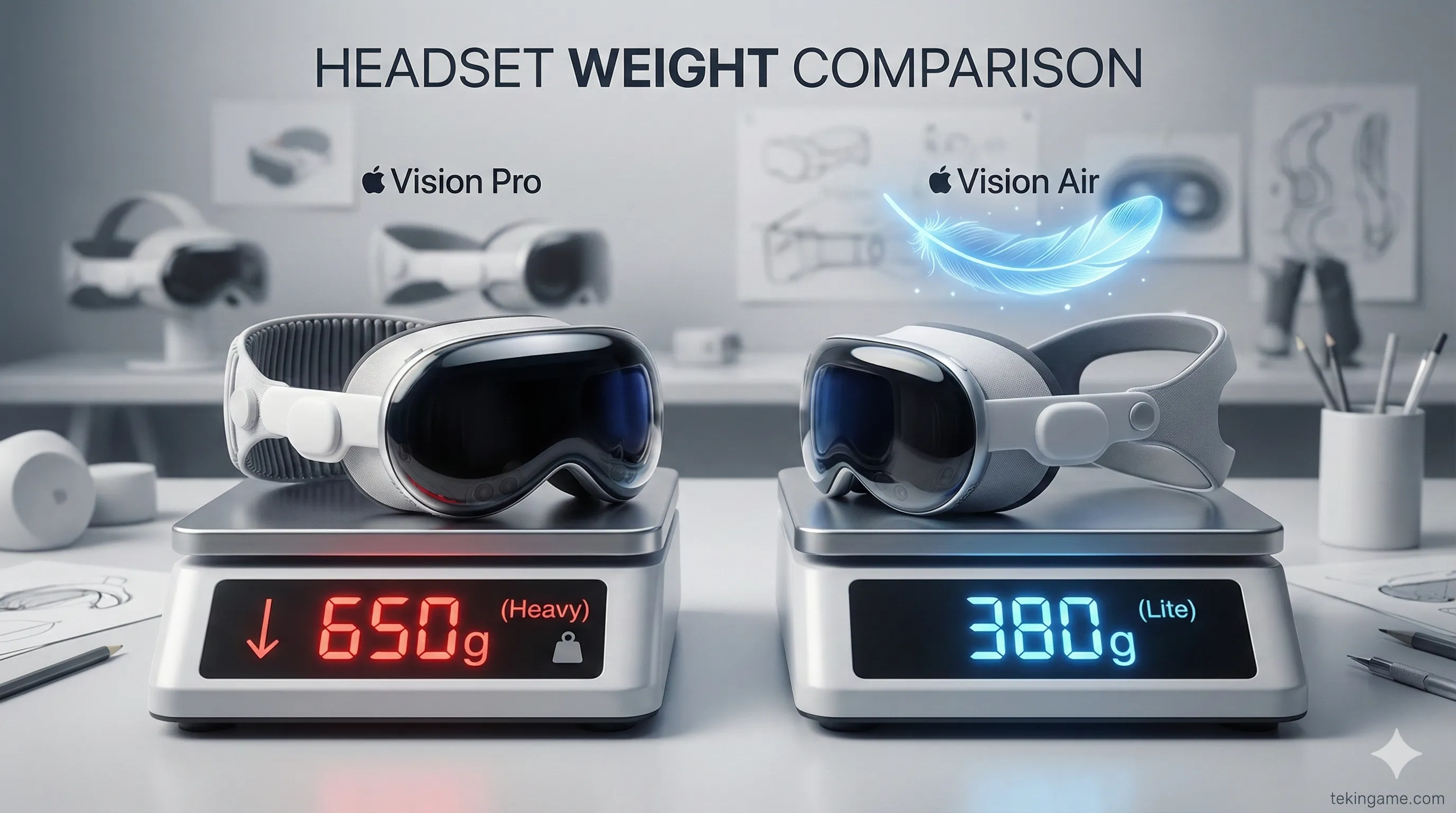
- Weight Drops: You lose the glass lens, the lenticular layer, and the OLED panel itself. That’s nearly 100g gone instantly.
- Battery Life Increases: Powering an external screen drained the battery unnecessarily. Now, every electron goes to your experience inside the headset.
- Cost Plummets: That assembly was expensive and complex to bond.
- Aesthetics Improve: The front can now be a sleek, matte plastic or fabric finish (similar to the HomePod or premium sunglasses), making it less fragile and less prone to fingerprints.
3. ⚙️ Silicon Wars: A19 vs. M2
Here is where the tech enthusiasts get nervous. The Vision Pro was powered by an M2 chip—a desktop-class processor found in MacBooks.
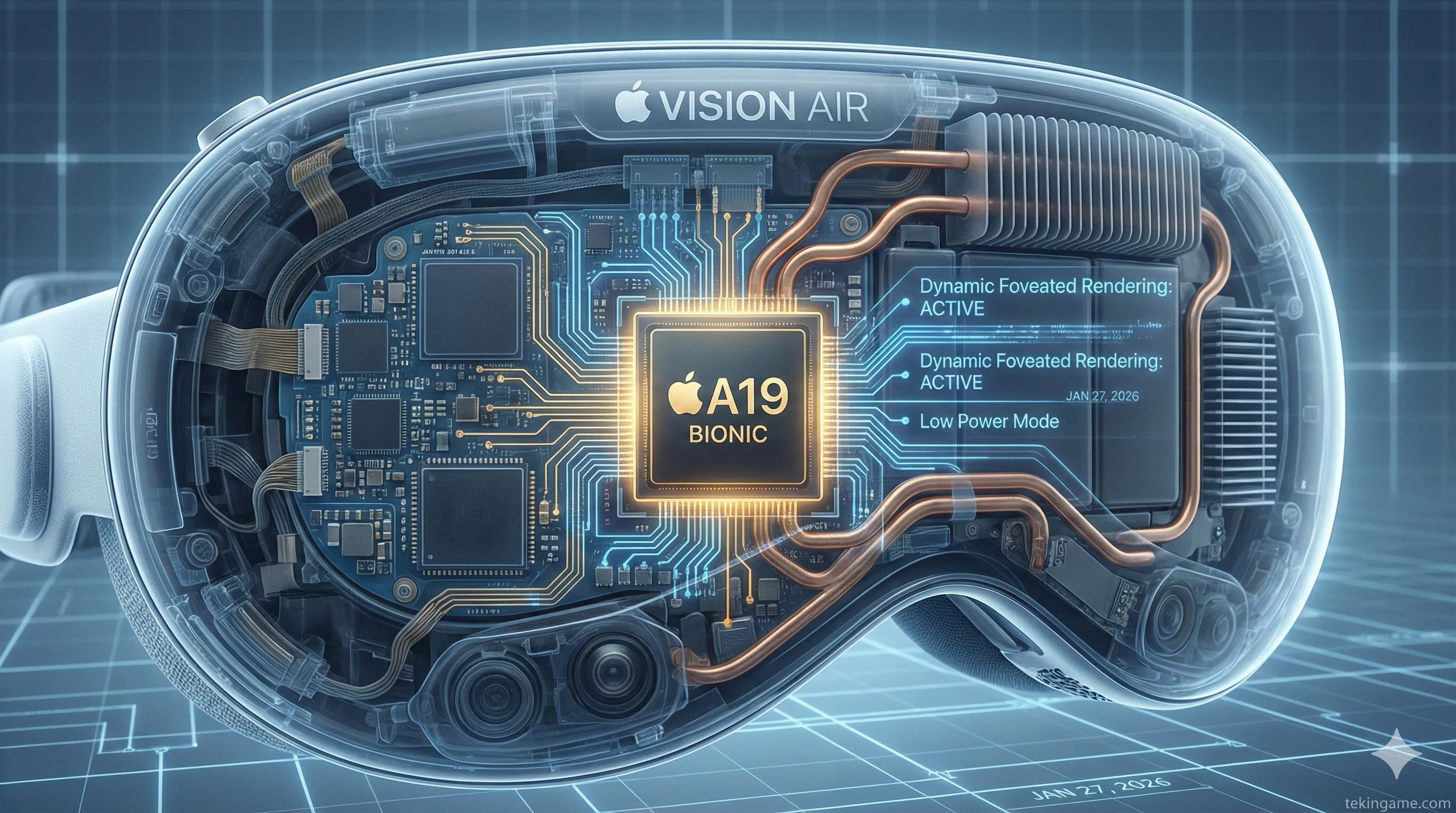
Leaks suggest the Vision Air will run on the A19 (the chip destined for the standard iPhone 18) or a binned A18 Pro.
| Spec Category | Vision Pro (M2 + R1) | Vision Air (A19 Leaked) |
|---|---|---|
| Architecture | 5nm (Desktop Class) | 2nm (Mobile Efficiency) |
| Cooling | Dual Active Fans | Passive or Single Silent Fan |
| Primary Use | Multitasking & Work | Media & Light Gaming |
Can a Phone Chip Handle VR?
Absolutely. The secret weapon is Dynamic Foveated Rendering.
Even in the cheaper model, Apple keeps the eye-tracking cameras inside. The chip knows exactly where you are looking. It renders that tiny spot in 4K resolution and blurs the rest of your peripheral vision. This reduces the GPU load by up to 70%.
Since the Vision Air is focused on media consumption (movies, immersive video) rather than heavy multitasking (running Final Cut Pro in mid-air), the A19 is more than capable. It runs cooler, allowing Apple to remove heavy heat sinks.
Caption: The 40% reduction in weight transforms the device from a "20-minute demo" to a "2-hour movie machine."
4. ⚖️ The Diet Plan: 40% Lighter and Finally Comfortable
The "Achilles Heel" of the first generation was comfort. It was front-heavy and painful.
For Project N107, Apple is swapping materials:
- Polycarbonate over Aluminum: Expect a high-quality polymer body (think iPhone 5C or Apple Watch SE) instead of heavy machined aluminum.
- Simplified Strap: The complex "Solo Knit Band" with its expensive adjustment dial might be replaced by a simpler, lighter elastic velcro mechanism similar to ski goggles.
5. 📱 The New Ecosystem: From "Mac Replacement" to "iPhone Accessory"
This is a critical shift in marketing strategy.
Apple pitched the Vision Pro as a standalone "Spatial Computer"—a replacement for your Mac.
They will pitch the Vision Air as the "Ultimate iPhone Accessory."
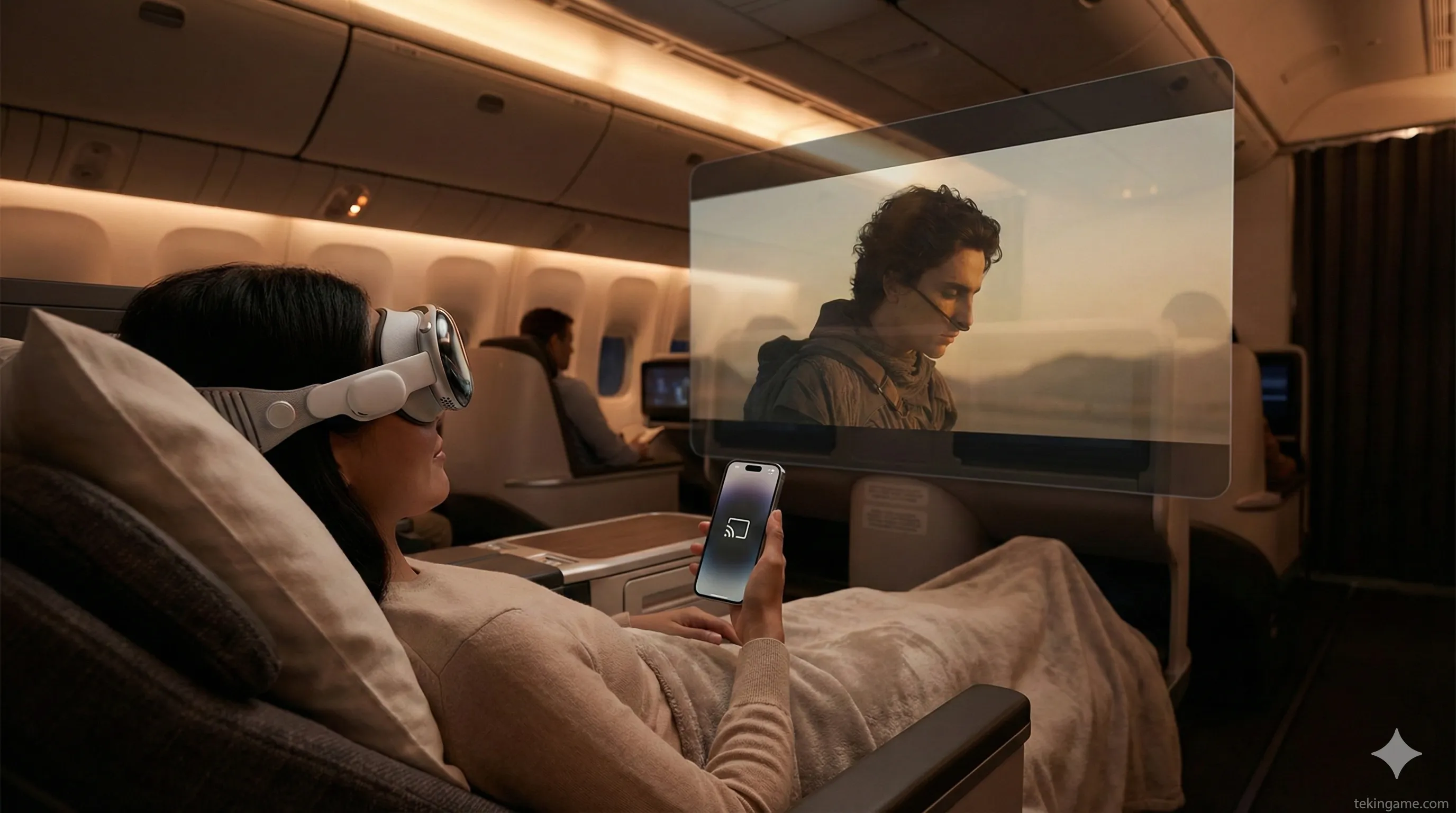
Caption: Seamless Handoff. Your phone provides the content; the headset provides the theater.
Imagine this scenario: You are on a 6-hour flight. You have your iPhone full of movies. You put on your Vision Air (which fits easily in your carry-on because it’s smaller). Instantly, you have a 100-foot IMAX screen in front of you. You are not "working"; you are escaping. This is a much easier sell to the average consumer than "spatial computing."
6. 🆚 The Arena: Vision Air vs. Meta vs. Samsung
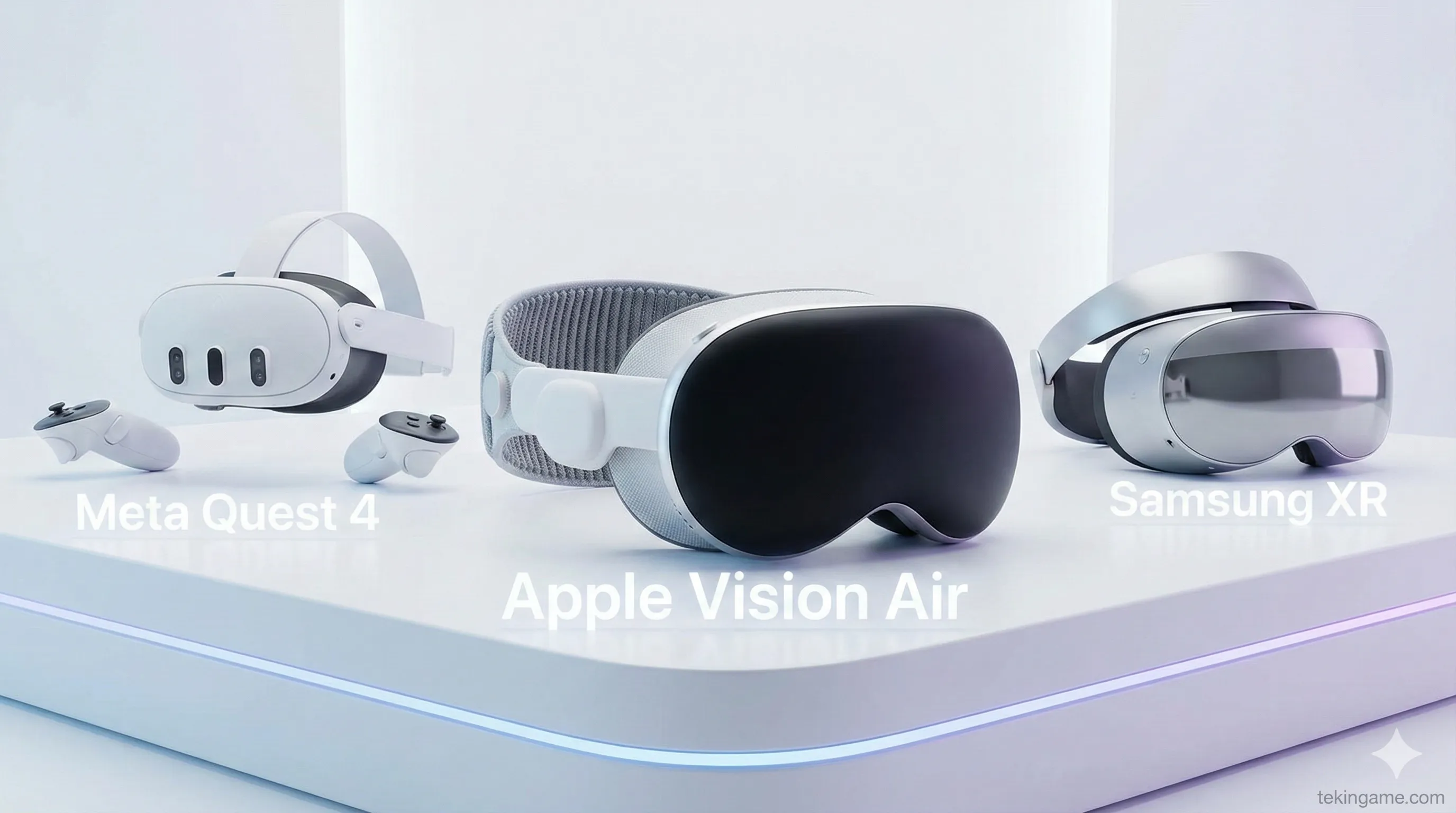
By late 2026, the battlefield will be crowded.
- Meta Quest 4 ($499): The king of gaming. If you want to play Beat Saber or fitness games, this is still the winner because it has physical controllers. Apple still refuses to make VR controllers, relying on hand gestures.
- Samsung XR ($1,000+): Powered by Google’s Android XR. It will integrate tightly with Galaxy phones. Its success depends entirely on software polish, an area where Google has historically struggled in AR.
- Apple Vision Air ($1,500): The king of media and ecosystem. It offers the best display and the best UI (visionOS), but lacks controller-based gaming.
7. 📅 The Inspector's Verdict: Is it Worth the Wait?
Commanders, here is the bottom line. If the rumors holding true today (January 27, 2026) are accurate, Apple has finally cracked the code. The Vision Pro was a prototype sold to the public. The Vision Air is the actual product.
At $1,500, it is expensive, yes. It costs as much as a high-end laptop. But consider what it replaces: A 4K OLED TV, a Surround Sound system, and a multi-monitor setup for your Mac. By removing the gimmicky EyeSight and focusing on weight reduction, Apple has created a device that people might actually want to wear, rather than feel forced to wear.
Predicted Launch: Late 2026 (September/October Keynote). Inspector's Advice: Start saving now. This is going to be the biggest hardware launch since the iPad.
🗣️ Join the Debate
Does the removal of 'EyeSight' make you want this device MORE or LESS?
Is $1,500 the "sweet spot" or still too expensive?
Drop your thoughts in the comments below! 👇